
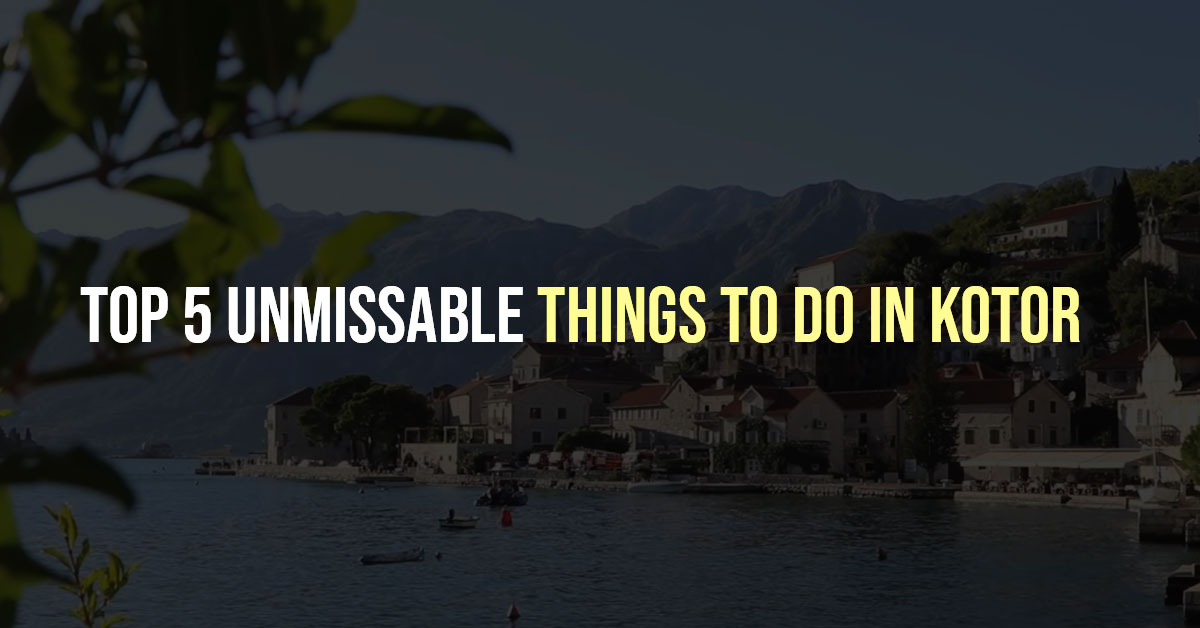
Imagine a place where jagged mountains plunge directly into a fjord-like bay, where medieval stone walls snake impossibly up vertical cliffs, and where the air carries the scent of salt, ancient stone, and freshly grilled seafood. Kotor reveals itself as Montenegro’s most dramatic urban treasure, a living museum nestled at the innermost corner of Boka Bay where Venetian palaces stand beside Byzantine churches beneath peaks that seem determined to push the entire town into the Adriatic. Often overshadowed by its more famous neighbor Dubrovnik, Kotor offers something deeper and that’s a place where you can climb medieval fortifications at dawn, sail to man-made islands by midday, and lose yourself in labyrinthine alleyways by sunset.
For travelers seeking authentic Balkan coastal experiences without overwhelming crowds, Kotor presents the perfect blend of accessibility and mystery. This UNESCO World Heritage city has welcomed everyone from Roman legions to Venetian merchants, yet it somehow retains an atmosphere of discovery. This guide presents the top 5 things to do in Kotor that capture the essence of this extraordinary corner of the Mediterranean.
If you are still torn between spending more time on the coast or inland, our guide on whether to visit Mostar or Kotor will help you decide which city fits your Balkan itinerary best.
Table of Contents
Introduction to Kotor
Kotor occupies a privileged position at the southernmost reach of the Bay of Kotor, often mistakenly called Europe’s southernmost fjord though geologically it is a submerged river canyon. The city sits at the base of Mount St. John whose limestone cliffs rise almost vertically from sea level to over 1,200 meters. This strategic location made Kotor a coveted prize throughout history, passing through Roman, Byzantine, Serbian, Venetian, Austro-Hungarian, and Yugoslav hands before becoming part of independent Montenegro in 2006.
The UNESCO-protected Old Town forms a triangular maze of narrow streets dating from the 12th to 14th centuries, enclosed within walls stretching 4.5 kilometers from sea level to San Giovanni Fortress at 280 meters elevation. Home to approximately 13,000 residents in the greater area, the city balances its role as a major cruise destination receiving over 500,000 passengers annually with its authentic character as a living Montenegrin community. The Bay of Kotor offers spectacular natural beauty with calm turquoise waters perfect for swimming and kayaking, dotted with historic villages like Perast and man-made islands holding centuries-old churches.
The nearest airports include Tivat just eight kilometers away, Podgorica 90 kilometers distant, and Dubrovnik Airport across the Croatian border approximately 75 kilometers away, though border crossings in summer can add significant time with waits sometimes exceeding two hours during peak season.
1. Climb to St. John’s Fortress in Kotor
Conquering the ascent to St. John’s Fortress represents the quintessential Kotor experience, a journey up approximately 1,350 stone steps gaining 260 meters in elevation over 1.2 kilometers. The fortifications constitute a marvel of military engineering begun during the 9th century Byzantine period but primarily expanded during Venetian rule. Most hikers complete the ascent in 45 minutes to one hour, passing the Church of Our Lady of Remedy halfway up where 16th-century plague survivors built a votive chapel.
The panorama from San Giovanni Fortress provides the defining image of Kotor, revealing the orange terracotta roofs of the Old Town spreading below while the deep sapphire waters of Boka Bay stretch toward the Adriatic, all framed by imposing grey mountains. An entrance fee of 15 euros gets collected at two main entry points within the Old Town, with early morning ascents before 8 a.m. or late afternoon climbs after 5 p.m. proving wisest for avoiding punishing midday heat and massive cruise ship crowds.
Critical safety information: bring at least one liter of water per person as dehydration represents a real danger especially in summer, wear sturdy closed-toe shoes with good grip since ancient stones become treacherously slippery when wet, and start early before temperatures climb because the fortress faces east receiving full morning sun that creates brutal conditions by midday.
2. Explore the Old Town of Kotor
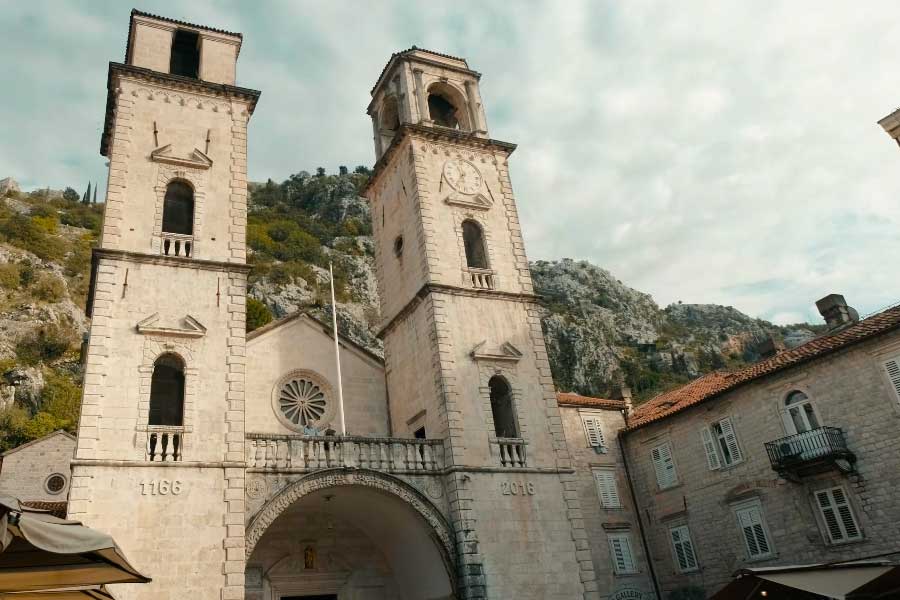
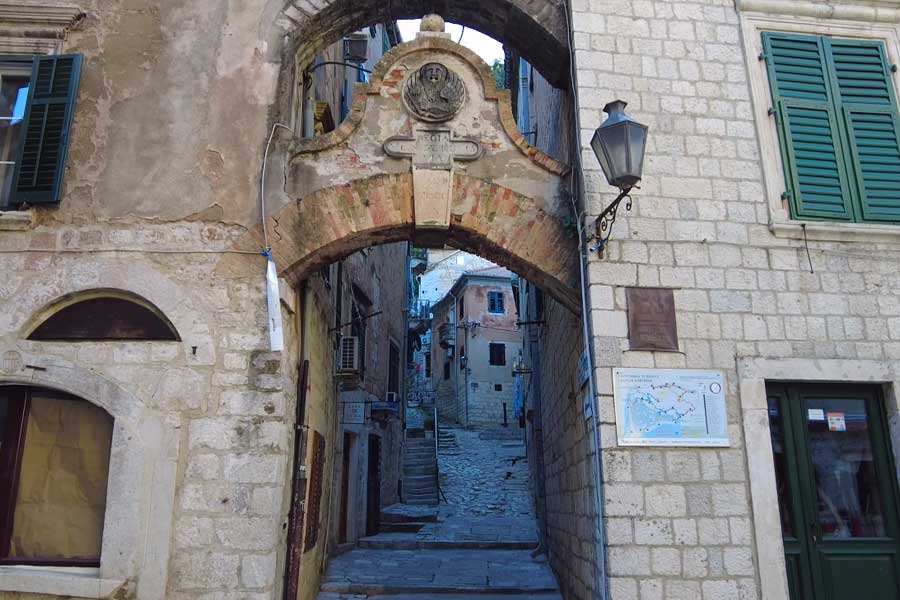
Wandering through Kotor’s UNESCO-protected Old Town transports visitors into a perfectly preserved medieval world where Venetian Gothic palaces stand beside Romanesque churches along marble streets unchanged since the 14th century. Enter through the Sea Gate built in 1555, immediately arriving at the Square of Arms dominated by the Clock Tower from 1602 and Prince’s Palace. If you are a cat lover, make sure to include a quick stop at the Kotor Cats Museum, a small museum in the Old Town that celebrates Kotor’s feline residents and their role in the city’s history. The Cathedral of Saint Tryphon constitutes the architectural crown jewel, a Romanesque masterpiece consecrated in 1166 making it older than Paris’s Notre Dame, with twin towers framing an interior featuring a stunning silver altar.
Navigation through the Old Town becomes part of the adventure as the triangular layout creates a maze where getting lost proves inevitable and desirable, leading to discoveries like hidden courtyards, tiny workshops, and intimate squares. The Maritime Museum housed in the baroque Grgurina Palace tells the story of Boka’s seafaring tradition, while the quirky Cats Museum celebrates the hundreds of felines that roam the streets as unofficial city mascots.
Authentic experiences emerge from embracing local rhythms, so sit in St. Luke’s Square with a dojč (long espresso with milk), visit the Saturday market outside the Sea Gate where farmers sell olives, prosciutto, and local cheeses, and time your visit to hear church bells creating overlapping harmonies. Restaurants tucked into ancient palaces serve fresh Adriatic seafood including black risotto, grilled octopus, and buzara mussels.
3. Boat Tour to Our Lady of the Rocks and Perast in Kotor Bay
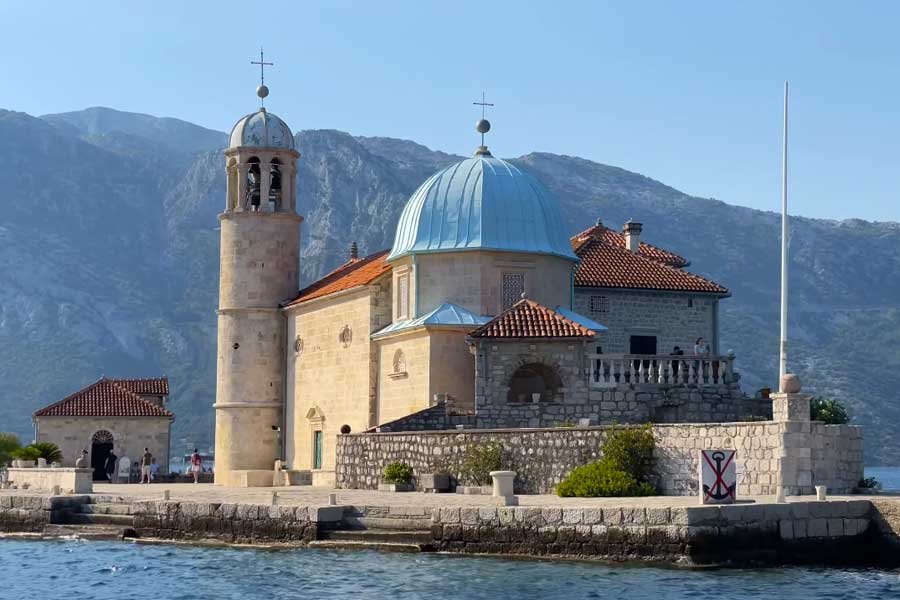
Experiencing Kotor from the water reveals perspectives impossible from land, with boat tours to the artificial island of Gospa od Škrpjela (Our Lady of the Rocks) and baroque Perast providing insights into maritime culture that defined this region. Legend recounts how in 1452, two sailors discovered an icon of the Madonna on a rock, prompting a tradition where after every successful voyage, sailors would sink rocks at that spot, eventually creating over centuries the man-made island topped by a striking blue-domed church.
Tours typically depart from the waterfront near Kotor’s port, with options ranging from traditional wooden boats offering leisurely two-hour journeys to speedboats incorporating stops at the Blue Cave where swimmers float in water glowing iridescent azure thanks to sunlight reflecting off white limestone. The church on Our Lady of the Rocks reveals an interior packed with maritime votive offerings including silver plates, paintings depicting storms, and most remarkably a tapestry embroidered over 25 years by a woman using her own hair woven with silver thread while waiting for her beloved sailor who never returned.
After the island visit, boats continue to Perast, a sleepy village of 300 residents that once served as home to wealthy sea captains whose baroque palaces still line the waterfront. Dress in layers as speedboat rides create significant wind chill even on warm days, bring swimwear if your tour includes the Blue Cave, and apply waterproof sunscreen since reflection off water intensifies sun exposure. Tours range from 20 euros for basic two-hour trips to 50 euros for comprehensive four-hour excursions.
4. Day Trip to Lovćen National Park from Kotor
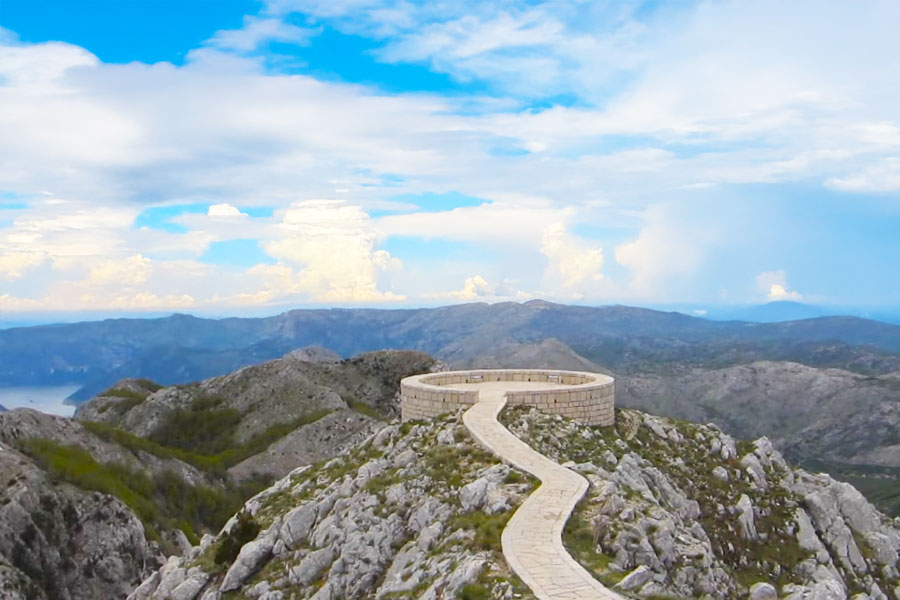
Rising dramatically behind Kotor, Mount Lovćen serves as Montenegro’s spiritual mountain, home to Lovćen National Park and the Njegoš Mausoleum where the nation’s greatest poet-prince lies entombed at 1,657 meters offering panoramas extending to Albania, Croatia, Bosnia, and across the Adriatic to Italy on clear days. Reaching Lovćen requires navigating the legendary Serpentine Road, an Austro-Hungarian engineering marvel featuring 25 hairpin turns climbing from sea level to over 1,000 meters in just 12 kilometers. The new Kotor-Lovćen cable car offers an alternative, providing a spectacular 11-minute aerial journey to the Kuk viewpoint at 1,300 meters.
Once in Lovćen National Park, the primary destination becomes the Njegoš Mausoleum, a striking modernist structure designed by sculptor Ivan Meštrović. Reaching the mausoleum interior requires climbing 461 steep steps from the parking area, a challenging ascent at high altitude that proves difficult for those with mobility issues or heart conditions, though the reward includes the tomb itself and a 360-degree viewing platform.
Driving the Serpentine Road yourself requires significant skill and nerve as the road remains extremely narrow with hairpin turns where two vehicles can barely pass, oncoming traffic appears suddenly around blind corners, and shoulder drop-offs plunge hundreds of meters without guardrails, so most visitors opt for organized tours with experienced drivers. Cable car tickets cost approximately 30 euros round trip while organized tours range from 40 to 80 euros.
5. Hike the Ladder of Kotor
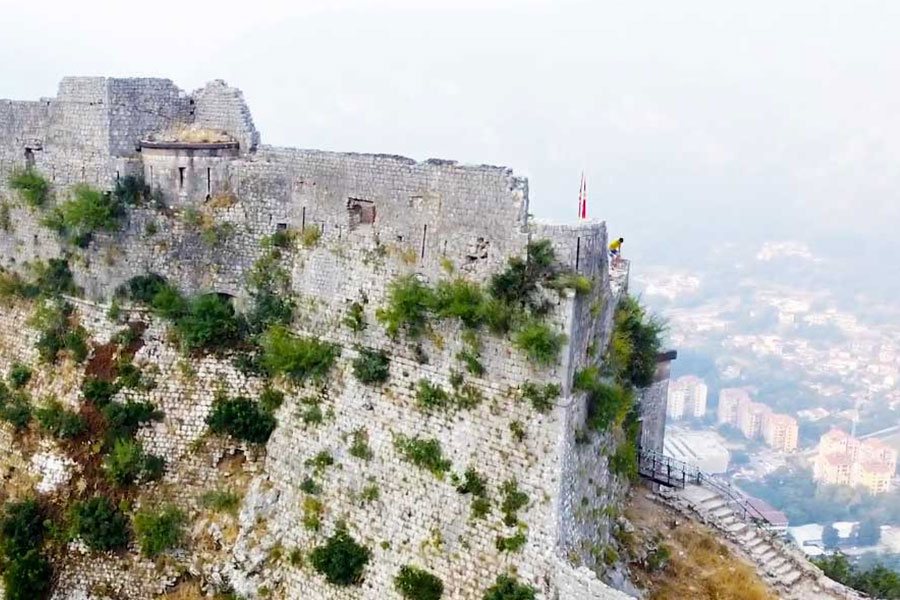
For adventurers seeking a more rugged alternative to the crowded fortress steps, the Ladder of Kotor provides an authentic mountain hiking experience following an ancient military supply route carved into the mountainside north of the city walls. This historic path served for centuries as the primary trade and military link between coastal settlements and inland regions, climbing relentlessly through 52 numbered switchbacks. Most visitors tackle only the lower sections, hiking for one to two hours to reach viewpoints that rival the fortress while encountering a fraction of tourist traffic.
The trail begins at the northern edge of the Old Town near Škurda Gate, initially passing through olive groves before serious climbing begins. About 45 minutes into the ascent, a remarkable discovery awaits: a tiny traditional stone house operates as an informal café where a local family welcomes hikers with homemade pomegranate juice, fresh goat cheese, and honey while their goats graze surrounding slopes, creating one of Kotor’s most authentic experiences unknown to most tourists.
The Ladder of Kotor requires proper hiking preparation including sturdy boots with ankle support, at least two liters of water per person as no reliable water sources exist, sun protection including hat and sunscreen since shade proves scarce, and realistic assessment of fitness levels since this constitutes genuine mountain hiking. Unlike the fortress which charges entry fees, the Ladder remains free and accessible 24 hours.
Practical Tips for Visiting Kotor
Spring from April through June and autumn from September through October provide optimal conditions, when temperatures range between 20 and 27 degrees Celsius perfect for both physical activities and leisurely wandering. Summer months see temperatures exceeding 35 degrees Celsius with multiple cruise ships disgorging thousands of passengers daily between 10 a.m. and 4 p.m., though early morning and evening restore tranquility.
Reaching Kotor requires flying into Tivat Airport just eight kilometers away with 15-minute taxi transfers for approximately 15 euros, Podgorica Airport 90 kilometers distant, or Dubrovnik Airport 75 kilometers away. Border crossings from Croatia in summer can add two or more hours with massive queues, so budget extra time. Daily budgets range from 60 to 120 euros covering accommodation (30 to 80 euros), meals (15 to 30 euros), fortress entrance (15 euros), and boat tours (20 to 50 euros).
Accommodation spans from luxury hotels within Old Town walls starting at 100 euros nightly to nearby Dobrota neighborhood apartments at half the price. Guests staying within Old Town must carry luggage from gates since vehicles cannot access the interior, with some accommodations up stairs without elevators. Essential packing includes sturdy walking shoes, swimwear, layers for variable mountain weather, and high-factor sunscreen.
FAQ: Common Questions on Kotor
How expensive is visiting Kotor compared to Dubrovnik?
Kotor generally costs 30 to 40 percent less than Dubrovnik for comparable services, with restaurant meals averaging 15 to 25 euros compared to Dubrovnik’s 25 to 40 euros.
Is it safe to drink tap water in Kotor?
Yes, tap water throughout Montenegro including Kotor meets European Union safety standards and is perfectly safe to drink.
How many days should I spend in Kotor?
Two full days allows comfortable completion of the top 5 things to do in Kotor, while three to four days permits more relaxed pacing plus additional beach time.
Can I visit Kotor as a day trip from Dubrovnik?
Yes, day trips are feasible given the 75-kilometer distance, but you must account for potential long delays at the Croatia-Montenegro border crossing during summer which can consume two or more hours each direction.
Do I need to book the fortress climb in advance?
No advance booking is required, as you simply pay the 15 euro cash entrance fee at the gates within the Old Town.
Our Most Popular Tours To Sarajevo
We offer many tours that include a visit to Sarajevo and its most popular locations:
- Full Day tour from Sarajevo to Belgrade (Most Popular)
- Full Day tour from Sarajevo to Međugorije & Mostar
- Full Day Tour from Sarajevo to Travnik and Jajce
- Full-Day 5 Cities Tour from Sarajevo to Herzegovina (Mostar)
- Full day Tour from Sarajevo to Dubrovnik (Kotor or Split)
Don’t Hesitate To Say Hi!
Got any questions about our tours or the city? Don’t hesitate to contact us anytime for more info and booking.
Use the following phone number and email: