
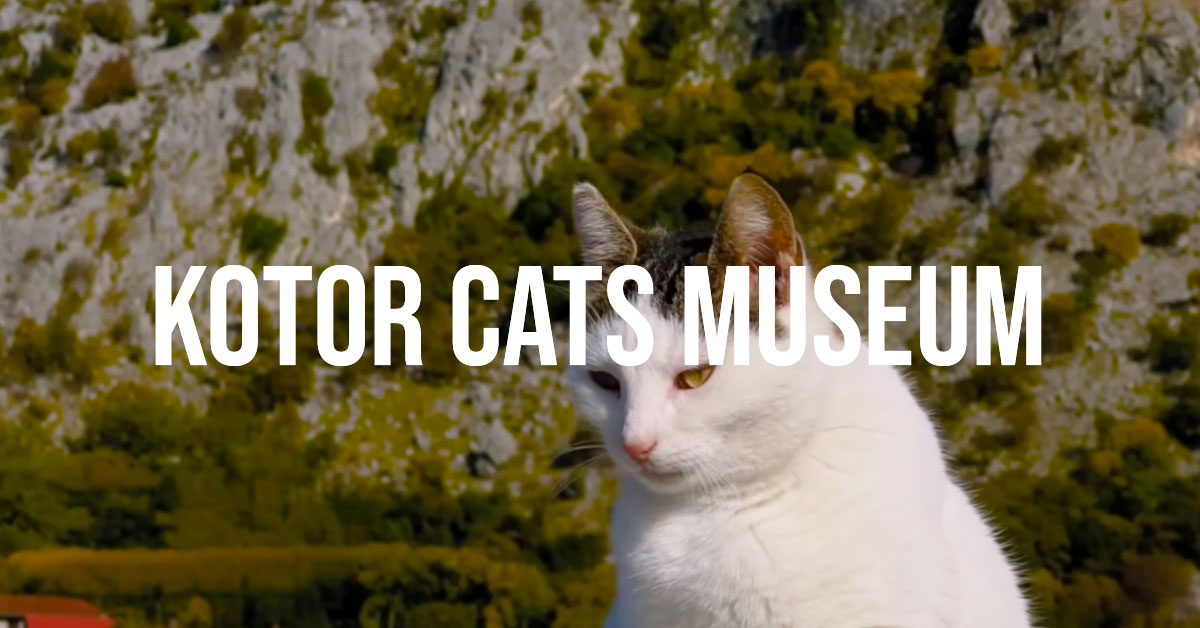
If you have ever visited Kotor, you have noticed them. They are everywhere. Sleeping on the steps of St. Tryphon Cathedral, begging for scraps under restaurant tables, and posing for photos like seasoned supermodels. We are talking, of course, about the cats of Kotor. But did you know there is an entire institution dedicated to them?
The Kotor Cats Museum is not just a quirky roadside attraction; it is a small but mighty cultural hub located in the heart of the Old Town. It stands as a testament to the city’s centuries-old love affair with its feline population. While most tourists are busy climbing the city walls or cruising the bay, a small door near the Cinema Square leads into a world of whiskers, tails, and history.
This is not a zoo, and you won’t find cages of exotic breeds here. Instead, you will find a fascinating collection of art, history, and oddities that tell the story of the cat through human history. Whether you are a cat lady or just a curious traveler, this museum offers a unique glimpse into the soul of Kotor.
Table of Contents
The Origins of the Kotor Cats Museum
The story of the Kotor Cats Museum begins not in Montenegro, but in Venice, Italy. The museum was founded in 2013 by Piero Pazzi, an Italian art expert and passionate collector. He didn’t just wake up one day and decide to open a museum; it was the result of a massive donation.
The core of the collection came from the International Centre for Adopting Cats “Badoer” in Venice, which received a substantial treasure trove of cat-related items from Countess Francesca Montereale di Mantica. Pazzi, realizing that Kotor was already the unofficial “City of Cats,” decided that this was the perfect home for the collection.
The choice of location was no accident. Kotor has a historical bond with cats that goes back centuries. Legend says that cats saved the city from the plague by keeping the rat population under control on the trading ships coming into the port. Another story claims that because Kotor was a trading crossroads, sailors from all over the world left their ship cats here, creating the diverse and resilient population we see today. The Kotor Cats Museum was established to honor this symbiotic relationship.
What You Will Find Inside the Kotor Cats Museum
Do not expect to see live cats on display inside the glass cases, though a few real ones often wander in to supervise the visitors. The Kotor Cats Museum is an art and historical museum. Its collection is surprisingly scholarly, featuring thousands of items that date from the 16th century all the way to the present day.
The walls are lined with antique engravings, lithographs, and hand-drawn postcards. You will see cats in situations you never imagined: cats as soldiers in World War I propaganda, cats on 19th-century advertising posters for soap and chocolate, and cats on rare postage stamps. One of the highlights is a stamp from 1927 that is believed to be one of the first philatelic items ever to feature a cat motif.
There is also a fascinating section dedicated to coins and medals featuring felines, as well as vintage books and sheet music with cat-themed covers. The exhibits show how our perception of cats has changed over time; from mystical hunters to pampered pets. It is a visual journey that proves cats have been ruling the internet long before the internet even existed.
One room is devoted entirely to feline mythology and superstition. Here you will learn about the Egyptian goddess Bastet, the Japanese Maneki-neko (beckoning cat), and the European belief that black cats crossing your path brought bad luck. Display cases hold small bronze figurines from ancient civilizations where cats were worshipped, as well as Victorian-era mourning jewelry made from cat hair; a practice that seems bizarre now but was a touching tribute in its time.
Another corner features vintage advertising materials where cats were used to sell everything from wine to machinery. These posters and tin signs reveal how cats became symbols of elegance, independence, and domestic comfort. There are also rare editions of children’s books featuring anthropomorphized cats, some dating back to the early 1900s, beautifully illustrated and preserved behind protective glass.
Perhaps the most charming aspect of the Kotor Cats Museum collection is its global nature. You will see cat imagery from Japan, Russia, France, Britain, and beyond. It becomes clear that no matter where humans lived, they shared one thing: an obsession with cats.
Kotor is the City of Cats
You cannot talk about the Kotor Cats Museum without talking about the city itself. Why are there so many cats here? The answer is a mix of history and community spirit. Unlike in many other cities where stray animals are treated as pests, in Kotor, they are citizens.
The local community takes collective responsibility for them. You will see bowls of water and kibble left out by shop owners and residents. The cats of Kotor are generally healthy, well-fed, and friendly because they are cared for by the “Kotor Kitties” charity and the museum itself.
The Kotor Cats Museum plays a direct role in this ecosystem. A portion of the ticket sales goes directly towards buying food and medical supplies for the street cats. So, by visiting the museum, you are not just looking at old pictures; you are actively helping the living descendants of those cats survive the winter. It is a circle of kindness that makes this museum truly special.
The Role of Cats in Kotor’s History and Culture
Why are there so many cats in Kotor? And why do locals treat them with such reverence? To understand the Kotor Cats Museum fully, you need to understand the deep historical roots connecting this city with its feline inhabitants.
During the Middle Ages, Kotor was a major trading port, a gateway between the East and West. Ships arrived daily carrying spices, silk, grain, and unfortunately, rats. These rats brought disease, most notably the bubonic plague, which devastated European populations in waves. Cats became essential crew members on merchant vessels because they controlled the rodent population. When ships docked, some cats would jump ship and settle in Kotor, creating a permanent feline population that essentially saved the city from repeated plague outbreaks.
There is a local saying in Kotor: “A city with cats is a city that survives.” It is not just folklore. Historical records from the Venetian period mention cats being purposefully imported and protected by city ordinances. Harming a cat was considered not only cruel but strategically foolish.
The Kotor Cats Museum dedicates an entire wall to this maritime history, with old maps, ship logs, and illustrations showing cats aboard vessels. There are even replicas of old Venetian laws that imposed fines on anyone who killed a cat within the city walls. This respect for cats became woven into the cultural identity of Kotor.
In modern times, the cats have become a symbol of resilience. After the devastating earthquake of 1979 that nearly destroyed the Old Town, locals say the cats returned before the people did, making homes in the rubble. As the city rebuilt itself, so did the cat population. Today, the cats are seen as guardians, survivors, and an inseparable part of what makes Kotor unique.
The museum captures this narrative beautifully, bridging the gap between historical necessity and modern-day affection. It answers the question that every visitor asks: “Why are there so many cats here?” The answer is simple: because Kotor wouldn’t be Kotor without them.
Practical Information for Visiting the Kotor Cats Museum
The Kotor Cats Museum is located in the Old Town of Kotor, specifically at the address Trg Gospa od Anđela (Square of Our Lady of the Angels). It is tucked away in a former monastery building, near the Cinema Square and the Church of St. Michael. It can be a bit tricky to find in the maze of streets, so look for the sign with a cat on it or ask a local.
The museum is typically open daily. During the tourist season (April to October), the opening hours are usually from 10:00 AM to 8:00 PM. In the winter months, the hours might be shorter, or it might close for maintenance, so it is always a good idea to check their Facebook page or a local guide before heading there.
The entrance fee is very affordable, costing only €1 per person. Considering that this money goes towards a good cause, it is arguably the best Euro you will spend in Kotor. The museum is small, you can see everything in about 30 to 45 minutes, making it a perfect quick stop to escape the summer heat or a sudden rain shower.
Souvenirs at the Kotor Cats Museum
If you want to take a piece of the cat magic home with you, the Kotor Cats Museum has a small gift shop that is a dangerous place for your wallet. It is packed with unique souvenirs that you won’t find in the generic tourist shops cluttering the main squares.
You can buy reproductions of the vintage posters and postcards on display, which make for excellent wall art. These are printed on high-quality paper and come in various sizes, perfect for framing. There are also handmade notebooks, magnets, tote bags, and even jewelry, all featuring feline designs. Some of the jewelry pieces are handcrafted by local Montenegrin artisans using silver and semi-precious stones, shaped into tiny cat silhouettes or paw prints.
For the practical shopper, there are greeting cards with whimsical cat illustrations, bookmarks made from recycled materials, and calendars featuring photos of Kotor’s most famous street cats. The shop also stocks a selection of books about cats, ranging from photography collections to folklore anthologies.
One of the most popular items is the “Kotor Cat” plush toy, a soft stuffed cat wearing a tiny sailor outfit as a nod to the city’s maritime history. Children adore them, and adults often buy them as keepsakes. There are also ceramic mugs, coasters, and even locally produced cat-themed honey and lavender sachets.
Many of these items are made by local artists, supporting the local economy. And just like the ticket price, the profits from the shop often support the local cat welfare initiatives. Some items are marked as “limited edition,” made in small batches by cooperatives working with the museum. It is the perfect place to buy a gift for the cat lover in your life who has everything, or to treat yourself to something that carries the spirit of Kotor home with you.
The staff at the shop are usually volunteers or part of the charity network, and they are incredibly knowledgeable. If you ask, they will tell you stories about the items, the artists, or even specific cats that inspired certain designs. Shopping here feels less transactional and more like contributing to a community.
Charity and Conservation Efforts of the Kotor Cats Museum
The Kotor Cats Museum is more than a tourist attraction; it is a hub for animal welfare. The museum works closely with organizations like “Kotor Kitties,” a UK-registered charity that focuses on spaying and neutering the street cats of Kotor and the wider Montenegro region.
Sterilization is key to maintaining a healthy cat population. Before these efforts began, the kitten mortality rate was high, and many cats suffered from disease. Today, thanks to the awareness raised by the museum and the funds collected, thousands of cats have been treated.
When you visit, you might see donation boxes or information pamphlets about how to adopt a Kotor cat. Yes, tourists have been known to fall in love with a stray and take them home! The museum staff can often provide information on the procedures for pet travel if you find yourself chosen by a local feline.
Frequently Asked Questions About Kotor Cats Museum
Where is the Kotor Cats Museum located?
The museum is situated in the Old Town of Kotor at Trg Gospa od Anđela (Square of Our Lady of the Angels), near the old cinema and the Church of St. Michael.
What is the entrance fee for the Kotor Cats Museum?
The ticket price is typically €1 per person, with children often entering for free or a reduced rate.
Does the Kotor Cats Museum have live cats?
While it is not a shelter or a cat café, real cats from the neighborhood often wander inside and can be seen sleeping on the counter or greeting visitors.
How long does it take to visit the Kotor Cats Museum?
It is a small museum, so a visit usually takes between 30 and 45 minutes, depending on how much time you spend reading the captions and browsing the shop.
Can I donate to help the cats at the Kotor Cats Museum?
Yes, there are donation boxes inside the museum, and they also cooperate with charities like Kotor Kitties where you can donate online.
Our Most Popular Tours To Sarajevo
We offer many tours that include a visit to Sarajevo and its most popular locations:
- Full Day tour from Sarajevo to Belgrade (Most Popular)
- Full Day tour from Sarajevo to Međugorije & Mostar
- Full Day Tour from Sarajevo to Travnik and Jajce
- Full-Day 5 Cities Tour from Sarajevo to Herzegovina (Mostar)
- Full day Tour from Sarajevo to Dubrovnik (Kotor or Split)
Don’t Hesitate To Say Hi!
Got any questions about our tours or the city? Don’t hesitate to contact us anytime for more info and booking.
Use the following phone number and email: