
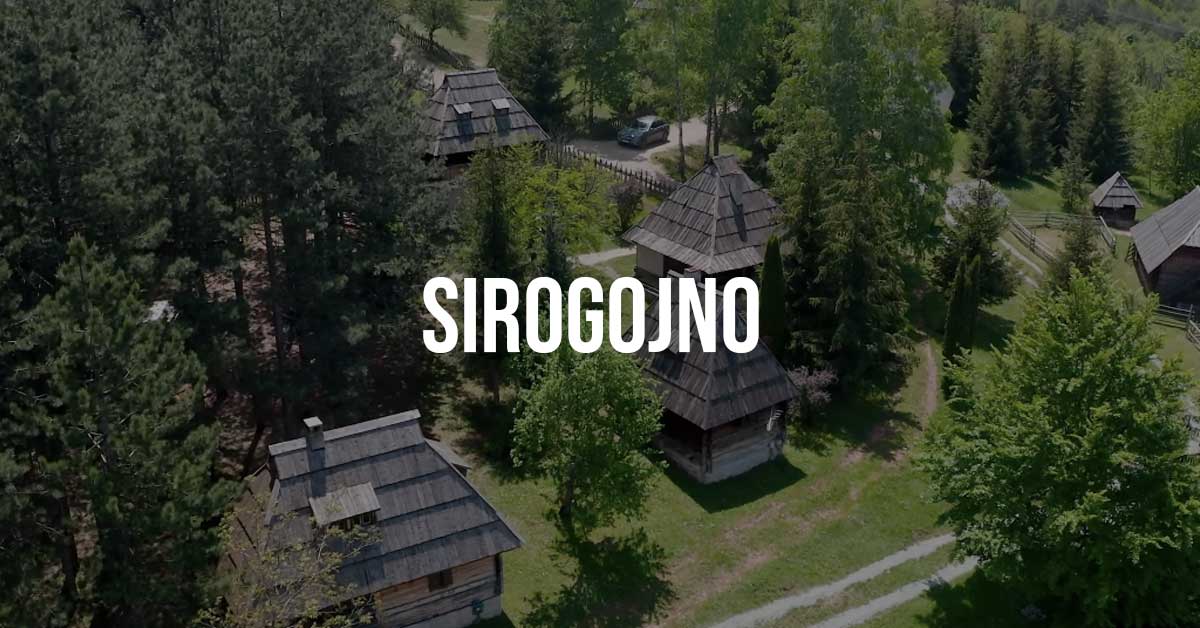
If Zlatibor has a true “heartbeat”, it’s Sirogojno. This is not one of those newly-built “ethno resorts” designed mainly for social media. Sirogojno is an authentic mountain village that has turned its real past into its greatest strength. You don’t come here just to sleep, take a selfie, and leave. You come to slow down, to walk between original log houses, to feel the smell of wood smoke and wool, and to understand why local people talk about this place with a special kind of warmth.
For many visitors, Sirogojno becomes the moment where Zlatibor stops being just a mountain with cafés and apartments, and starts feeling like a region with its own memory, rhythm, and character. That is exactly why it works so well as a day trip: it gives you something you cannot get in the main tourist center-a sense of how life here looked long before tourism arrived.
Table of Contents
Where Sirogojno Is and How to Reach It
Sirogojno lies on the quieter, eastern side of the Zlatibor plateau, roughly half an hour by car from the main Zlatibor town. The ride itself is part of the experience. As you leave the busy center behind, the road begins to curve through gently rising hills, meadows, and scattered farmhouses. With every kilometer, concrete and neon signs give way to wooden fences, haystacks, and views that look like they haven’t changed in decades.
Most travelers reach Sirogojno by car; the road is paved and straightforward, and navigation apps find it easily. If you don’t drive, local agencies on Zlatibor regularly organize excursions that combine Sirogojno with other attractions like Stopića Cave and Gostilje Waterfall. Taxis and private transfers are also an option, especially if you prefer flexibility over a fixed group schedule.
The moment you arrive, you notice the difference. There are no massive hotel blocks or loud bars, just a handful of houses, a calm road, and a line of stalls where woolen sweaters, socks and hats are displayed like a soft, colorful welcome.
For a complete visit plan (what you’ll see inside, how long the tour takes, opening hours, and what to wear), use this detailed guide to Stopića Cave.
The Open-Air Museum: Sirogojno’s Living Past
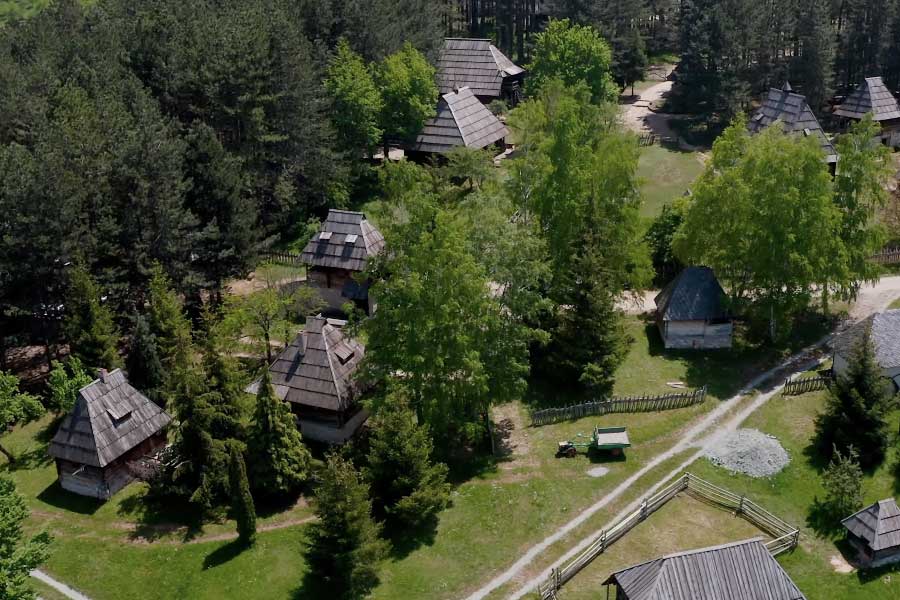
The centerpiece of Sirogojno is “Staro selo” – the Old Village open-air museum. It’s the only museum of its kind in Serbia, and it gathers original wooden buildings from the surrounding Zlatibor area into one coherent, carefully reconstructed settlement. Rather than preserving a single old house, the museum lets you walk through an entire mountain village as it once was.
The layout is simple yet striking. On a gently sloping hillside, paths connect clusters of log houses, each representing a household with all its necessary buildings: the main house, additional small rooms, barns, a dairy, a smokehouse, and sheds for tools and food storage. The architecture is modest, but precisely because of that it feels honest. These were not houses built to impress neighbors or tourists; they were built to endure cold winters, strong winds, and a life oriented around livestock and land.
Inside the main houses, you see the heart of traditional life: the open hearth in the central room. This is where food was cooked, where people warmed themselves, and where the family gathered in the evenings to talk through plans for planting, harvesting, and caring for animals. Heavy wooden chests, simple beds, woven rugs and tools on the walls tell a story without needing words. When you learn that some extended families included dozens of members, the number of outbuildings and the structure of each homestead suddenly feel very logical.
Unlike many museums where objects sit behind glass, here you move through spaces that were once used every day. You step over thresholds polished by footsteps, look at small windows that once framed the same hills, and you walk under roofs that have seen far more winters than you have.
A Village Church and Sense of Continuity
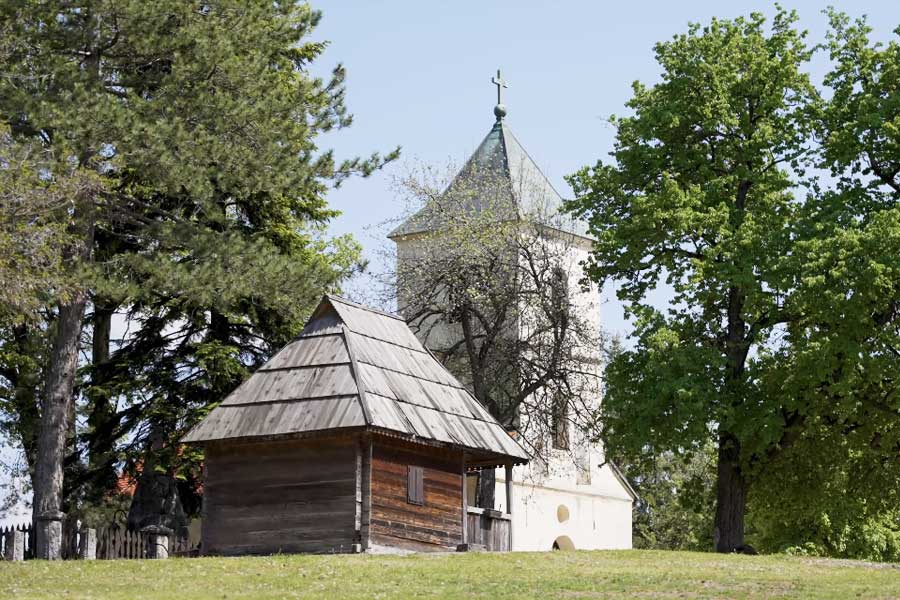
Beyond the museum complex, Sirogojno quietly reminds you that this is not just a reconstructed set, but a living place shaped by faith and routine. The Church of Saints Peter and Paul stands close by, protected as a cultural monument and considered the oldest preserved church in the Zlatibor area.
From the outside, it is simple—a small white church with a modest bell tower, sitting slightly above the surrounding houses. Yet in that simplicity lies its charm. This is not a grand cathedral, but a church built by villagers for villagers, scaled to the size of the community and the landscape.
Stepping inside, you see frescoes, icons, and wooden elements that speak of the era when it was built and the limited resources available. The atmosphere is quiet and humble, the kind that invites you to lower your voice and slow your steps even if you are not religious. Together with the open-air museum, the church completes the picture of a village whose story has not been entirely relegated to the past.
From Wool to World: The Sirogojno Sweater Story
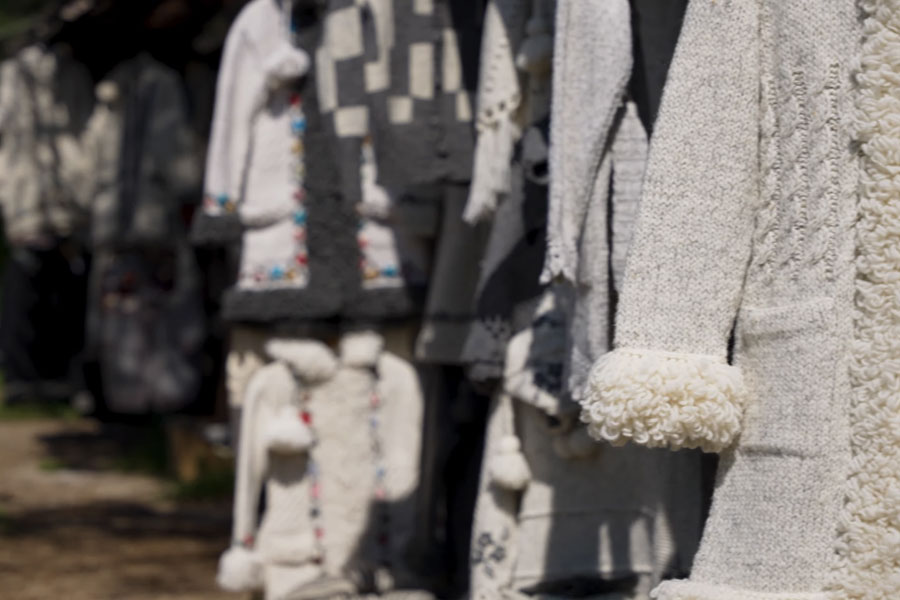
Sirogojno’s story doesn’t end with log houses and churches. In the second half of the 20th century, it gained a new identity thanks to its knitwear. Local women, already skilled in working with wool, began to organize and transform traditional patterns into designs suitable for wider markets. The result was the Sirogojno sweater—warm, durable, and visually distinctive, often decorated with motifs inspired by village life and nature.
Over time, these hand-knit pieces gained recognition beyond Yugoslavia, appearing in fashion shows and magazines and becoming quietly iconic. The name “Sirogojno” started to mean both the village and the clothing brand tied to it. Today, you can still find these products in dedicated stores and stalls around the village. Prices reflect the materials and handwork involved, but many visitors see a sweater or scarf as a long-lasting reminder of their time on Zlatibor.
Even if you don’t plan to buy anything, just watching the designs and feeling the textures can help you appreciate how a rural craft evolved into something internationally recognized, without losing its connection to the community.
Local Flavors: Eating in Sirogojno

After a couple of hours walking through the Old Village, you’ll feel why the inn within the museum complex is such a natural next stop. Designed in the same rustic style as the surrounding buildings, it serves as a bridge between the historic exhibits and modern-day comfort.
Menus here usually focus on simple, hearty mountain food: smoked meats, local cheeses, kajmak, pies made under a cast-iron lid, stewed dishes and homemade sweets. Portions tend to be generous, flavors straightforward, and ingredients often sourced from nearby farms. It’s the kind of meal that makes sense in a place where winters can be long and hard, and where food was traditionally both fuel and ritual. Pair your meal with a glass of plum rakija, the local spirit that is part drink, part tradition. Sitting in a creaking wooden room, with thick walls and small windows, a warm dish in front of you and a glass of rakija in your hand, the experience feels deeply rooted in the landscape you’ve just walked through.
Planning Your Visit: Time, Season and Pace
Most visitors find that two to three hours are enough for a relaxed tour of the Old Village, a brief visit to the church, and a look at the woolen goods. If you add lunch at the inn, your Sirogojno experience easily becomes half a day. For those who like to take photos or simply sit and soak it all in, stretching it to a full day never feels like a waste.
Sirogojno works in all seasons. Spring and early summer bring fresh grass, wildflowers and comfortable temperatures. Autumn covers the hills in muted gold and red, making the wooden houses blend beautifully into their surroundings. Winter offers perhaps the most dramatic scenes: snow on roofs, smoke rising from chimneys and the kind of crisp air that makes a hot meal taste even better. The only things you need to adjust are your clothing and your expectations about road conditions in deep winter.
Practicalities are straightforward. Comfortable shoes are essential; you’ll be walking on uneven ground, grass and sometimes muddy paths. Dressing in layers allows you to adapt to changes in temperature and wind. Entry to the museum is paid on the spot, at a price that most visitors find very reasonable given the scale and uniqueness of the experience. Meals and souvenirs vary in cost depending on what you choose, but basic options are still accessible to most travel budgets.
FAQ: Sirogojno Visitor Essentials
Is Sirogojno worth it if I’m only on Zlatibor for a short stay?
Yes. If you want to understand the region and not just see its commercial face, Sirogojno is one of the key stops. It gives you context—who lived here, how they survived, what they built and what they wore.
Is it suitable for children?
Compared to Western Europe, no. Drinks and entry are affordable, though premium venues with bottle service can be pricey. Budget 30-50 EUR for a good night including drinks and entry.
Do I need to book in advance?
Individual visitors usually don’t. If you’re coming with a larger group or want a guided tour, it’s a good idea to contact the museum beforehand.
How much will a visit cost me?
The museum ticket is modest, meals in the inn are fairly priced for a tourist destination, and handmade wool products range from affordable small items to more expensive sweaters and coats. You can tailor your spending easily.
Our Most Popular Tours To Sarajevo
We offer many tours that include a visit to Sarajevo and its most popular locations:
- Full Day tour from Sarajevo to Belgrade (Most Popular)
- Full Day tour from Sarajevo to Međugorije & Mostar
- Full Day Tour from Sarajevo to Travnik and Jajce
- Full-Day 5 Cities Tour from Sarajevo to Herzegovina (Mostar)
- Full day Tour from Sarajevo to Dubrovnik (Kotor or Split)
Don’t Hesitate To Say Hi!
Got any questions about our tours or the city? Don’t hesitate to contact us anytime for more info and booking.
Use the following phone number and email: