
If you’ve ever wondered how to get from Sarajevo to Mostar, then this blog is written just for you. Mostar is one of those places that must be on your list to visit if you’re traveling through Bosnia and Herzegovina. The city is nestled at the foot of the Neretva River, a river that flows through some of the most beautiful parts of the Balkans, and its Stari Most – a UNESCO World Heritage Site – is not just a structure but a symbol of coexistence among several cultures.
The distance between Sarajevo and Mostar is just 129 kilometers, and the journey will not take you more than two and a half hours. This means you can make a trip that you will remember forever, whether you decide on a classic train experience or something more dynamic. In this guide, we’ll cover everything you need to know about traveling from Sarajevo to Mostar – from transportation options to places you must visit.
Table of Contents
How to Travel from Sarajevo to Mostar
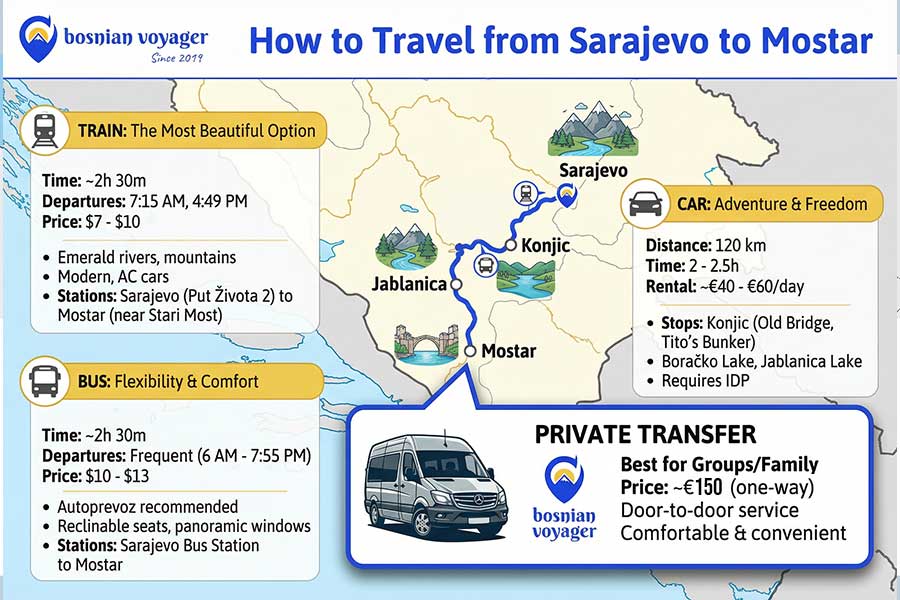
When it comes to traveling from Sarajevo to Mostar, you have four options: train, bus, car, or private transfer. Each has its advantages, and we’ll help you choose the best one for your situation.
Train from Sarajevo to Mostar – The Most Beautiful Option
When it comes to sightseeing before you reach Mostar, the train is undoubtedly the best option. The journey from Sarajevo to Mostar is considered one of the most beautiful train rides in Europe, and when you see the reasons, you’ll agree.
The train journey from Sarajevo to Mostar takes about two hours and thirty minutes. During the ride, you’ll see emerald rivers, small villages with traditional houses, and mountains that stretch to the horizon. The cars are modern with comfortable seats, spacious luggage storage, and air conditioning – which means you’ll be relaxed throughout the entire journey.
The train schedules are as follows:
Train 723: Departs from Sarajevo at 7:15 AM, arrives in Mostar at 9:10 AM
Train 721: Departs from Sarajevo at 4:49 PM, arrives in Mostar at 6:48 PM
The ticket price ranges from 7 to 10 dollars for second class, or up to 10 dollars for first class. If you know in advance that you’ll need a return ticket, you can get a 20 percent discount if you buy both directions at the same time.
You can purchase tickets on the official ŽFBiH website (Railways of the Federation of Bosnia and Herzegovina) or directly at the counter in Sarajevo. If you purchase online, you’ll need your passport and a copy of the confirmation email – forwarding it to your phone works perfectly.
Sarajevo Railway Station is located at Put Života 2, and you can easily reach it by tram line number 1 from the city center. Mostar Station is in the northern part of the city and just a 15-minute walk from Stari Most.
Bus from Sarajevo to Mostar – Flexibility and Comfort
The bus is also an excellent choice if you’re in a hurry or need more flexibility with departure times. Every day there are a dozen or more buses running this route, which means you have plenty of options when it comes to departure times.
The bus journey takes approximately two and a half hours, which is only slightly longer than the train, but the price is similar – between 10 and 13 dollars per ticket. It’s important to choose a good bus company, as not all buses are of equal quality. The recommendation is Autoprevoz, which is known for comfortable reclinable seats, large panoramic windows, an onboard bathroom, and friendly drivers.
The first bus leaves at 6 AM, and the last one at 7:55 PM. This means you can take a day trip – leave early in the morning, spend the entire day in Mostar, and return in the evening.
You can purchase tickets at the Sarajevo Bus Station, which is located near the railway station, or online via the GetByBus website. Sarajevo Bus Station has more than ten platforms, several cafés, and a small restaurant if you need something to eat before you leave.
Driving from Sarajevo to Mostar
If you love adventure and freedom, driving from Sarajevo to Mostar is an excellent choice. The distance is 120 kilometers, and the drive usually takes from two to two and a half hours, depending on traffic congestion and driving speed.
A good idea is to make a small detour and visit some places along the way. One of the most famous stops is Konjic, which is located roughly in the middle of the route. Here you can see the Old Stone Bridge, an incredibly beautiful Ottoman bridge structure built in 1682. If you have time, you can also visit the famous Tito’s Bunker – a secret shelter built during the Cold War as protection for Yugoslav leader Josip Broz Tito and 350 selected people in case of nuclear attack. The bunker is located 280 meters below Mount Zlatar, and tours through it are available upon request.
Between Konjic and Mostar is Boračko Lake, an emerald blue lake surrounded by mountains. It’s a perfect place to take a break from driving, and if you love nature, this lake is a must-see.
If you rent a car, the price is around 40 to 60 euros per day, and you’ll need an International Driving Permit (IDP) if you’re not from Bosnia and Herzegovina. The simplest way is to use RentalCars or a similar website that aggregates all car rental agencies.
Another scenic stop on the same corridor is Jablanica Lake, especially good for a quick viewpoint break or a longer kayaking plan on a warm day.
Private Transfer from Sarajevo to Mostar
If you’re with family or a group, a private transfer might be cheaper than renting a car. It costs around 150 euros for a one-way transfer from Sarajevo to Mostar, which is more affordable if you’re traveling with multiple people.
Read more here: Transfer from Sarajevo to Mostar
Attractions Along the Way from Sarajevo to Mostar
Before you reach Mostar, there are several places you must see. Here are the main stops along the way.
Počitelj – A Medieval Fortress
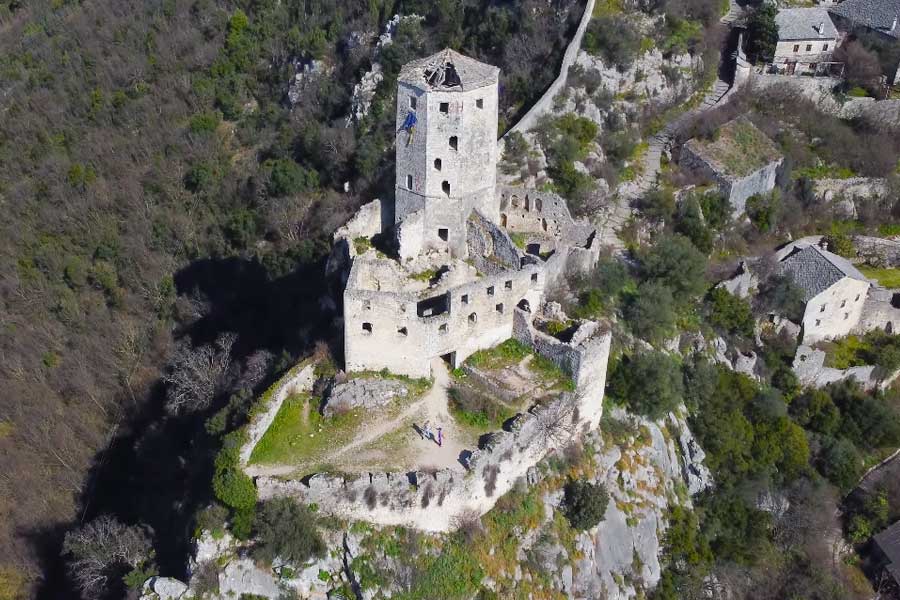
Počitelj is a small town nestled on a hill above the Neretva River, about 50 kilometers before you reach Mostar. This is one of the best-preserved medieval towns in Bosnia and Herzegovina.
Počitelj was conquered by the Ottomans in 1468, and during the Ottoman period, the town flourished as a trading center. The fortress was built between the fifteenth and eighteenth centuries with breaks in between. When you reach the top of the fortress, you’ll see a beautiful view of the Neretva River and the surrounding countryside.
The main attractions in Počitelj are Hadži-Alija’s Mosque from the 16th century – one of the finest examples of Ottoman architecture in Bosnia – Sahat-kula (Clock Tower) from the 17th century, and the old caravanserai where travelers and merchants came to rest. Entrance to the fortress is free, and it’s a great place to take photographs.
Attractions Near Mostar
Blagaj and Vrelo Bune is one of the most beautiful natural places in Herzegovina. Vrelo Bune is the source of the Buna River, which springs from beneath a massive cliff up to 200 meters high. The water is clear, turquoise in color, and cold – perfect for cooling off in the summer heat. The site is located just 12 kilometers southeast of Mostar.
As soon as you reach Blagaj, you’ll need to open your eyes wide. The Tekija – an old dervish lodge – sits right by the water, almost like a scene from a fairy tale. Legend has it that a dervish named Salih defeated a dragon that lived in a cave, and Herceg Stjepan built the tekija as thanks for saving his daughter. The climb is challenging, but the view you get from the top of the tekija takes your breath away.
Just 30 minutes from Mostar lies Međugorje, one of the world’s most visited pilgrimage destinations where millions of faithful travelers climb Apparition Hill to visit the site where the Virgin Mary is believed to have appeared to six local children in 1981, creating a deeply spiritual experience that complements the cultural richness of Mostar.
For travelers who love a mix of history and adrenaline, make time for the Fortica Skywalk, a free glass walkway and adventure park high above the city that combines war‑time viewpoints, hiking trails and breathtaking views over the Neretva valley.
Mostar – A City You Must Visit
Mostar is a city with a rich history, a strong spirit, and a wealth of cultural heritage. The city is located on the banks of the Neretva River, nestled at the foot of the Neretva mountains and surrounded by two souls – east and west.
Before you set out for Mostar, you need to know that the city suffered terrible war damage during the Bosnian War of 1992–1996. The city was divided into several parts, and Stari Most was severely damaged. But what Mostar has endured only shows its spirit of resilience. The city has been rebuilt and is now one of the most visited places in Bosnia and Herzegovina.
Stari Most – The Symbol of Mostar
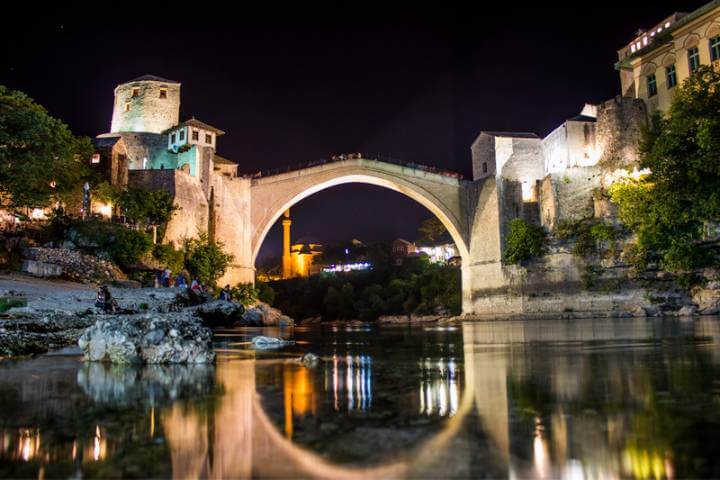
Stari Most is certainly the most famous attraction in Mostar. It was built in 1566 by order of Sultan Suleiman the Magnificent, and the architect was Mimar Hajrudin, a student of the famous architect Mimar Sinan. The bridge was built on the spot where an old wooden bridge had previously stood, which was unstable and dangerous.
Stari Most is humpbacked, 4 meters wide, and 30 meters long. With its height of 24 meters, it dominates the Neretva River. When you see it for the first time, you’ll understand why it’s a masterpiece – simple, elegant, and perfect.
During the Bosnian War, particularly during the Bosniak-Croat conflict in 1993, Stari Most was bombarded and destroyed by the HVO (Croatian Defense Council) on November 9, 1993. The destruction of the bridge was symbolic – it was not just a bridge, but a symbol of coexistence and the culture that had lived beneath it for centuries.
However, after the war, Stari Most was rebuilt. Reconstruction began in 1995, and the bridge was reopened on July 23, 2004. The reconstruction was made possible through international aid, and most of the stones were extracted from the Neretva River, which allowed the bridge to be maintained as close to the original as possible.
Stari Most is now a UNESCO World Heritage Site, and it doesn’t look like it was ever damaged. Visiting the bridge is a must – you need to see it before you leave Mostar.
In addition to the bridge structure itself, Stari Most is also famous for the jumps into the Neretva River. Traditional jumpers have been jumping off the bridge for several centuries, and now it’s also an official competition held every summer. The most famous is the Red Bull Cliff Diving World Series, which has been held in Mostar for several years now. Divers from around the world come to jump off the bridge into the river below, which is a spectacular display of skill and daring.
Kujundžiluk – The Old Bazaar of Mostar
Kujundžiluk is the oldest street in Mostar, and it’s located right next to Stari Most. It’s an old bazaar dating back to the 16th century, and it feels like you’re stepping into a time machine when you walk down the cobblestone streets.
Kujundžiluk was the center of trade during the Ottoman period. The name comes from kujundžija – craftsmen who worked with copper and coins. The street was home to more than 500 shops during its heyday, and although a fire in 1861 caused significant damage, the street survived.
As you walk down Kujundžiluk, you’ll see small shops selling traditional handicrafts: copper items, pottery, textiles, jewelry, and more. Restaurants and cafés offer a pleasant atmosphere, with terraces where you can sit and watch the Neretva River flow below you.
Souvenir prices can be a bit higher, but when you buy something handmade by a local craftsman, you know it’s unique and authentic.
Koski Mehmed-pasha Mosque
This mosque was built in 1617 and is located just a few minutes’ walk from Stari Most. It’s not large, but its beauty lies in the details – especially if you climb the minaret.
The minaret is 20 meters high, and there are several spiral stairs that wind up a narrow staircase. The climb is challenging, but when you reach the top, you’ll see one of the most beautiful views of Mostar – Stari Most, the Neretva River, and the entire old town – all stretching beneath you. It’s one of the most photographed spots in Mostar on social media.
Vrelo Bune and Blagaj
As I mentioned earlier, Vrelo Bune is one of the largest water springs in Europe. The water springs from beneath a massive cliff, creating the Buna River, which is famous for its incredibly turquoise color.
Tekija Blagaj is a traditional dervish residence, and its silence and tranquility make it a perfect place for contemplation. Whether you’re spiritual or just need some peace, Blagaj is perfect for you.
Once you decide how to travel, the next step is choosing the right area to sleep, and this in‑depth where to stay in Mostar guide will help you compare Old Town guesthouses, modern hotels, and quieter neighborhoods around the city.
Dining Options Along the Route from Sarajevo to Mostar
Restaurants in Konjic
Restoran Orahovica (Konjic area) is perfectly positioned if traveling between Mostar and Sarajevo or vice versa, located roughly one hour’s drive from both cities. This restaurant offers excellent value and is specifically designed as a rest stop for travelers. The traditional menu features local specialties including grilled meats, fresh river fish, and traditional Bosnian dishes. A typical meal costs 10-16 euros. The restaurant’s riverside location and travel-friendly positioning make it ideal for a lunch break during your journey.
Restoran Han (Konjic) is highly rated for European and Eastern European cuisine, with particular emphasis on traditional Bosnian dishes. The restaurant offers comfortable dining with views of the historic Old Stone Bridge. Traditional specialties include grilled meats, fresh trout from the Neretva River, and traditional Bosnian preparations. Prices are reasonable for the quality offered at 12-18 euros per main dish.
Janjetina in Jablanica – A Must-Try Local Specialty
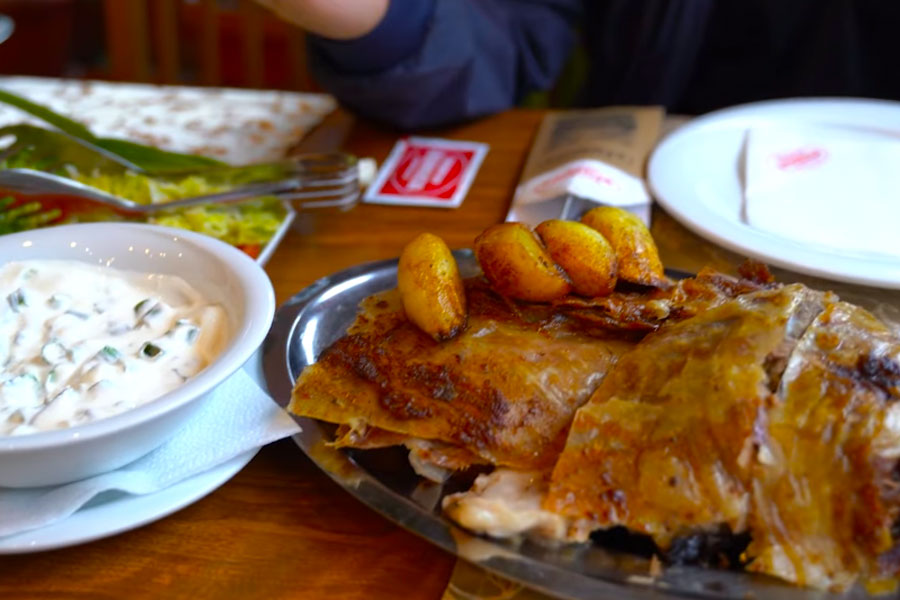
Jablanica, a small town located about halfway between Mostar and Sarajevo, is famous throughout Bosnia for one particular culinary treasure: janjetina, or roasted lamb. This is not just any meal – it’s a Bosnian institution, especially in this region. The tradition of roasting lamb on open fires has been passed down through generations, and the restaurants in Jablanica have perfected this art.
Janjetina is typically roasted slowly over charcoal fires, resulting in meat that is incredibly tender, succulent, and infused with smoky flavors. It’s usually served with fresh bread, onions, and a side of kajmak (a dairy product similar to clotted cream) and ajvar (a roasted red pepper spread). The dish is hearty and satisfying, and a portion typically costs between 12 and 18 euros.
Restoran Zdrava Voda (Jablanica; +387 36 842 101) has been serving traditional roasted lamb since 1967, making it one of the oldest and most respected establishments in the region. This traditionally-styled restaurant features a beautiful view of the Neretva River and the historic bridge. The restaurant’s specialty is janjetina sa ražnja (lamb roasted on traditional open fire spits), prepared with meticulous attention to texture and flavor. The lamb arrives hot, sliced fresh before you, and served with roasted potatoes and fresh tomato slices. Prices range from 12 to 18 euros per kilogram of lamb, with meals for two typically costing 24-40 euros depending on portion size. The establishment attracts international visitors from Italy, Korea, Germany, Arabia, and across Europe, testament to the excellence of their preparation.
Restoran Kod Gojka (Restoran Lovački Dom, Jablanica) is a legendary establishment that has operated continuously for over 53 years, including throughout the 1990s war in Bosnia. This restaurant became famous when American journalist Brett Martin wrote about it in GQ Magazine, describing the experience of receiving a kilogram of perfectly roasted lamb with roasted potatoes and blood-red tomato slices. The restaurant operates in a beautiful garden setting where you can watch the traditional five-spit roasting process. Prices are comparable to other Jablanica establishments at 12-18 euros per kilogram.
Lamb House (Jablanica) is a newer gastronomic destination that has quickly gained recognition for serving not only traditional janjetina but also various Arabic specialties and premium selections. The restaurant features halal-certified lamb and offers family-style dining for those wanting to sample multiple preparations. Prices are slightly higher due to the premium positioning and variety offered.
When stopping in Jablanica for lamb, the universal recommendation is to arrive hungry, order a full kilogram (which typically serves two people generously), and enjoy the succulent, tender meat that represents decades of culinary tradition. The lamb’s tenderness results from the specific preparation process – the animals rest for one to two days after slaughter, allowing the meat to tenderize without becoming tough. The cooking involves gentle heat from open fires, requiring skill to achieve the perfect balance of cooking the meat through while maintaining its moisture.
Lakeside Dining at Boračko Lake
The few restaurants around Boračko Lake specialize in fresh fish, particularly local trout. A fish dish with vegetables and bread typically costs between 10 and 18 euros. The prices are slightly higher than in regular towns due to the location, but the experience of dining with views of the emerald lake justifies the cost.
Where to Eat in Mostar
Mostar has an incredible culinary scene. Traditional Bosnian cuisine is present throughout the city, and restaurants offer authentic flavors that have stood the test of time.
Konoba Taurus is famous for its meat specialties – especially beef roasted on an open fire. The menu is extensive, and the portions are generous. Prices are reasonable – between 12 and 35 Bosnian marks per dish.
Nacionalni Restoran Tima-Irma is known for its ćevapi – a traditional dish of ground meat – and other grilled specialties. The restaurant has been around for many years and has earned a reputation as the best place for authentic Bosnian food.
Restoran Šadrvan offers a combination of traditional Bosnian dishes with modern presentation. Specialties include begova čorba (traditional soup) and sarma (rolled grape leaves). The view of Stari Most from the terrace is breathtaking.
You should also try local specialties such as ćevapi – ground meat grilled over an open fire, burek – a pastry with meat or cheese filling, potato or meat pie, ajvar – a traditional red pepper spread, and local cheese and kajmak from the surrounding mountains.
If you want specific places instead of just dish recommendations, have a look at our curated list of the best restaurants in Mostar covering traditional eateries and top spots with bridge views.
Tips for Traveling from Sarajevo to Mostar
Mostar is most beautiful in spring (April-May) and fall (September-October). Summer can be very hot – temperatures can reach 40 degrees Celsius.
What to bring: water, sunscreen, comfortable shoes for hiking and stone ruins, and a camera for photos. Most people in Mostar speak English, especially those involved in tourism. But learning a few words in Croatian and Bosnian is nice – people appreciate the effort.
Bosnia uses the Bosnian Mark (KM). ATMs are available throughout the city, and most places accept cards. However, in smaller places, you may need cash.
For travelers combining Bosnia and Herzegovina with the Croatian coast, this detailed Split to Mostar travel guide shows exactly how to reach Herzegovina by bus, train, rental car, or private transfer before continuing onward to Sarajevo: Travel From Split to Mostar.
FAQ – Frequently Asked Questions
How long does it take to travel from Sarajevo to Mostar?
The journey from Sarajevo to Mostar usually takes two to two and a half hours, depending on weather conditions and traffic volume. The train is usually slightly longer than the bus – about two hours and 40 minutes – but it’s a much more beautiful experience.
What should I see when I’m in Mostar?
Must-see: Stari Most, Kujundžiluk (old bazaar), Koski Mehmed-pasha Mosque, and Vrelo Bune in Blagaj. If you have time, also visit Počitelj on the way from Sarajevo.
Can I make a day trip from Sarajevo to Mostar and back?
Absolutely! If you’re traveling by train, you can take the 7:15 AM train from Sarajevo that arrives in Mostar at 9:10 AM, spend the entire day there, and then return on the 5:09 PM train from Mostar that arrives in Sarajevo at 7:04 PM.
Where should I eat in Mostar?
Recommendations: Konoba Taurus for meat, Nacionalni Restoran Tima-Irma for ćevapi, and Restoran Sadrvan for a combination of traditional and modern cuisine with a view of the bridge.
Our Most Popular Tours To Sarajevo
We offer many tours that include a visit to Sarajevo and its most popular locations:
- Full Day tour from Sarajevo to Belgrade (Most Popular)
- Full Day tour from Sarajevo to Međugorije & Mostar
- Full Day Tour from Sarajevo to Travnik and Jajce
- Full-Day 5 Cities Tour from Sarajevo to Herzegovina (Mostar)
- Full day Tour from Sarajevo to Dubrovnik (Kotor or Split)
Don’t Hesitate To Say Hi!
Got any questions about our tours or the city? Don’t hesitate to contact us anytime for more info and booking.
Use the following phone number and email: