
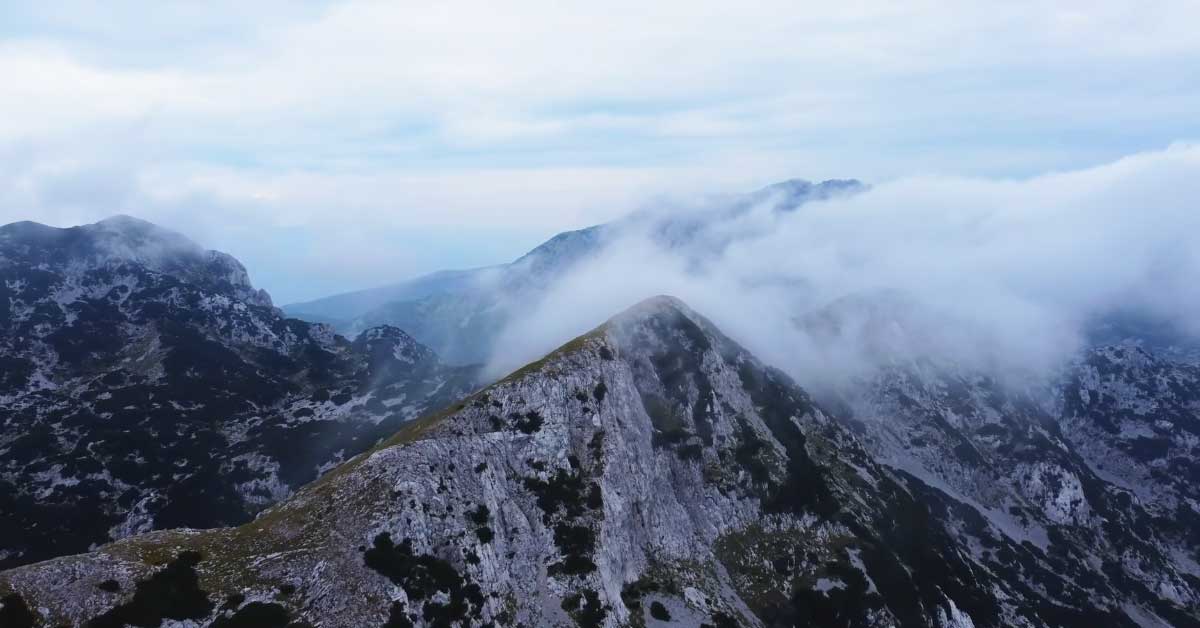
Imagine a landscape so rugged and untamed that it earned the nickname “Herzegovinian Himalayas,” a place where eleven limestone peaks pierce the sky above 2,000 meters and ancient forests hide valleys carved by Ice Age glaciers. Prenj Mountain is not just a destination; it is a challenge and a sanctuary located at the heart of the Dinaric Alps in Bosnia and Herzegovina. Rising dramatically between the emerald Neretva River cities of Konjic, Jablanica, and Mostar, Prenj remains one of Europe’s last true wildernesses. Its stark white dolomite cliffs contrast sharply with lush green valleys like Tisovica, creating a visual drama that leaves hikers breathless and photographers spellbound.
For the adventurous traveler, Prenj offers more than just scenic views. It is a journey into a world of extremes, from the sun-drenched Mediterranean air climbing up its southern slopes to the biting continental winds guarding its highest summit, Zelena Glava. Here, you walk paths once used by tobacco smugglers and Austro-Hungarian soldiers, now transformed into some of the most spectacular hiking trails in the Balkans. It is a place where endemic species like the black salamander hide in the karst shadows and wild horses roam free on the high plateaus.
Table of Contents
The Majestic Geography and History of Prenj Mountain
Prenj Mountain is a geological masterpiece, a massive limestone and dolomite barrier that defines the landscape of northern Herzegovina. Its name is believed to derive from Perun, the supreme deity of Slavic mythology, fitting for a mountain that commands storms and skies with such authority. The massif spans roughly 600 square kilometers, acting as a climatic wall that separates the warm Mediterranean influence of the south from the harsh continental climate of the north. This clash of weather systems has sculpted a unique environment where snow can linger into summer, yet Mediterranean flora thrives in the lower valleys.
Historically, Prenj has always been a fortress of nature, but it also bears the scars of human conflict. During the 1992-1995 war in Bosnia and Herzegovina, the mountain served as a strategic frontline. While heavy combat took place on its slopes, the post-war years have seen a remarkable transformation. Demining efforts have cleared the main hiking routes, and mountain huts like Jezerce and Vrutak have been restored, turning former military zones back into havens for hikers. Today, the only battles fought here are personal ones against gravity and fatigue on the steep ascents to peaks like Otiš and Lupoglav.
The mountain’s geology is characterized by typical karst formations: deep sinkholes, sharp ridges, and a notable scarcity of surface water. Unlike the lush, river-rich mountains of central Bosnia, Prenj is dry and thirsty, swallowing rain into subterranean channels that feed the Neretva below. This dryness adds to the challenge of exploring it; carrying sufficient water is not just a recommendation, it is a survival rule. Yet, in valleys like Tisovica, formed by ancient glaciers, you find a surprising softness, green meadows stretching for kilometers, framed by jagged peaks that look like the teeth of a sleeping giant.
The Flora and Fauna of Prenj Mountain
While Prenj is famous for its stark, rocky summits, its slopes are teeming with life that has adapted to this challenging environment. The mountain is a botanical treasure trove, hosting endemic species that can be found nowhere else on earth. One of the most significant is the Munika pine (Pinus heldreichii), an ancient tree species that clings to the limestone crags, often twisting into fantastical shapes due to the wind and snow. These forests are some of the best-preserved in Europe, creating a prehistoric atmosphere in valleys like Tisovica. In the spring and early summer, the high meadows burst into color with rare wildflowers, including the exquisite Prenj gentian and various species of edelweiss, which are strictly protected.
The fauna of Prenj is equally impressive and elusive. The rugged terrain provides a perfect sanctuary for the Balkan chamois (Rupicapra balcanica), a symbol of the mountain’s wild spirit. These agile climbers can often be spotted on the vertical cliffs of Lupoglav and Otiš, watching hikers from a safe distance. The dense forests on the lower slopes are home to brown bears, wolves, and wild boars, although sightings are rare as these animals tend to avoid human contact.
Birdwatchers will find Prenj a paradise, with golden eagles soaring on the thermals above the peaks and rock partridges nesting among the stones. This rich biodiversity adds a layer of wonder to every hike, reminding visitors that Prenj is a living, breathing ecosystem worth protecting.
Exploring the Peaks and Valleys of Prenj Mountain
The crown jewel of Prenj Mountain is Zelena Glava (Green Head), standing at 2,115 meters (previously measured at 2,155m). Climbing it is the ultimate goal for most visitors, but it is not a walk in the park. The final ascent requires scrambling up a secured cable route (via ferrata) that tests both nerve and fitness. However, the view from the top is unrivaled, a 360-degree panorama encompassing the entire Dinaric chain, from Maglić and Volujak in the east to Čvrsnica in the west. Just beside it stands Otiš, a twin peak that offers equally stunning vistas and contains a legendary ice cave that retains snow year-round.
But Prenj is not only about the summits. The Tisovica valley is often cited as one of the most beautiful high-altitude valleys in the Balkans. Accessible by 4×4 vehicles from Konjic, Tisovica stretches for 5 kilometers at an altitude of 1,300 meters, surrounded by ancient Bosnian pine forests (Pinus heldreichii). It is a place of profound silence, perfect for camping or gentle hiking if the high peaks seem too daunting. Another gem is the valley of Bijela, the starting point for many ascents from the Konjic side. The trail here winds through dense beech forests before breaking out onto the rocky plateaus, offering a gradual transition from lush greenery to the stark, moon-like surface of the high karst.
For those interested in unique wildlife, Prenj is the home of the “Prenj salamander” (Salamandra atra prenjensis), a rare subspecies of the alpine salamander that is entirely black and gives birth to live young, an adaptation to the harsh, water-scarce environment. Spotting one after a summer rain is a badge of honor for naturalists. The mountain is also a sanctuary for chamois, which can often be seen navigating the vertical cliff faces of Cetina peak with impossible grace.
Trails and Access Points for Prenj Mountain
Accessing Prenj Mountain requires planning, as the massif is vast and trails start from very different sides. The most popular and accessible starting point for tourists is Rujište, a mountain resort located about 25 kilometers north of Mostar. Rujište lies at 1,050 meters and is easily reached by car on an asphalt road. From here, a well-marked trail leads to the mountain lodge “Bijele Vode” (White Waters), a relatively moderate hike of about 2 hours that offers a taste of Prenj without the extreme difficulty of the high peaks. This route is part of the Via Dinarica White Trail and is suitable for reasonably fit hikers.
For the more ambitious aiming for Zelena Glava, the approach from the north (Konjic side) via the Tisovica valley is often preferred because it starts higher up, reducing the elevation gain. However, reaching Tisovica requires a robust off-road vehicle to navigate the rough macadam road. Alternatively, the route from the valley of Konjička Bijela is a classic mountaineering test because it’s long, steep, and strenuous, requiring a full day or an overnight stay at the Jezerce mountain hut.
Another spectacular but demanding route starts from the Jablanica side, ascending through the steep slopes towards the peak of Cetina. This area is wilder and less frequented, offering solitude for those who seek it. Regardless of the route, navigation skills are essential. While main trails are marked with the red-and-white Knafelc circles, fog can descend rapidly on Prenj, turning the limestone labyrinth into a dangerous trap. GPS devices or reliable maps, along with hiring a certified local guide, are strongly recommended for anyone venturing above the tree line.
Accommodation and Logistics near Prenj Mountain
Staying on Prenj Mountain itself is an experience in rugged simplicity. The mountain huts (planinarski dom) are the primary shelter for multi-day hikers. The Jezerce hut is strategically located in the heart of the massif and serves as a base camp for summit pushes. It is maintained by volunteers and offers basic bunk beds; you usually need to bring your own sleeping bag and food. The “Vrutak” hut near Zelena Glava is a small bivouac shelter, offering emergency protection but little comfort.
For tourists who prefer more comfort, the base towns are the best option. Rujište offers the “Snježna Kuća” (Snow House) hotel and private mountain cabins, providing a cozy, alpine atmosphere with restaurants serving hearty local dishes like polenta and goulash. Konjic, located at the northern foot of the mountain, has a wide range of hotels, hostels, and riverside apartments along the Neretva. It is a vibrant town famous for its woodcarving heritage and the Tito’s Bunker museum.
Jablanica, to the west, is famous for its roasted lamb (janjetina) restaurants, a culinary institution in Bosnia. Stopping for a lunch of spit-roasted lamb after a long hike on Prenj is a tradition for many mountaineers. Mostar, only an hour’s drive away, offers the full touristic package with its Old Bridge and wide array of luxury and budget accommodations. When packing for Prenj, remember the “three layers” rule: the weather changes instantly. Even in July, temperatures on the peaks can drop near freezing, while the valleys bake in the sun. Carry at least 3-4 liters of water per person per day, as springs are rare and often dry up in summer.
FAQ: Common Questions on Prenj Mountain
Is hiking Prenj Mountain safe for beginners?
Hiking the high peaks of Prenj is generally not recommended for absolute beginners without a guide due to the rugged terrain, lack of water, and rapid weather changes. However, lower trails like the one from Rujište to Bijele Vode are safe for fit beginners with proper hiking gear.
Do I need a permit to hike on Prenj Mountain?
No official permit is required for individual hikers, but if you plan to stay in mountain huts like Jezerce, it is polite and often necessary to contact the local mountaineering club in Konjic or Mostar in advance to check availability and key access.
Are there landmines on Prenj Mountain?
While significant demining has occurred, some remote areas of Prenj still carry a risk of unexploded ordnance from the 1990s war. It is crucial to stick strictly to marked trails and well-trodden paths; never wander off-trail into overgrown areas or ruins.
What is the best time of year to visit Prenj Mountain?
The best time for hiking the high peaks is from late June to October. Before June, snow can still block the higher passes, making hiking dangerous without winter equipment.
Is there cell phone coverage on Prenj Mountain?
Cell phone coverage is patchy; it is generally available on the peaks and ridges facing the towns, but deep valleys like Tisovica often have no signal.
Our Most Popular Tours To Sarajevo
We offer many tours that include a visit to Sarajevo and its most popular locations:
- Full Day tour from Sarajevo to Belgrade (Most Popular)
- Full Day tour from Sarajevo to Međugorije & Mostar
- Full Day Tour from Sarajevo to Travnik and Jajce
- Full-Day 5 Cities Tour from Sarajevo to Herzegovina (Mostar)
- Full day Tour from Sarajevo to Dubrovnik (Kotor or Split)
Don’t Hesitate To Say Hi!
Got any questions about our tours or the city? Don’t hesitate to contact us anytime for more info and booking.
Use the following phone number and email: