
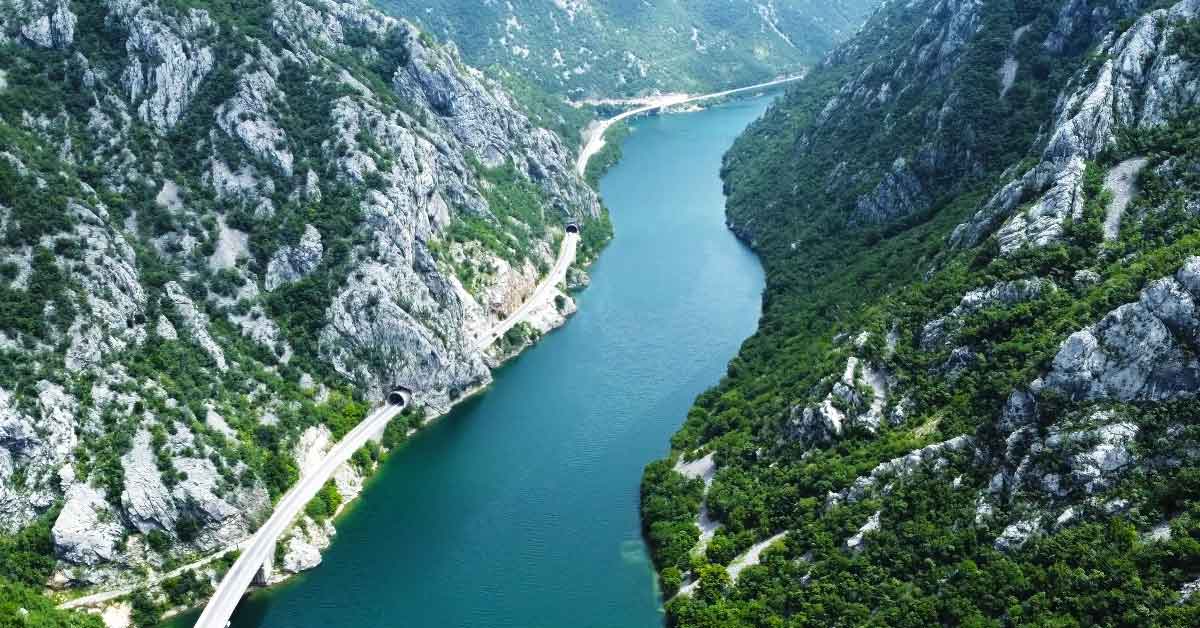
The Neretva River represents one of Europe’s most remarkable and least understood waterways – a 230-kilometer artery flowing from Bosnia’s remote Dinaric Alps through Herzegovina’s dramatic limestone canyons before emptying into the Adriatic Sea. Known as one of the world’s coldest major rivers (7-8°C even in summer), the Neretva sustains pristine ecosystems, legendary fly fishing grounds, and thrilling whitewater sections that have transformed it into a premier European adventure destination. Yet the river’s significance extends far beyond recreation – for nearly 2,000 years, the Neretva has shaped settlement patterns, commerce, agriculture, and culture throughout Herzegovina, from the Ottoman period through contemporary times.
What distinguishes the Neretva is its dramatic geography. The river carves some of the Balkans’ most spectacular canyons, with limestone walls rising 600-800 meters from the water’s surface. The river’s upper course flows through virtually uninhabited terrain – gorges so remote that few Bosnian tourists ever witness them. The middle section transitions through populated areas including the historic junction near Mostar where the Neretva flows alongside the iconic Stari Most. The lower valley opens into agricultural flatlands, the Neretva Delta – called “Croatia’s California” – where citrus orchards, strawberry fields, and traditional farming continue centuries-old practices.
This comprehensive guide explores the Neretva River’s geological significance, historical evolution, adventure opportunities, and cultural heritage. It serves as essential context for understanding Herzegovina’s relationship with water, power, commerce, and natural beauty – the river that has shaped the region’s destiny.
Table of Contents
The Neretva River Course: Geography of a Living Legend
The Neretva’s name is believed to derive from Celtic origins – “Nera Etwa” – meaning “the Flowing Divinity,” a poetic testament to ancient peoples’ reverence for this remarkable waterway. The river springs at approximately 1,227 meters elevation on Lebršnik and Zelengora mountains in Bosnia’s high Dinaric Alps, near the remote village of Jabuka. The river springs at approximately 1,227 meters elevation on Lebršnik and Zelengora mountains in Bosnia’s high Dinaric Alps, near the remote village of Jabuka. Just to the west of this source region, the imposing Prenj Mountain massif rises to 2,156 meters, its dramatic karst peaks and challenging alpine routes like Zelena Glava drawing experienced mountaineers to explore some of Herzegovina’s most spectacular high-altitude terrain. Unlike typical rivers born from numerous tributaries, the Neretva emerges almost fully formed from karst springs, suggesting massive underground aquifer systems feeding water from vast mountain watersheds.
Unlike typical rivers born from numerous tributaries, the Neretva emerges almost fully formed from karst springs, suggesting massive underground aquifer systems feeding water from vast mountain watersheds.
The Upper Neretva (Gornja Neretva) extends 90 kilometers from the source southward to Konjic, flowing through uninhabited gorges and rapids of staggering beauty. The water remains almost crystalline – Class I purity by international standards – because the limestone geology acts as natural filtration. Temperatures remain extraordinarily cold throughout the year; even midsummer brings 7-8°C water, explained by the river’s origin from deep subterranean sources and its rapid descent through shaded canyons. This upper section features Grade IV rapids interspersed with calmer stretches, creating challenging conditions for serious kayakers and rafting enthusiasts.
The Middle Neretva transitions from rugged wilderness to inhabited landscape after Konjic. Near Glavatičevo village, the river calms to Grade II-II+ difficulty – navigable for recreational paddlers and ideal for fishing. The canyon becomes the primary attraction: sheer limestone walls rise dramatically, with occasional waterfalls visible from the water. The river widens and deepens, creating emerald pools reflecting cliffs above. This section extends approximately 50 kilometers through some of Herzegovina’s most photographed landscape.
The Lower Neretva, below Mostar, transitions further as the river enters the warmer Mediterranean climate zone. The canyon gradually opens, agricultural development increases, and the landscape becomes gentler. The river receives tributaries including the famous Buna spring (emerging dramatically at Blagaj Tekija), creating increased water volume. By the time the Neretva reaches the delta near Metković in Croatia, it has transformed into a slow, meandering river suitable for boat exploration and delta bird-watching.
The total watershed encompasses approximately 11,798 square kilometers – one of southeastern Europe’s most significant freshwater systems. Four major hydroelectric dams – each over 15 meters height – provide Bosnia and Herzegovina with electricity, though controversially altering river ecology and flow patterns. These dams created artificial lakes including Jablaničko Lake, which paradoxically attracts tourists though representing ecological transformation from wild river to managed resource.
Historical Significance – The Neretva River as Civilizational Artery
The Neretva’s history extends back to ancient times. Archaeological evidence suggests Illyrian settlements flourished along the river during the Iron Age, approximately 2,000-2,500 years ago. Stone fortifications and massive burial mounds – “gomile” – constructed by Illyrians remain visible in delta regions, testament to this river’s strategic importance for early Mediterranean civilizations. The Romans recognized the Neretva’s value as transport corridor and resource source, maintaining settlements and fortifications controlling the valley.
During the Ottoman period (1465-1878), the Neretva valley experienced significant economic transformation. Ottoman administrators recognized the river’s agricultural potential and implemented systematic development. Traditional crops included mulberries (for silk production), rice, olives, and various fruits. Water-powered mills dotted the river, providing mechanical power for grinding grain and processing agricultural products. Ottoman cadastral records reveal sophisticated land management systems adapted to karst hydrology – understanding which lands could be irrigated and which required dry-farming techniques.
The lower valley particularly flourished. The Ottoman period witnessed development of intensive fisheries in the delta region, with fish ponds constructed to harvest eels and other species. Traditional fishing practices coexisted with agricultural production, creating layered economic systems. The village of Metković emerged as administrative and commercial center, positioned at the junction of mountain trade routes and maritime commerce.
The Venetian period (brief, 1685-1797) brought Italian agricultural techniques and intensified exploitation. Venetians – drawing from similar successes in Italy – established large-scale fishponds and commercial agriculture. The Austro-Hungarian period (1878-1918) witnessed infrastructure modernization: construction of railway, port facilities at Metković, and controversial river regulation projects designed to reduce flooding but which devastated traditional fisheries.
Throughout the 20th century, the Neretva remained central to Bosnian and Herzegovinian identity and economy. Communist-era Yugoslavia invested heavily in hydroelectric development, constructing dams and power plants transforming the wild river into managed resource. The 1990s war caused significant environmental damage through bombardment of bridges and infrastructure, though the Neretva itself continued flowing, indifferent to human conflict. Contemporary periods witness renewed interest in the river – tourism development seeking to balance economic opportunity with environmental preservation..
Neretva River Canyon: Geological Marvel and Visual Wonder
The Neretva Canyon represents one of Europe’s most spectacular examples of karst river gorge development. Karst topography – characterized by limestone dissolution, cave systems, and distinctive drainage patterns – dominates the Neretva region. The river’s slightly acidic water continuously dissolves limestone, widening channels and deepening gorges over geological timescales. The process creates dramatic vertical walls – sometimes reaching 600-800 meters from water surface to plateau rim.
The canyon’s appearance changes dramatically by season and time of day. Spring brings peak water flow – snowmelt from mountains combines with heavy rainfall, creating powerful currents and occasional flooding. The emerald color intensifies with high water volume. Summer features lower water levels and clearer conditions, ideal for sightseeing and photography but less dramatic for whitewater enthusiasts. Autumn brings golden light reflecting off limestone walls, creating unparalleled photography opportunities. Winter occasionally brings icy conditions in upper sections, though lower reaches remain navigable.
The geological history is legible in the canyon walls. Exposed limestone layers reveal marine origins – these rocks formed millions of years ago on ancient seafloors before tectonic uplift raised them to current elevations. Occasional darker layers indicate periods when rivers transported sediment from distant sources. The limestone’s distinctive pale color – sometimes brilliant white, sometimes golden in specific light – results from pure calcium carbonate composition with minimal iron or other minerals.
The canyon provides habitat for specialized ecosystems. Raptors – particularly griffon vultures and golden eagles – soar on thermals created by temperature differential between canyon walls and upper atmosphere. Riverside vegetation includes dense riparian forests with willows and poplars adapted to periodic flooding. Aquatic life includes endemic fish species found nowhere else, adapted over generations to the Neretva’s unique conditions.
Adventure Tourism on the Neretva River: Rafting and Kayaking
The Neretva has emerged as one of Europe’s premier whitewater destinations, attracting adventure tourists from across the continent. The river offers experiences for all skill levels, from beginner-friendly leisure paddles to expert-only extreme sections.
Recreational Rafting (Glavatičevo to Konjic, 23km, 5 hours, 40-60 euros) represents the signature Neretva experience. Tours depart Glavatičevo village around 10:00 AM, with preliminary safety briefings and equipment distribution. Participants receive helmets, life jackets, and paddles. Guides – typically experienced locals – navigate inflatable rafts through Grade II-II+ rapids with dramatic names like “Stup” and “Velovršak,” passing under waterfalls and through narrow canyon sections. The Međeđak waterfall – cascading directly into the river – provides dramatic scenery. Lunch typically occurs at midpoint beaches accessible only by water. Return journey includes slower-paced floats allowing photography and swimming. Families with children ages 8+ participate safely; guides emphasize safety as paramount.
Kayaking and Canoeing offer more personal experiences. Two-person canoes require coordination and technique, ideal for couples. Single kayaks provide independent navigation, suitable for intermediate paddlers. Sections from Glavatičevo downstream provide manageable difficulty with beautiful scenery. Upper sections from Konjic require serious whitewater skills – Grade IV rapids demand constant scouting for hazards like fallen trees creating “strainers” (trees spanning water that can trap boats). Professional kayak guides lead expeditions, providing instruction and safety oversight.
Seasonal Variations significantly impact rafting conditions. Spring (March-June) features maximum water flow – rivers run faster, rapids become more powerful, and conditions become more serious (Grade III-IV). Summer (June-September) brings lower water levels, easier conditions, and warmer temperatures ideal for swimming and sightseeing. Autumn (September-November) offers excellent conditions – moderate water flow, clear skies, and perfect temperatures. Winter is limited to lower sections; upper canyons become inaccessible.
Fly Fishing on the Neretva River: Exclusive Trout Waters
The Neretva represents one of Europe’s most celebrated fly fishing destinations, attracting serious anglers from worldwide who consider the river sacred ground. The upper Neretva’s crystal-clear, cold waters sustain populations of endemic fish species found nowhere else on Earth.
Glavatičevo, the primary fishing village, sits amid stunning canyon scenery at approximately 400 meters elevation. The distinctive species is Softmouth Trout (Salmo obtusirostris) – an endemic Balkan fish found only in Neretva and nearby river systems. Legendary in fly fishing circles, softmouth trout represent the ultimate challenge for skilled anglers – selective feeders requiring precise presentations and understanding of their behavior. The species evolved in Neretva’s unique conditions, adapting to cold, clear water and sophisticated insect fauna.
Other species include Marble Trout (Salmo marmoratus, “Marmorata”), Zubatak (Salmo dentex), Brown Trout, Grayling, and Rainbow Trout. The river’s cold temperatures favor trout health – cold water holds more oxygen and supports robust populations. The limestone geology creates ideal habitat: clear sight-lines for visual predators, stable substrate for aquatic insects, and excellent current patterns for feeding.
Fishing Regulations are strictly enforced. Daily licenses cost 10-50 euros depending on location and season. Fly-only restrictions govern most fishing zones (“revir”), with single-fly regulations limiting to one hook. The premier revir at Glavatičevo extends approximately 4 kilometers with daily catch limits of 2-3 fish (sometimes catch-and-release requirements). These restrictions preserve populations and maintain the water’s reputation.
Prime Seasons are May 15 to July 1 and September 1 to October 30. Spring offers increasing water temperatures and active insect hatches; autumn provides crisp air, low water making fish visible, and ideal temperatures. Grayling fishing (40-60cm specimens) occurs year-round – remarkable among European rivers. The river’s reputation draws serious anglers willing to travel internationally for the opportunity.
Fishing Accommodations reflect the river’s exclusive positioning. Villa Neretva at Glavatičevo offers family-run hospitality featuring simple but authentic accommodations, homemade meals, and direct fishing access. Guide services include local expertise – understanding seasonal patterns, insect hatches, and specialized techniques. Some operators offer multi-day fishing trips combining whitewater rafting with fishing opportunities.
Agricultural Heritage of the Neretva River Delta: Croatia’s California
The lower Neretva valley – particularly the delta region between Ploče, Metković, and Opuzen in Croatian territory – represents Mediterranean agriculture at its finest. The fertile alluvial soils, combined with the river’s irrigation water and Mediterranean climate, create ideal conditions for specialized crops that have made the region legendary.
Citrus Production dominates contemporary agriculture. Mandarins, oranges, lemons, and grapefruit flourish in the valley’s warm, sunny climate. Annual mandarin harvest reaches approximately 30,000 tonnes, earning the valley comparison to California’s Central Valley. The famous Neretva mandarins – distinctive for sweetness and flavor – command premium prices in European markets. Traditional harvest occurs November-December, though recent climate changes have extended seasons. Elaborate packing facilities employ thousands of seasonal workers sorting, grading, and preparing fruit for European distribution.
Strawberries and Other Produce: Beyond citrus, the valley grows strawberries (famous for early season production), watermelons, tomatoes, and various vegetables. The combination of irrigation water, lengthy growing season, and intensive farming techniques makes the Neretva valley extraordinarily productive per hectare.
Traditional Practices persist despite modernization. Family-owned orchards, many spanning generations, continue time-honored cultivation methods alongside contemporary mechanization. The landscape reflects centuries of agricultural landscape management – terracing, irrigation channels, traditional stone walls – visible evidence of sustained human relationship with the land.
Historical Evolution: Ottoman-era development established the basic agricultural framework. Mulberry cultivation for silk production was particularly significant – the valley supplied sericulture operations throughout Ottoman territories. Wet rice cultivation provided additional crops. The Austro-Hungarian period brought modernization but also environmental transformation – river regulation projects reduced flooding but disrupted natural ecosystem functions that had sustained fisheries and agriculture simultaneously.
Dining and Hospitality Along the Neretva River
Traditional restaurants throughout the Neretva valley emphasize authentic regional cuisine featuring river products and local agricultural specialties.
Villa Neretva (Glavatičevo) operates as family-run hotel-restaurant emphasizing homemade cooking reflecting Neretva Valley traditions. Meals feature local fish (particularly trout), freshwater eels, indigenous recipes passed through generations. Accommodations remain simple but clean; the experience emphasizes immersion in fishing culture rather than comfort amenities. Prices typically 12-18 euros per meal.
Traditional Konobas throughout Konjic and river valley villages serve authentic Bosnian cuisine with Neretva specialties. Brudet – slow-cooked fish stew with herbs and spices – represents the iconic river dish. Eels, freshwater fish, and grilled trout appear on most menus. Local taverns operating from ancient stone houses create atmospheric dining. Meals cost 10-18 euros. Evening mosquitoes can be problematic near riverside locations; afternoon dining often preferable.
Metković Area Restaurants include Bistro Metković (known for generous mixed meat/fish platters), Konoba Lanterna, and various family establishments emphasizing local products. The lower valley’s Mediterranean climate influences cuisine – citrus-infused dishes, lighter preparations reflecting Croatian coastal traditions. Prices 12-20 euros for main courses.
Seasonal Produce Markets: Valley farmers’ markets feature seasonal abundance – strawberries in late May/June, mandarins in October-December, watermelons in high summer. These markets provide authentic encounter with agricultural reality and opportunity for visitors to purchase fresh produce directly from producers.
Practical Considerations for Neretva River Experiences
Accessing the River: The Neretva is accessible from multiple entry points. Konjic serves as the primary rafting hub (90km from Sarajevo, 50km from Mostar). Glavatičevo village provides fishing access. Vehicle rental from Mostar, Sarajevo, or Konjic enables independent exploration, though guided tours simplify logistics.
Seasonal Weather: Spring brings 15-22°C temperatures, high water flow, occasional rain. Summer reaches 25-35°C with lower water and calm conditions ideal for families. Autumn provides 15-25°C temperatures, clear skies, and perfect conditions. Winter (December-March) brings cool 5-15°C temperatures; upper canyons become inaccessible.
Safety Considerations: Rafting on the Neretva requires respect for water conditions. Professional guides emphasize safety protocols – proper equipment use, swimming competency, understanding of rapid locations. All participants wear helmets and life jackets. Upper sections (Grade IV) require serious whitewater experience. Fly fishing demands caution around slippery rocks and cold water conditions.
Equipment and Preparation: For rafting – bring swimwear, towel, change clothes, water shoes for slippery rocks, sunscreen, and reusable water bottle. Fishing requires fly rod, waders, specialized equipment (available through local guides). Hiking canyon rims demands sturdy boots, sun protection, ample water.
Booking and Guides: Numerous guides operate throughout the region. Local knowledge regarding seasonal conditions, fish behavior, and safe routes proves invaluable. Guide services typically cost 40-80 euros per person depending on group size and duration.
Currency and Costs: All prices in euros. Rafting 40-60 euros, fishing guides 60-100 euros daily, meals 10-20 euros, accommodations 30-50 euros per night in basic lodgings.
FAQ about Neretva River
What makes the Neretva special compared to other European rivers?
It is Europe’s largest karst river, exceptionally cold and clear, flowing through one of the continent’s most dramatic limestone canyons. Its mix of wild whitewater, pristine ecosystems, and endemic trout makes it unique for both adventure and nature tourism.
What are the best months for rafting, fishing, and general visiting?
Rafting is best from May to October: spring has stronger rapids, summer is calmer and family‑friendly, autumn is a great balance of conditions and fewer crowds. Prime fly‑fishing seasons are mid‑May to early July and September–October.
Is the Neretva suitable for families with children?
Yes, the standard Glavatičevo–Konjic rafting section is appropriate for children around 8+ with life jackets and professional guides. Younger kids can still enjoy calmer river spots, picnics, and short walks along the banks.
Can I visit both the Neretva River and Stari Most in Mostar in one day?
Absolutely: you can explore Mostar’s Old Town and Stari Most in the morning, then drive to Konjic or Glavatičevo for an afternoon on the river. Many visitors base themselves in Mostar and treat Neretva activities as easy half‑ or full‑day trips.
Roughly how much does a rafting trip on the Neretva cost and what’s included?
Expect around 40–60 euros per person for a standard day trip, including guide, equipment, and time on the river. Transport to the starting point and meals are often extra, so plan an additional 20–30 euros for food and local transfers.
Why is the water so emerald‑green, and is it safe to swim or drink?
The color comes from dissolved limestone and minerals that refract light in vivid green tones. The water is extremely clean (karst‑filtered) and safe for swimming, and locals often drink directly from springs and tributaries.
Our Most Popular Tours To Sarajevo
We offer many tours that include a visit to Sarajevo and its most popular locations:
- Full Day tour from Sarajevo to Belgrade (Most Popular)
- Full Day tour from Sarajevo to Međugorije & Mostar
- Full Day Tour from Sarajevo to Travnik and Jajce
- Full-Day 5 Cities Tour from Sarajevo to Herzegovina (Mostar)
- Full day Tour from Sarajevo to Dubrovnik (Kotor or Split)
Don’t Hesitate To Say Hi!
Got any questions about our tours or the city? Don’t hesitate to contact us anytime for more info and booking.
Use the following phone number and email: