

If Republic Square is Belgrade’s living room, National Museum Belgrade is the bookshelf that explains the house you have just walked into. Standing proudly behind the equestrian statue on the square, the museum gathers millennia of artifacts and artworks under one copper‑domed roof. It is the place where a first‑time visitor can understand Serbia in a single afternoon – and where locals come back again and again because the story deepens every time.
Table of Contents
National Museum Belgrade as a City Landmark
National Museum Belgrade occupies a monumental early‑20th‑century building that originally housed an important bank. Its neo‑Renaissance façade, paired columns and green domes give the square a formal rhythm, while the wide staircases and generous halls inside feel made for public life. Over the decades the building has survived war damage, post‑war repairs and finally a major modern restoration, yet it has kept its character. Walking in from the busy square, you feel the contrast between the noise outside and the calm, measured space inside – a reminder of Belgrade’s resilience as much as its taste for culture.
Inside National Museum Belgrade, Floor by Floor
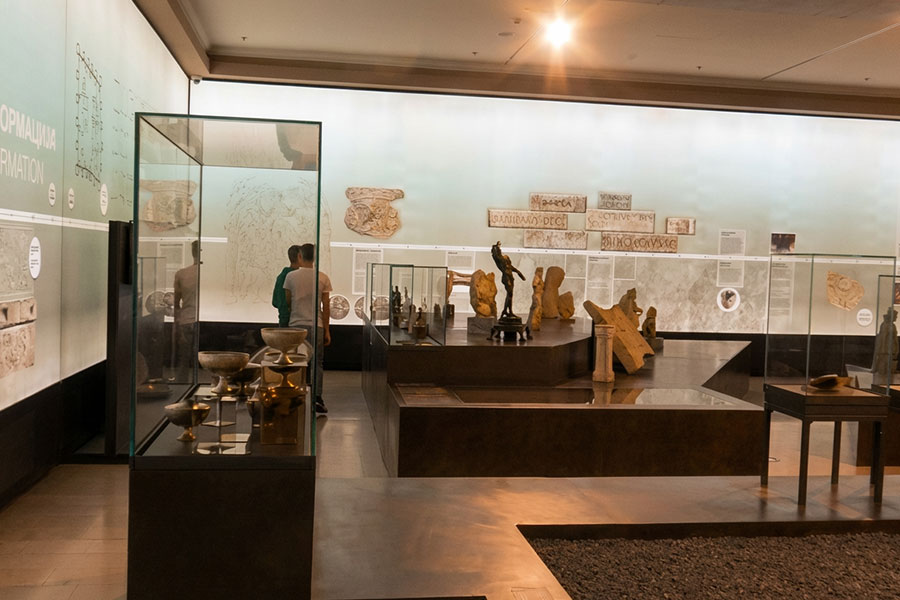
The museum is organized like a time spiral that leads you from deep prehistory towards the present. The lower levels introduce stone tools, Neolithic figurines and objects from early river‑based cultures that developed along the Danube and its tributaries. These rooms quietly establish a timeline: people have lived, traded and created here for thousands of years.
Moving forward, the antiquity section brings Roman Singidunum and neighboring towns to life through coins, glass, inscriptions and everyday objects. The medieval galleries gradually replace stone and bronze with icons, manuscripts, reliquaries and church art. They show how faith, power and image intertwined in the Balkans under Byzantine, Serbian and later Ottoman influence. Higher floors cover the early modern and modern periods, with portraits, landscapes, historical scenes and avant‑garde experiments. By the time you reach 19th‑ and 20th‑century painting, you are standing in front of works that wrestle openly with identity, politics and modern life.
Signature Highlights of National Museum Belgrade

Among thousands of objects, a few highlights help anchor a first visit. The Neolithic collection, especially pieces from Vinča and other Danube cultures, reveals abstract forms that look surprisingly contemporary despite their age. Roman artifacts, including sculptures and finely crafted jewelry, pull the ancient city beneath Belgrade’s feet into focus. Medieval manuscripts, gospel books and icons illuminate the world of monasteries and royal courts, where text and image were both sacred and political tools.
In the more recent sections, 19th‑century portraits and historical scenes show how Serbian society saw itself as it gained autonomy and later independence, while 20th‑century works move through realism, impressionism and modernism into more experimental styles. The pleasure is in the juxtapositions: a prehistoric figurine near a Roman portrait, a gilded cross only a few steps away from a modern painting questioning tradition.
Planning Your Time in National Museum Belgrade
How long to stay depends on your style of travel. With roughly one hour, you can follow a backbone route: a quick pass through prehistory and Roman rooms, a slower look at medieval treasures, and then a focused visit to the last two galleries of modern art. In about two hours, there is time to read key labels, pause by a handful of favorite works and still exit without feeling rushed.
If you have three hours or more, National Museum Belgrade becomes a place to truly linger. You can loop back to certain periods, take a short break in the atrium, and allow yourself to be drawn towards lesser‑known objects, not just the obvious stars. This is when the museum shifts from “what to see” to “what you personally notice,” and that difference can make the visit memorable.
How National Museum Belgrade Explains Republic Square
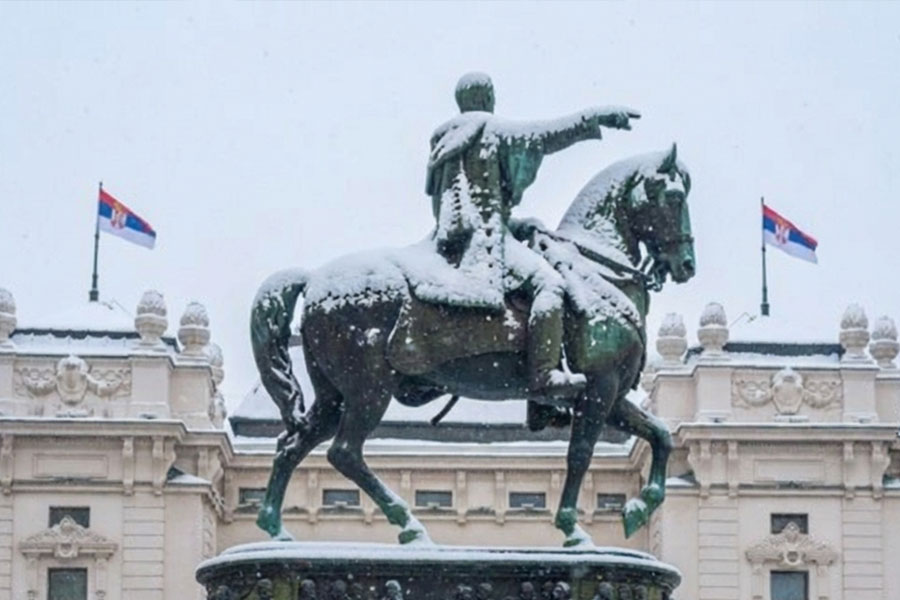
Stepping back out onto Republic Square after your visit, the scene feels different. The statue of Prince Mihailo, the National Theatre on one side, the crowds meeting “by the horse” – all of these gain extra layers once you have walked through the timelines inside the museum. You are more aware that beneath the paving stones lie Roman remains, that the medieval city once clustered around the fortress, and that the surrounding façades speak of 19th‑century urban ambition.
In that sense, National Museum Belgrade is not a break from the city, but a lens for it. Once you have seen how history, art and politics are presented inside, you begin to read the streets and buildings of Belgrade with a different eye.
Practical Tips for Visiting National Museum Belgrade
National Museum Belgrade stands directly on Republic Square, which makes it one of the easiest cultural institutions to reach in the city. Most tram, bus and trolleybus lines that serve the center stop within a few minutes’ walk, and Knez Mihailova Street begins just beside it. Because of its central location, it fits naturally into almost any walking itinerary through downtown.
Tickets are very reasonably priced compared to museums of similar size in Western Europe, and there are discounts for students, seniors and groups. The museum is generally open every day except certain holidays; opening hours can vary slightly, so checking the official website before you go is a good idea. Photography is usually allowed without flash, which lets you capture details for later, though some temporary exhibitions may have stricter rules.
Inside, signage and explanations are available in Serbian and English, and the chronological layout makes it hard to get lost. There is a cloakroom, restrooms on multiple levels, and a small bookshop and café area, so you can comfortably spend several hours if you choose.
For a different, more “everyday Serbia” angle in the same central zone, continue to the Ethnographic Museum Belgrade at Studentski Trg.
Why National Museum Belgrade Works for First‑Timers and Regulars
For first‑time visitors to Belgrade, National Museum Belgrade offers something rare: a structured, well‑told overview of the region that does not feel dry. Instead of flooding you with dates, it shows how everyday objects, religious art and modern paintings fit together into one long story. You can walk in with almost no prior knowledge and walk out with a clearer sense of where you are in Europe and the Balkans.
For those who live in the city or return often, the museum works on a different level. You can focus on a single floor or theme each visit – medieval art one day, modern painting another – and gradually build a personal relationship with specific works. Rotating exhibitions, small changes in layout and simply the passage of time all ensure that repeat visits rarely feel repetitive.
Suggested Routes Through National Museum Belgrade
Different interests call for different routes. History‑focused visitors might start with prehistory and antiquity, slow down substantially in the medieval rooms and finish with 19th‑century historical painting, seeing how ideas of the nation and state were visually constructed.
Art‑lovers could invert that logic: begin on the upper floors among 19th‑ and 20th‑century canvases, then trace key visual ideas backwards into icons and manuscripts, ending among Neolithic forms that suddenly seem like distant cousins of modern sculpture. Visitors who care most about understanding Belgrade itself can concentrate on Roman artifacts from Singidunum, selected medieval pieces linked to the city, and the 19th‑century works that coincide with the building of Republic Square.
Why National Museum Belgrade Matters Today
Great city museums do more than preserve beautiful objects—they help a place understand itself honestly. National Museum Belgrade does this by refusing to present a single, flat narrative. Instead, it allows multiple beginnings and turning points to coexist: river cultures and imperial legions, monasteries and courts, revolutions and quiet studio work. The story it tells is complex, sometimes contradictory, but always grounded in real things made and used by real people.
You leave not with the feeling that you have “finished” Serbia, but that you now know how to keep looking. In a city as layered as Belgrade, that may be the most valuable souvenir you can take.
If you want to explore more than just the National Museum, this complete Belgrade museums guide covers the top 5 cultural spots in the city, from Tesla’s inventions and Tito’s mausoleum to contemporary art and military history.
FAQ About National Museum Belgrade
Is National Museum Belgrade suitable for children?
Yes. Older children and teenagers, in particular, enjoy the archaeological sections, medieval armor and vivid paintings. Younger kids might prefer a shorter route focused on visually striking objects.
Do I need to book tickets for National Museum Belgrade in advance?
Individual visitors usually do not need to book National Museum Belgrade tickets ahead of time. On weekends, holidays, or during major temporary exhibitions, it’s wise to check the official website for any time‑slot or capacity rules.
Are there guided tours or audio guides in National Museum Belgrade?
National Museum Belgrade regularly offers guided tours and sometimes audio or digital guides in multiple languages. Current schedules and available languages are listed at the information desk and on the museum’s official site.
How does National Museum Belgrade fit into a day in central Belgrade?
Because National Museum Belgrade stands on Republic Square, it’s easy to combine with a walk along Knez Mihailova Street, a coffee on the square, and an afternoon or sunset visit to Kalemegdan and Belgrade Fortress.
Our Most Popular Tours To Sarajevo
We offer many tours that include a visit to Sarajevo and its most popular locations:
- Full Day tour from Sarajevo to Belgrade (Most Popular)
- Full Day tour from Sarajevo to Međugorije & Mostar
- Full Day Tour from Sarajevo to Travnik and Jajce
- Full-Day 5 Cities Tour from Sarajevo to Herzegovina (Mostar)
- Full day Tour from Sarajevo to Dubrovnik (Kotor or Split)
Don’t Hesitate To Say Hi!
Got any questions about our tours or the city? Don’t hesitate to contact us anytime for more info and booking.
Use the following phone number and email: