
Let’s be honest right from the start – when you think of Belgrade, museums probably aren’t your first association.
You’re probably thinking of splavs (river clubs), coffee on Strahinjića Bana street, the traffic jam on the Gazela bridge, or the food in Skadarlija. And that’s totally fine. Belgrade is a city of entertainment. But if you think museums in Belgrade are just dusty rooms where strict ladies shush you and where you stare at Neolithic pottery shards that mean absolutely nothing to you – you are dead wrong.
Belgrade hides some of the wildest, most bizarre, and most valuable stories in the Balkans.
Here, we have the ashes of the man who invented the 20th century (literally). We have the grave of a president of a country that no longer exists, yet is still visited by thousands of people from all over the world. We have art worth millions of euros sitting right under your nose for the price of a coffee. We have parts of an “invisible” plane that crashed into the Serbian mud.
In this text, I won’t write dry encyclopedic data you can find on Wikipedia in three seconds. Nobody cares about that. I will write about what exactly you get by visiting these museums, why they matter for your general knowledge (and Instagram feed), and how to organize yourself to see everything without going bankrupt.
Get ready, this is your ultimate guide to museums in Belgrade.
Table of Contents
1. The National Museum: The Heavyweight on Republic Square
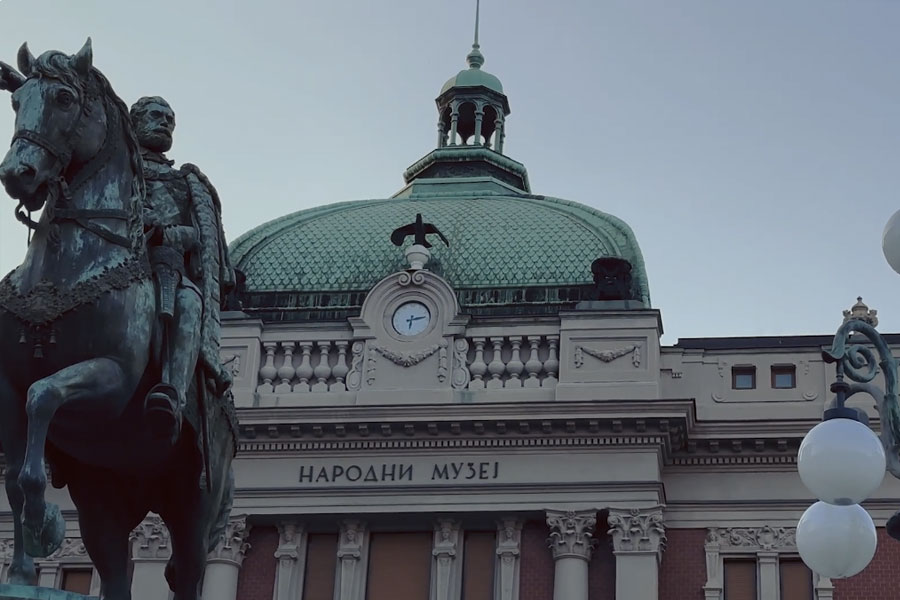
We waited for it for a long time. It was closed for a full 15 years. Generations grew up thinking that the big building on Republic Square was just an expensive facade for scaffolding and beer advertisements. But since it reopened in 2018, the National Museum has become a place you simply cannot skip, even if you aren’t an “art type.”
What awaits you inside?
This is a time machine. Literally. You start from the ground floor where archaeology awaits – from mammoths to Roman helmets that look like they were forged yesterday. But the real “treat” that foreigners come for is the Miroslav Gospel.
It’s not just an “old book.” It is the oldest surviving Serbian Cyrillic manuscript from the 12th century. UNESCO included it in the “Memory of the World” register – think of it as the “Mona Lisa” of Serbian literacy. Seeing it in person gives you a special kind of chills (note: the original is displayed only during special periods for preservation, but a hologram and perfect facsimiles are always there).
On the floors above, Serbian art from the 18th and 19th centuries awaits (Paja Jovanović, Uroš Predić), but also a serious collection of foreign art. Yes, in Belgrade you can see works by Picasso, Van Gogh, Renoir, and Mondrian. They are standing right there, in front of your nose. No bulletproof glass (mostly), no crowds like in the Louvre. Just you and the art.
Logistics and Useful Info
- Location: Republic Square 1a (Trg Republike 1a) – literally the center of the center.
- Opening Hours:
- Tue, Wed, Fri, Sun: 10:00 – 18:00
- Thu, Sat: 12:00 – 20:00
- Closed on Mondays.
- Ticket Price: Approx. 300 RSD for the permanent exhibition, approx. 600 RSD if there is a thematic exhibition.
- Insider Tip: Entrance to the permanent exhibition is free on Sundays. If you want to impress a date with culture while saving the budget for dinner afterward – Sunday is your day.
2. Nikola Tesla Museum: Meeting the Genius (and Electricity)
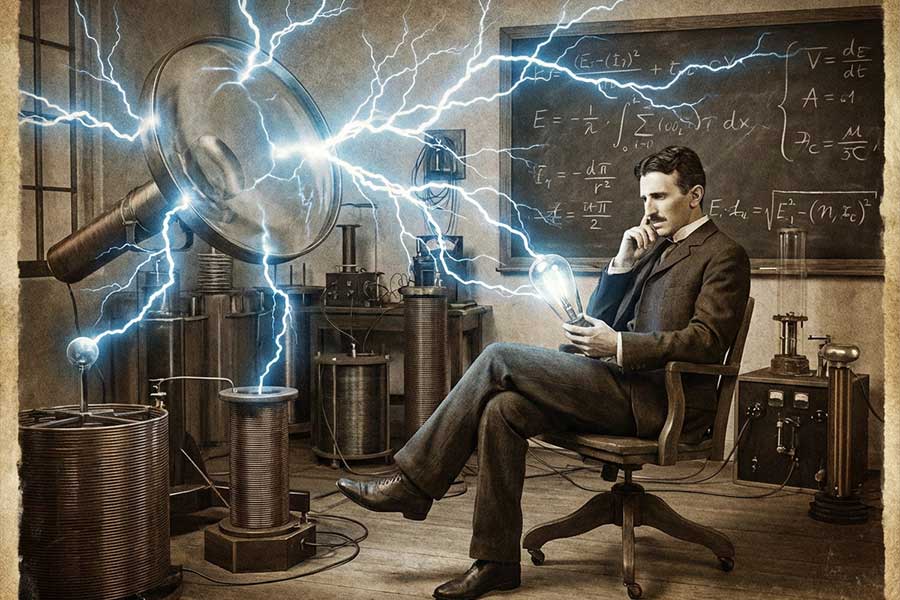
This is not a classic museum where you just walk and look at display cases. This is an interactive pilgrimage. Nikola Tesla is probably the most famous Serb in world history, and his museum in Belgrade is unique on the planet for one morbid but fascinating fact: it is the only museum that keeps his personal inheritance and the urn with his ashes.
Yes, the ashes of the greatest mind of the 20th century are in a gold sphere in one of the rooms of this museum.
Why is this experience different?
Because they let you participate. Every tour starts with a short film (great for resting your feet), and then the real show begins. The curators turn on a 500,000-volt Tesla coil.
They give you a neon tube to hold, and while lightning flashes across the room, that tube in your hand starts to glow – completely wirelessly. It feels like being a Jedi. There is also the famous remote-controlled boat with which Tesla shocked people in New York more than 100 years ago. You will also see his personal suit (he was incredibly elegant and tall), gloves, and letters.
Important Note for 2025: There have long been rumors about moving the museum to a larger location (the old power plant in Dorćol or Belgrade Waterfront), because this villa on Krunska Street has become too tight for thousands of tourists. Be sure to check before you go if they have moved, but while they are in Krunska – crowds are inevitable, but worth the wait.
Logistics and Useful Info
- Location: Krunska 51 (Vračar).
- Opening Hours:
- Monday: 10:00 – 18:00
- Tuesday – Sunday: 10:00 – 20:00 (They are open almost every day due to huge demand).
- Ticket Price: 400 RSD for visitors from Serbia/Region, 800 RSD for foreign tourists (English tour).
- Tip: Definitely arrive early or book a slot online because the tours are guided and have limited capacity. You can’t just walk in and wander alone.
3. Museum of Yugoslavia (House of Flowers): Yugonostalgia in Dedinje
Maybe you’re too young to remember Yugoslavia. Maybe you don’t care about politics. But you must see this complex to understand the mentality of the people in this region. The museum is not just one building; it is a complex: The 25th of May Museum, the Old Museum, and the House of Flowers.
What’s the “catch” here?
Batons (Relays). There are thousands of them. For decades, people ran across the entire country, through rain and sun, carrying wooden, metal, and plastic batons as a birthday gift for Josip Broz Tito. Some are true works of art, some are bizarre (like a baton in the shape of a power line or a miner’s lamp). It is a testimony to a time and a cult of personality that will never happen again in Europe.
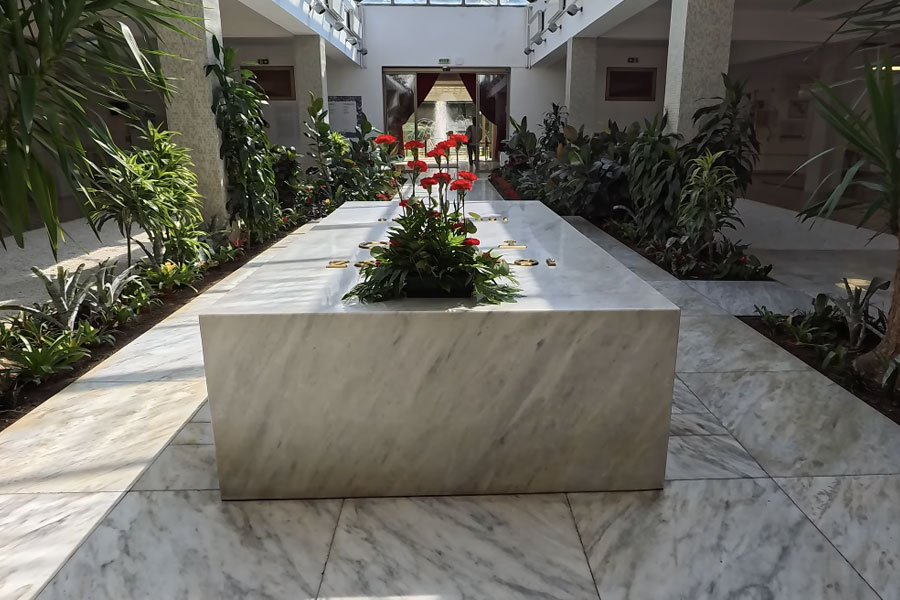
And of course – The Grave of Josip Broz Tito. It is located in the House of Flowers, which is actually a winter garden turned into a mausoleum. This is one of the most visited tourist spots in the region. You will see tourists from China and America, but also “Yugonostalgics” from Bosnia, Croatia, and Slovenia coming to pay their respects. The view of Belgrade from the plateau in front of the museum is phenomenal.
Logistics and Useful Info
Free Entry: Every first Thursday of the month, entrance is free for everyone.
Location: Mihaila Mike Jankovića 6 (Dedinje, near the Partizan stadium).
Opening Hours:
Tuesday – Sunday: 10:00 – 18:00
Closed on Mondays.
Ticket Price: Approx. 600 RSD for adults, 300 RSD for students.
4. Museum of Contemporary Art (MSUB): The Spaceship at Ušće
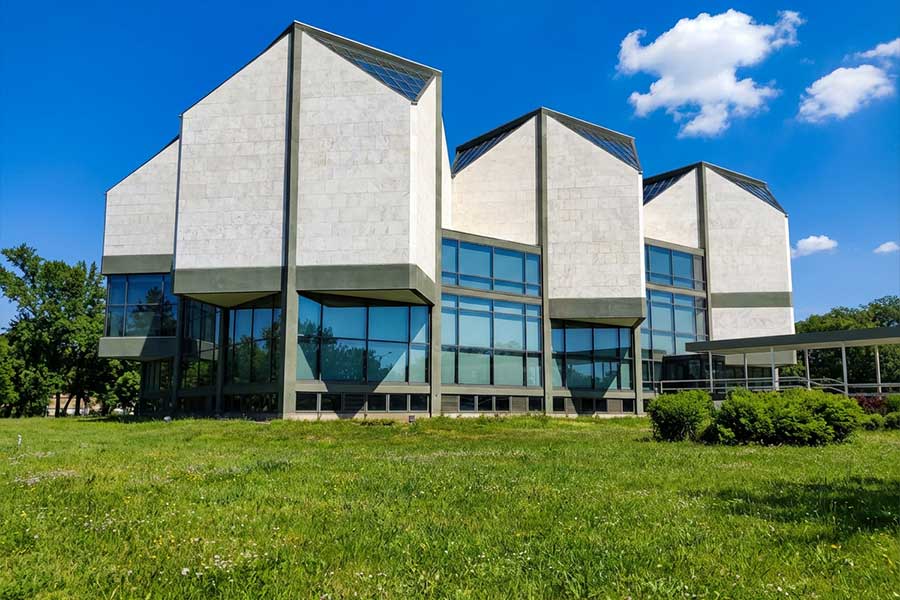
If you love modern architecture, “cool” design, and taking photos for Instagram, this is your number one destination. The building at Ušće looks like a crystal that landed on the lawn. It has been renovated and now shines in full glory, and the interior is a real “space shuttle.”
Why isn’t it boring?
Because it shatters prejudices about museums. There are no heavy gold frames, dark rooms, or musty smells. Everything is white, open, full of light, with glass walls overlooking Kalemegdan and the river.
The permanent exhibition gives you an overview of Yugoslav art of the 20th century. Believe me, some works are so avant-garde that you will ask yourself “how was this created in the 1960s under socialism?”. World-class exhibitions are held here – just remember Marina Abramović’s “The Cleaner” which blocked the city. In addition, the park around the museum is an open-air museum with sculptures. Perfect for a walk or bike ride after your culture tour.
Logistics and Useful Info
Free Entry: Every first Wednesday of the month.
Location: Ušće 10 (New Belgrade, right by the river).
Opening Hours:
Wednesday – Monday: 10:00 – 18:00 (Thursdays they work longer, until 20:00).
Closed on Tuesdays.
Ticket Price: Approx. 600 RSD.
5. Military Museum: Tanks at Kalemegdan
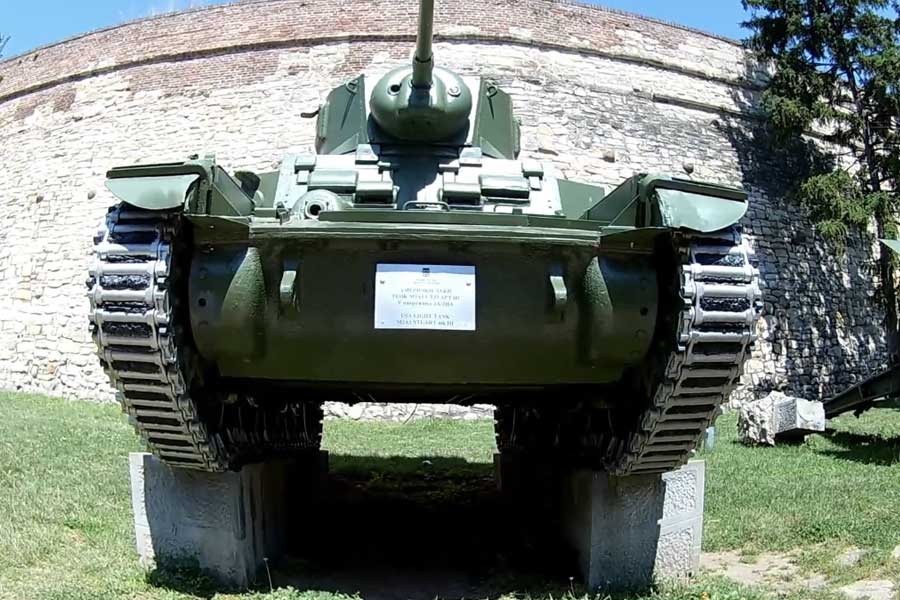
You’ve probably walked past it a hundred times while strolling through Kalemegdan. It’s that building in front of which stand tanks, howitzers, and torpedoes that kids (and adults when no one is looking) climb on. But have you ever gone inside? You should.
What does the fortress hide?
The history of warfare in this region – and unfortunately, we have too much of it. The exhibition is brutal, detailed, and fascinating.
You start from Roman swords and Ottoman yatagans, through the incredible uniforms of the Serbian army from WWI (you’ll see how small those people actually were physically, but huge in spirit), all the way to modern times. What everyone wants to see is near the end of the exhibition: parts of the shot-down “invisible” F-117A plane from 1999. Yes, that’s the one we “didn’t know was invisible.” It is a piece of modern history you can’t see anywhere else in the world in this context.
Logistics and Useful Info
Note: The outdoor exhibition (tanks and cannons in front of the building) is completely free and accessible 24/7. You only pay to enter the building.
Location: Kalemegdan (Upper Town, inside the fortress).
Opening Hours:
Tuesday – Sunday: 10:00 – 17:00
Closed on Mondays.
Ticket Price: Approx. 350 RSD.
Table of Other Museums: Where Else to Go (Without Being Bored)?
If you’ve already checked out the “Big Five,” or you’re simply looking for something specific – maybe you’re interested in science, illusions, or African masks – here is a list of other museums in Belgrade. These are often “hidden gems” that tourists don’t know about.
| Museum | Address | Opening Hours | Ticket Price (RSD) | Why go? |
|---|---|---|---|---|
| Museum of Science and Technology | Skenderbegova 51 (Dorćol) | Tue-Sun: 10-18h (Mon closed) | ~400 (adults) ~200 (students) Free for kids <7 muzejnt | Must-see for kids. They have a “Children’s Museum” where everything can be touched, crooked mirrors, and old machines. |
| Museum of Illusions | Nušićeva 11 (Center) | Mon-Sun: 09-22h (Every day) muzejiluzija | ~750-900 (adults) ~450-650 (kids) ~1750 (family) muzejiluzija+1 | For Instagram and fun. Not a classic museum, more like an amusement park for the brain. Great for a rainy day. |
| Ethnographic Museum | Studentski trg 13 (Center) | Tue-Sun: 10-17h (Mon closed) apartmani-u-beogradu | ~600 (adults) ~400 (discounted) Free on Sundays (check!) apartmani-u-beogradu | If you want to see how people lived in the countryside 100 years ago. Costumes, houses, customs. Serious tradition. |
| Princess Ljubica’s Residence | Kneza Sime Markovića 8 | Tue-Sun: 10-18h (Fri shorter) (Mon closed) stannadan | ~300 (adults) ~150 (discounted) stannadan | To see how people lived during the Obrenović dynasty. The interior is authentic, Turkish-Balkan style. |
| Museum of African Art | Andre Nikolića 14 (Senjak) | Daily: 10-18h (The only one open on Mondays!) instagram | ~300 (adults) ~150 (students) instagram+1 | Hidden gem. The only museum in the region dedicated exclusively to Africa. Located in a beautiful villa in Senjak. |
| Historical Museum of Serbia | Trg Nikole Pašića 11 | Tue-Sun: 12-20h (Mon closed) n1info | ~400 (adults) ~150 (students) n1info | They often have powerful thematic exhibitions about kings and dynasties (Nemanjić crowns, robes, etc.). |
| Museum of Vuk and Dositej | Gospodar Jevremova 21 | Tue-Sun: 10-17h/18h (Mon closed) | ~200-300 | The oldest preserved residential building in Belgrade. Exudes the spirit of old Turkish Belgrade. |
FAQ: Frequently Asked Questions (So You Don’t Get Lost)
Which museum is best for small children?
If you have kids who can’t sit still, forget about the National Museum (unless you want stress). Take them to the Museum of Science and Technology in Dorćol. They have a special section where they can touch exhibits, see how gravity works, look in crooked mirrors, etc. Another option is the Military Museum (the outdoor part with tanks) – it’s free, outdoors, and they can run around.
Do I need to know Serbian?
Don’t worry. All major museums (these Top 5) are fully bilingual. All legends, descriptions, and maps are in Serbian and English. The Nikola Tesla Museum offers guided tours in both languages, just check the schedule before you buy a ticket.
When is the best time to visit to avoid crowds?
The rule is simple: avoid weekends between 12 PM and 3 PM. That is “rush hour” for tourists. The best time is a weekday (Tuesday-Thursday) right at opening time at 10 AM. For the National Museum and MSUB, Thursday afternoon is the secret code – they work longer (until 8 PM), and most people are not in the museum then.
Where is that popular Museum of Illusions?
It is a private museum in the city center, on Nušićeva Street. Keep in mind: this is not a “classic” museum with historical artifacts. It is a place of entertainment. It’s great for photos, laughter, and killing an hour with friends, but don’t expect to learn the history of Belgrade there.
Our Most Popular Tours To Sarajevo
We offer many tours that include a visit to Sarajevo and its most popular locations:
- Full Day tour from Sarajevo to Belgrade (Most Popular)
- Full Day tour from Sarajevo to Međugorije & Mostar
- Full Day Tour from Sarajevo to Travnik and Jajce
- Full-Day 5 Cities Tour from Sarajevo to Herzegovina (Mostar)
- Full day Tour from Sarajevo to Dubrovnik (Kotor or Split)
Don’t Hesitate To Say Hi!
Got any questions about our tours or the city? Don’t hesitate to contact us anytime for more info and booking.
Use the following phone number and email: