
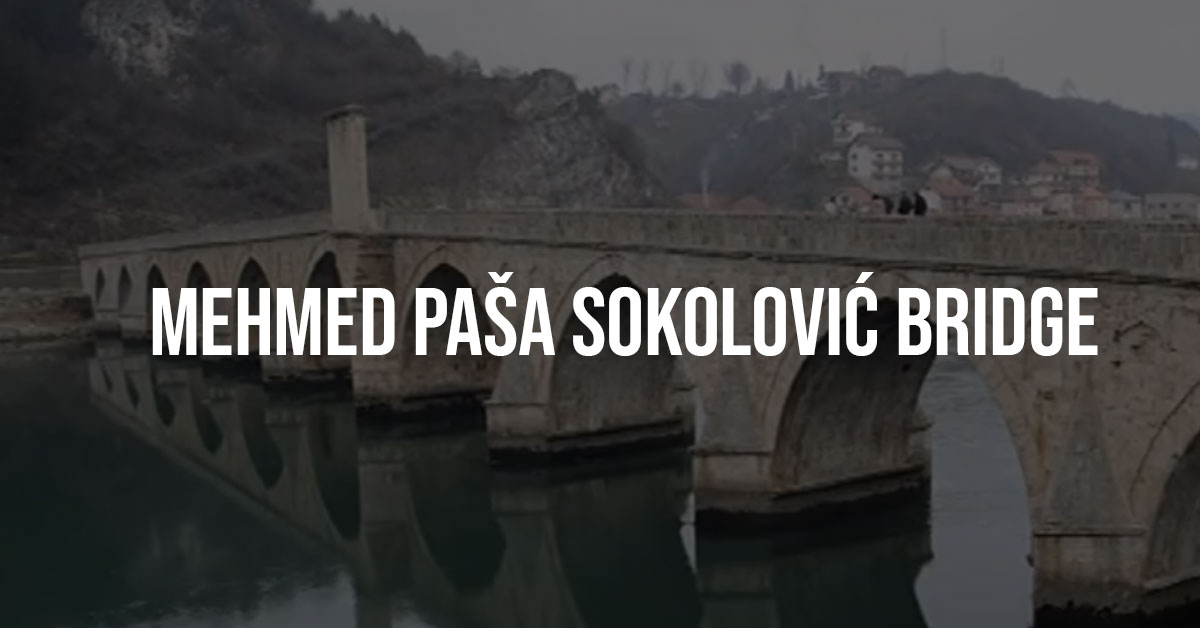
When you think of Višegrad, one thought probably spins in your head – the bridge. And not just any bridge, but the famous one from the literature that tortured us all in high school until we realized the genius of Ivo Andrić.
But the Mehmed Paša Sokolović Bridge in Višegrad is not just “that thing from the book.” It is a masterpiece that has stood there for nearly 500 years, defying everything – floods, wars, dynamite, and the ravages of time. It stands and watches as empires change, while the Drina flows.
If you are planning a visit to Višegrad, or just thinking about where to go for a weekend that isn’t the usual tourist trap, this is the text for you. You won’t find boring historical data copied from Wikipedia here. Here you will find out why this bridge is probably the most important structure you will see in this part of the Balkans, how to organize yourself to see everything important in one day, and where to eat the best kebabs without getting ripped off.
Višegrad is not just a bridge. It is a place where East and West collide, where the best coffees are drunk by the river, and where the silence of the emerald water tells stories. Get ready, I’m taking you to the Drina.
Table of Contents
Architecture and Genius: How Was the Mehmed Paša Sokolović Bridge in Višegrad Created?
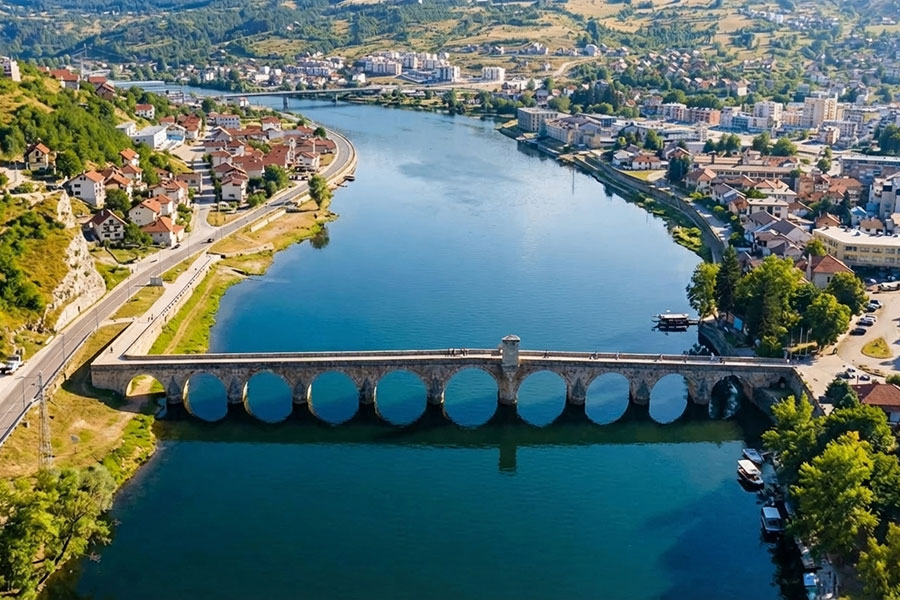
To understand the magnitude of this bridge, we have to go back to the 16th century. Imagine that time. No excavators, no cranes, no concrete as we know it today. And then comes one man, Mimar Sinan, the greatest architect of the Ottoman Empire (something like the Michelangelo of the East), and decides to bridge one of the wildest rivers in the Balkans – the Drina.
The client? None other than Mehmed Paša Sokolović. A boy born as Bajica Nenadić in the village of Sokolovići near Rudo, taken in the “blood tax” (devshirme), who rose to the position of Grand Vizier, the most powerful man in the empire right next to the Sultan. Although he ruled half the known world at the time, he never forgot where he came from. That is why he ordered a bridge to be built in his homeland to connect Bosnia with the rest of the empire.
Why is this a marvel of engineering?
The Mehmed Paša Sokolović Bridge in Višegrad has 11 arches with a gentle rise towards the middle. It is almost 180 meters long. But it’s not about the dimensions. It’s about elegance. The stone, tufa (travertine), was brought from Višegrad Spa. Each block was hand-carved and joined with iron clamps sealed with lead.
Legend says that Sinan calculated the statics so well that the bridge seems to float above the water, even though it weighs thousands of tons. It survived everything. The Austro-Hungarians mined it, the Germans bombed it, but it is still there. When you stand on it and look into the green Drina, you feel that weight of centuries under your feet. It’s not just stone, it’s history breathing. And yes, since 2007 it has been under UNESCO protection, which means it is officially a world treasure.
Bloody Legends of the Mehmed Paša Sokolović Bridge in Višegrad
There is no great building in the Balkans without a terrible story in its foundation. The Mehmed Paša Sokolović Bridge in Višegrad is no exception. If you have read Andrić, you know about Radisav.
According to legend (and Andrić’s novel), during construction, the local Serbs were forced into kuluk (unpaid labor). One peasant, Radisav, decided to sabotage the construction. At night, he would destroy what the masters built during the day, spreading the story that the “water fairy” did not allow the construction. Of course, the Turks caught him. The punishment was cruel – impalement on a stake in the middle of the bridge, alive, as a warning to everyone. That scene from the book is probably one of the most harrowing in our literature, and when you stand on the “kapija” (the widening in the middle of the bridge), you can’t help but remember that story.
Stojan and Ostoja
Another legend, similar to the one about Skadar on Bojana, says that the bridge could not stand until twins, Stojan and Ostoja, were built into the foundations. Their mother allegedly begged the master builder Rade to leave openings on the pillars so she could breastfeed her children. And indeed, on the pillars of the bridge, there are two openings from which, to this day, at a certain time of year, “milk” flows (actually water dissolving limestone).
These stories give the bridge an aura of mystery. It is not just a crossing over a river. It is a place of suffering, sacrifice, but also incredible beauty that emerged from all of that. While drinking coffee on the “sofa” (stone bench in the middle of the bridge), you are sitting in a place where merchants, soldiers, fugitives, and travelers have rested for centuries, listening to the roar of the Drina.
What to Do Around the Mehmed Paša Sokolović Bridge in Višegrad?
Okay, you saw the bridge, took a selfie, crossed it on foot. What now? Višegrad offers much more than just the bridge. Here is a plan for a perfect day.
1. Boat Ride on the Drina
This is mandatory. Only from the water can you perceive the true size and beauty of the arches of the Mehmed Paša Sokolović Bridge in Višegrad. There are several options:
- Small tourist boats: The ride lasts about 30-45 minutes. They start from the bank below Andrićgrad or near the bridge itself. Captains are usually locals full of stories and anecdotes. The price is affordable (around 5-10 euros per person), and the experience is priceless.
- Grand tour to Stari Brod: If you have more time, book a cruise through the Drina canyon to Stari Brod and back. The Drina canyon is the third deepest in the world (after Colorado and Tara), and nature is untouched. The water is emerald green and clean.
2. Andrićgrad (Stone Town)
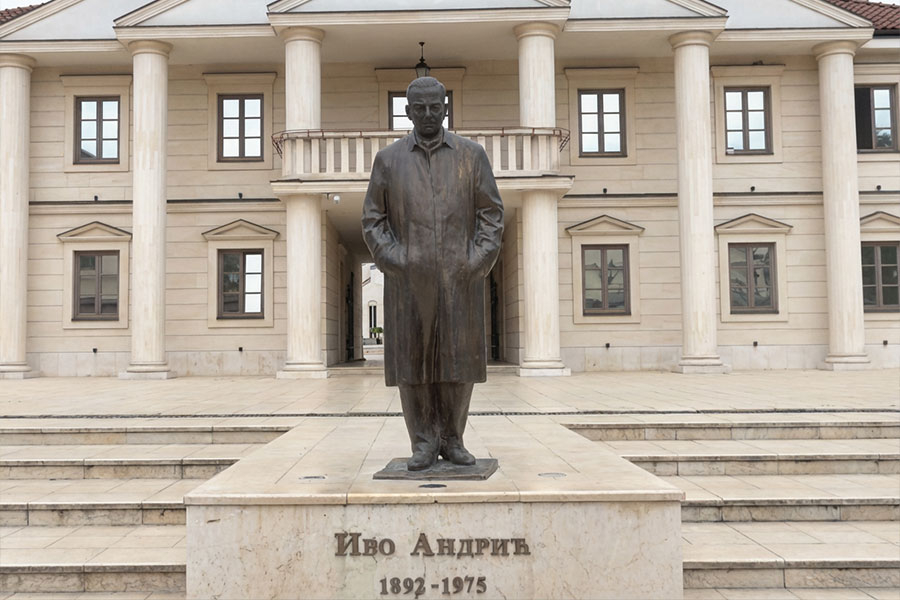
Just a few hundred meters from the old bridge, there is something completely different – Andrićgrad. A project by Emir Kusturica. It is a city within a city, dedicated to Ivo Andrić. Built of stone, it represents a mixture of Byzantine, Ottoman, and Austro-Hungarian styles – just like the history of Bosnia.
- What to see: Monument to Ivo Andrić, monument to Njegoš, Church of Saint Lazar (a replica of Dečani monastery), cinema, gallery.
- Where to sit: In Andrićgrad you have excellent cafes and a beer hall. There is also the restaurant “Zlatna moruna” (Golden Beluga), named after the tavern where Young Bosnia members gathered before the assassination in Sarajevo. The atmosphere is cinematic.
3. Monument to Ivo Andrić near the bridge
Next to the bridge itself is the house where Ivo Andrić spent his childhood (although not born in Višegrad, he grew up there with his aunt). The house is private property and unfortunately can only be seen from the outside, but there is a memorial classroom nearby that is worth a visit if you want to hear stories about the Nobel laureate.
Practical Information for Visiting the Mehmed Paša Sokolović Bridge in Višegrad
Višegrad is a small town, everything is close and can be visited on foot. But a few tips are worth gold.
How to Get There?
Višegrad is a crossroads. It is located in eastern Bosnia, right on the border with Serbia.
- From Belgrade: Best via Valjevo, Debelo Brdo, and Bajina Bašta, then across Tara to the Kotroman border crossing. The road is beautiful (you drive along the Drina), but winding. You will need about 4-5 hours of easy driving.
- From Sarajevo: Višegrad is approximately 120 kilometers east of Sarajevo, which takes around 2-2.5 hours by car. The route goes via Pale and follows the Drina river valley through stunning mountain scenery. This is a popular route for those exploring eastern Bosnia, and the road quality is generally good. You can also combine your visit with stops at other nearby attractions along the way.
Where to Eat (Gastro Guide)?
Bosnia is synonymous with good food, and Višegrad does not lag behind.
- Cevapi: Of course. Anywhere in the center, you can’t go wrong. “Anika” and “Kruna” are frequent recommendations.
- Fish: Since you are on the Drina, trout is a specialty. Restaurants along the river offer fresh grilled trout that is finger-licking good.
- Restaurant “Kruna”: One of the more popular ones, with a nice view and domestic cuisine. Try veal under the sač (bell).
When to Visit?
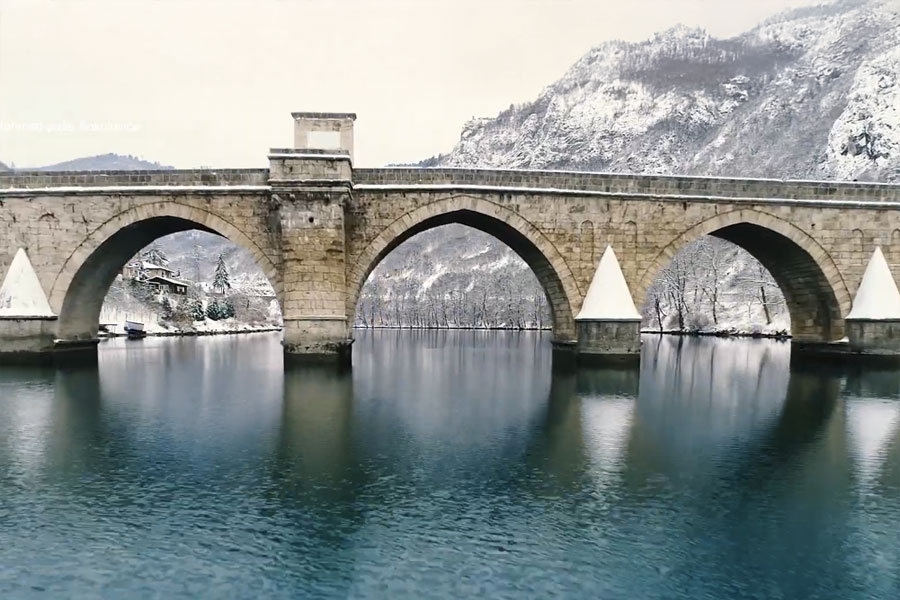
The Mehmed Paša Sokolović Bridge in Višegrad is most beautiful in spring and autumn. In summer it can be very hot (the stone heats up), but then the boat ride is most pleasant. In winter, when snow falls, the bridge looks like something out of a fairy tale, but the wind from the Drina can be sharp.
Why Is the Mehmed Paša Sokolović Bridge in Višegrad More Than Tourism?
At the end of the day, when the tourists disperse and you remain alone on the bridge, you realize one thing. This is not just a tourist attraction where you buy a magnet and move on.
This bridge is a symbol of connection. It connects shores that would never touch. It connects East and West. It connects times – Mehmed Paša’s time, Andrić’s time, and our time. It is a silent observer of all our follies, wars, loves, and transience.
Ivo Andrić wrote: “Everything that a man does in life only makes sense if it serves something and someone.” This bridge has served people for 500 years. And it will serve for another as many, as long as there is a Drina. Coming to Višegrad and not feeling that respect for this structure means you missed the point. So, when you step on those white stone slabs, slow down. Take a deep breath. And listen to what the water tells you.
Table: Višegrad and the Bridge in the Palm of Your Hand
Here is a quick overview of everything you need for travel planning. Prices are approximate (Bosnia is still quite cheap for tourists from the region/Europe) and subject to change, but serve as a good guide.
| Attraction / Service | Opening Hours | Price (Approx.) |
|---|---|---|
| Mehmed Paša Sokolović Bridge | 00-24h (Always open) | Free |
| Andrićgrad (Stone Town) | 07-22h (Restaurants longer) | Entrance to complex is Free |
| Boat Ride (Short) | 10-18h (Season) | ~5-10 EUR |
| Cruise to Stari Brod | By arrangement / Schedule | ~15-25 EUR |
| Ivo Andrić Memorial Classroom | Variable (check on spot) | Symbolic donation |
| Višegrad Spa (Banja) | 08-20h | ~4-5 EUR (pool) |
| Restaurants (Lunch per person) | 08-23h | ~10-20 EUR |
FAQ: Questions About the Mehmed Paša Sokolović Bridge in Višegrad You Are Ashamed to Ask
Can I jump from the Mehmed Paša Sokolović Bridge in Višegrad?
Please don’t. Although local guys sometimes do it (especially during the “Jumps from the Bridge” event), the Drina is a deceptive, cold, and fast river. The bottom changes. If you are not a professional and don’t know the river like the back of your hand, enjoy the view from the bridge, and swim at arranged beaches or in the spa. Don’t be that tourist written about in the crime section.
What currency is used in Višegrad?
Višegrad is in the Republika Srpska entity of Bosnia and Herzegovina, so the official currency is the Convertible Mark (KM). However, given the proximity to the border, Euros are unofficially accepted almost everywhere (restaurants, souvenirs, boats). The exchange rate is fixed: 1 EUR = 1.95 KM (count 2 KM for easier math). Serbian Dinars are accepted in some places, but don’t count on it as a rule – better exchange money or pay by card (where possible).
Is the Mehmed Paša Sokolović Bridge in Višegrad safe for walking?
Absolutely. It is a pedestrian zone. Cars have been banned on the bridge for years. The stone fence is solid, but be careful if you lean over for photos, the height is not small (about 15 meters).
What if it rains while I’m on the Mehmed Paša Sokolović Bridge in Višegrad?
Then you are lucky (partially). The wet stone of the bridge gets a special, darker color and photos are dramatic. Hide on the “sofa” (the gate in the middle of the bridge) if it’s not a downpour, or run to the first cafe in Andrićgrad. Rain in Višegrad has a special smell.
Our Most Popular Tours To Sarajevo
We offer many tours that include a visit to Sarajevo and its most popular locations:
- Full Day tour from Sarajevo to Belgrade (Most Popular)
- Full Day tour from Sarajevo to Međugorije & Mostar
- Full Day Tour from Sarajevo to Travnik and Jajce
- Full-Day 5 Cities Tour from Sarajevo to Herzegovina (Mostar)
- Full day Tour from Sarajevo to Dubrovnik (Kotor or Split)
Don’t Hesitate To Say Hi!
Got any questions about our tours or the city? Don’t hesitate to contact us anytime for more info and booking.
Use the following phone number and email: