
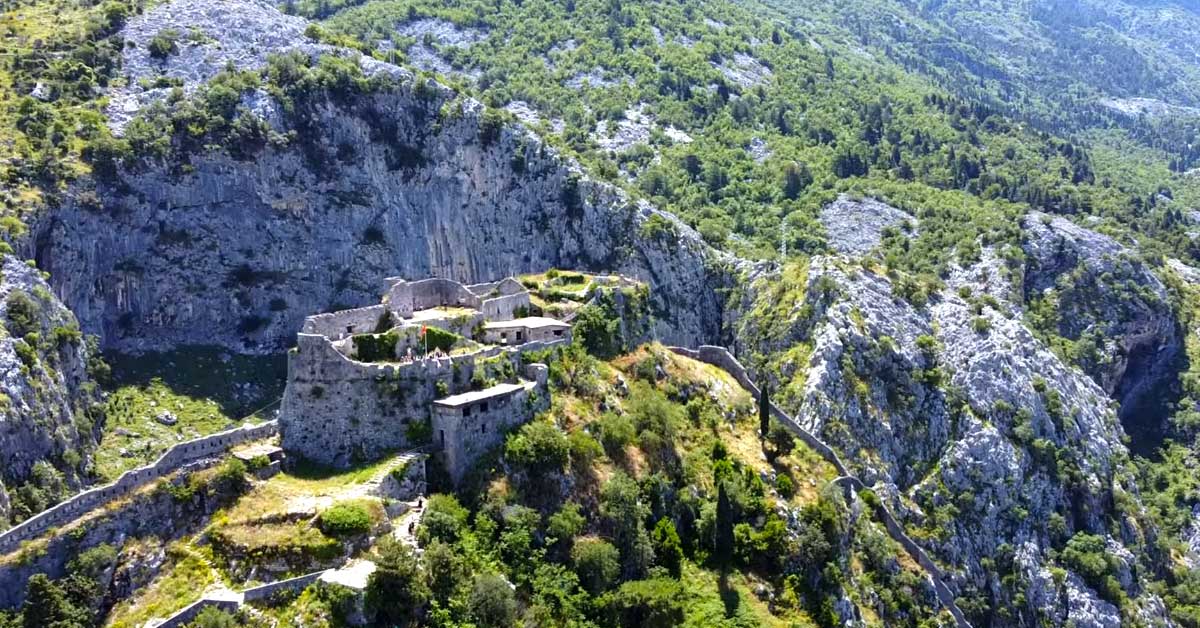
Imagine standing at the top of a 280-meter fortress, sweat still dripping from 1,350 steep stone steps, when suddenly the entire Bay of Kotor explodes below you like a scene from a fantasy movie – red-roofed Kotor Old Town hugging the water’s edge, yachts sparkling like diamonds on turquoise fjords, Perast village glowing across the bay, and jagged Lovćen mountains piercing the clouds behind it all. That’s Kotor Fortress, Montenegro’s ultimate hiking challenge and reward, where every gasping breath on the way up buys you one of the world’s most jaw-dropping panoramas.
Kotor Fortress – properly called St. John’s Fortress or San Giovanni – isn’t just another viewpoint you drive to or cable car up. It’s a proper pilgrimage starting right from Kotor’s UNESCO-listed Old Town, zigzagging up the Ladder of Kotor through 4.5 kilometers of ancient fortifications that have guarded this strategic bay since Illyrian tribes first settled here 2,000 years ago. The hike takes anywhere from 45 minutes for fit adventurers to 90 minutes for casual walkers who pause at every viewpoint (and trust me, you’ll want to pause), but the summit makes you forget every aching calf muscle.
What makes Kotor Fortress special isn’t just the view – though that alone would justify the climb – but the journey through living history. These aren’t restored tourist traps; they’re real defensive walls with crumbling Venetian barracks, hidden Byzantine churches embedded in the stone, wild goats grazing sheer cliffs, and wildflowers exploding from cracks in April and May. At the top, the ruined Castle of San Giovanni feels like the edge of the world, where Montenegro’s rugged soul stares down at the gentle Adriatic below. Whether you’re chasing sunrise gold painting the bay, sunset fire turning the water orange, or just testing your legs after too many rakija shots the night before, Kotor Fortress delivers the kind of experience that turns travelers into storytellers.
Table of Contents
The 2000-year history of Kotor Fortress: warriors who built Montenegro
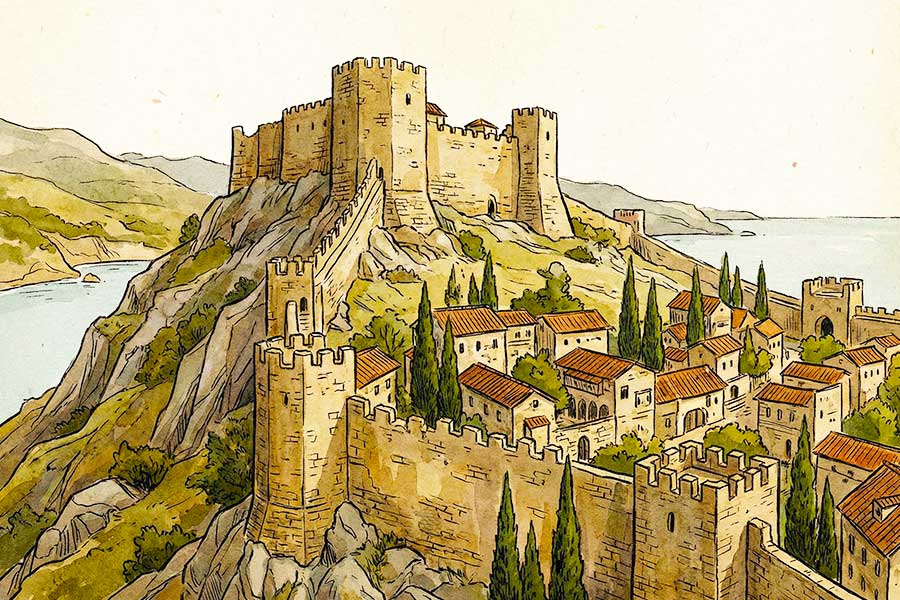
Kotor Fortress didn’t spring from the mountain overnight, its story stretches back over two millennia, each layer built by warriors who understood this bay’s impossible strategic value. Picture Illyrian tribes around 100 BC scratching out hill forts on St. Ivan mountain, already recognizing that whoever controlled this narrow chokepoint between mountains and sea controlled Adriatic trade from Venice to Constantinople. These were rough stone outposts, more tribal lookout than proper fortress, but they marked the spot where empires would clash for centuries.
Fast forward to the 6th century AD, when Byzantine Emperor Justinian I swept through during his reconquest of the Balkans. He didn’t just rebuild Kotor Fortress – he transformed it into a proper military stronghold with organized walls, gates, and watchtowers, part of his grand plan to hold the frontiers against Slavic migrations flooding south. Byzantine engineers understood water supply, cistern construction, and defensive geometry centuries before it became fashionable, embedding churches like the tiny Our Lady of Remedy right into the fortifications so soldiers could pray between patrols.
Then came the Serbs in the 12th-14th centuries under the Nemanjić dynasty, who expanded the walls during their medieval golden age. They added height, thickness, and new bastions, turning Kotor into a key link between their inland empire and Venetian trade routes. But the real transformation happened under Venice from 1420-1797, when La Serenissima poured engineering genius and endless ducats into creating the Ladder of Kotor – that iconic zigzag staircase of walls climbing St. Ivan’s impossible slope. Venetian military architects designed it to funnel attackers into kill zones, with walls up to 20 meters high and 16 meters thick at the base, arrow slits perfectly angled, and massive bastions like Gurdic Spring that could rain cannon fire on any fleet daring the bay.
The fortress proved its worth repeatedly. In 1539, when Ottoman admiral Barbarossa ravaged nearby coasts, Kotor held firm under Venetian command. Local legend says the Virgin Mary herself intervened, but more likely it was the walls’ genius design and 300 determined defenders. Earthquakes battered it – 1667 and 1979 both struck hard – but repairs always happened, layer upon layer, until UNESCO declared the entire Kotor fortification system a World Heritage Site in 1979.
Through Napoleonic occupation, Austrian tinkering, two world wars, and Yugoslavia’s breakup, Kotor Fortress stood watch. During World War II, Partisans used its heights for radio relays; in the 1990s Yugoslav conflicts, it remained neutral ground above the fray. Today, climbing those same stairs connects you directly to 2,000 years of survivors – Illyrians who first saw the bay’s potential, Byzantines who engineered its bones, Venetians who gave it wings, and Montenegrins who turned it into their national symbol. Every loose stone underfoot tells their story.
If you want to dive deeper into Kotor’s maritime legacy and understand how sea captains and shipbuilders financed these massive fortifications through centuries of Adriatic trade, the Maritime Museum Kotor displays original navigation charts, captain logbooks, and ship models that bring this naval empire to life.
Step-by-step: the complete Kotor Fortress hiking experience
Your Kotor Fortress adventure begins at ground zero: Kotor’s Sea Gate (Glavna Vrata), the main entrance to the Old Town where cruise ships disgorge passengers and tour groups cluster like confused goats. Don’t worry – you’re not joining them. Buy your ticket (€8-15 depending on season, cash euros only, kids free) at the booth just outside the gate or opt for the quieter North Gate 5 minutes walk away. Both lead to the same path, but North Gate skips the morning rush.
First 20 minutes (easy warm-up): The trail starts gentle enough, following Old Town walls past stone houses with flower boxes spilling geraniums. You’ll pass Gurdic Bastion after about 15 minutes – a massive round tower with a natural spring where soldiers once filled waterskins. Pause here for your first wow moment: Kotor Old Town spreads below like a medieval board game, red roofs climbing from the bay, church towers poking through like chess pieces, and the water shimmering all the way to Perast 5km distant. Wild cats sun themselves on warm stones, unbothered by your admiration.
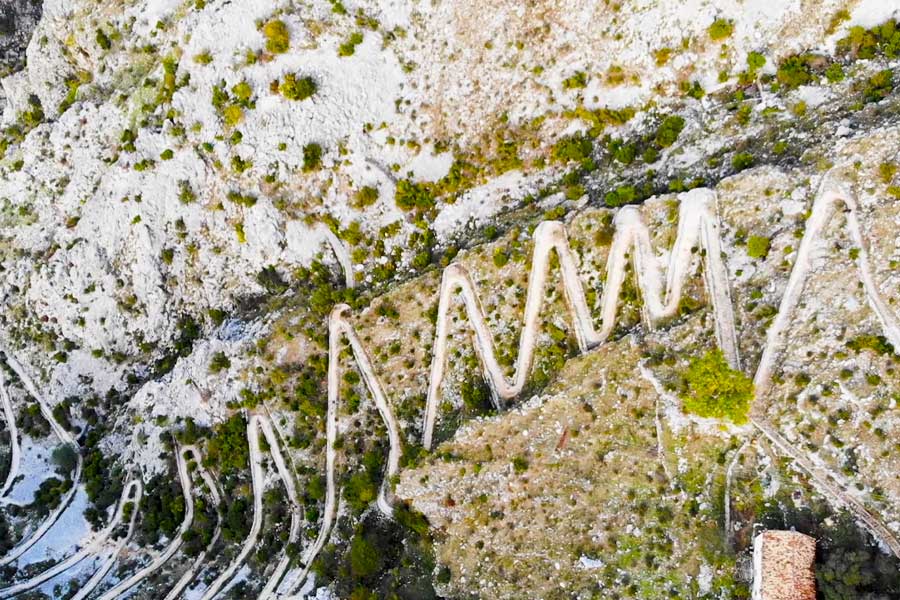
20-40 minutes (steady climb): The path steepens as you enter the Ladder of Kotor proper – those famous zigzag walls that make the fortress visible from halfway across the bay. Steps turn uneven, handrails appear (thank the Venetians), and every switchback reveals more bay. You’ll pass the Church of Our Lady of Remedy around the halfway mark – a tiny 1518 chapel blasted into the cliff with faded frescoes inside. Shaded benches invite collapse; local grannies sell cold water and homemade baklava from baskets (support them, it’s tradition).
40-70 minutes (the grind): Switchbacks multiply, steps grow shorter and meaner, designed to exhaust attackers before they reached the top. Legs burn, lungs demand pauses every 50 steps, but views compensate – Dobrota’s shoreline appears across the water, Vrmac hill’s fortifications mirror yours, wild goats leap impossible cliffs like they’re mocking your huffing. Spring brings purple wildflowers exploding from cracks; summer offers shade from scrub pines. Aim for 60 minutes if fit, 90 if savoring every vista.
Summit arrival (pure bliss): Finally, the Castle of San Giovanni appears – ruined Venetian barracks sprawl across the 280-meter summit, cannon platforms stare seaward, massive stone cisterns catch rainwater. Flags whip in the wind, goats chew nearby grass, and suddenly you’re king of Boka Bay. The full 360° panorama hits: Kotor’s toy-like Old Town at your feet, bay serpentine arms curling 30km to the open sea, Perast’s twin islands floating like green jewels, Lovćen’s peaks clawing the sky behind, yachts tracing silver wakes below. Stay 30-60 minutes; few restaurants serve simple grilled meats, beer, and panoramic bragging rights.
Descent (45-60 minutes): Same path down, mercifully quicker but brutal on knees – use handrails, go slow on wet stones. Sunset descents glow magical but require headlamps after dark. Total round trip: 1.5-3 hours covering 2.5km with 260m elevation gain via 1,350 steps.
The unbeatable summit views of Kotor Fortress
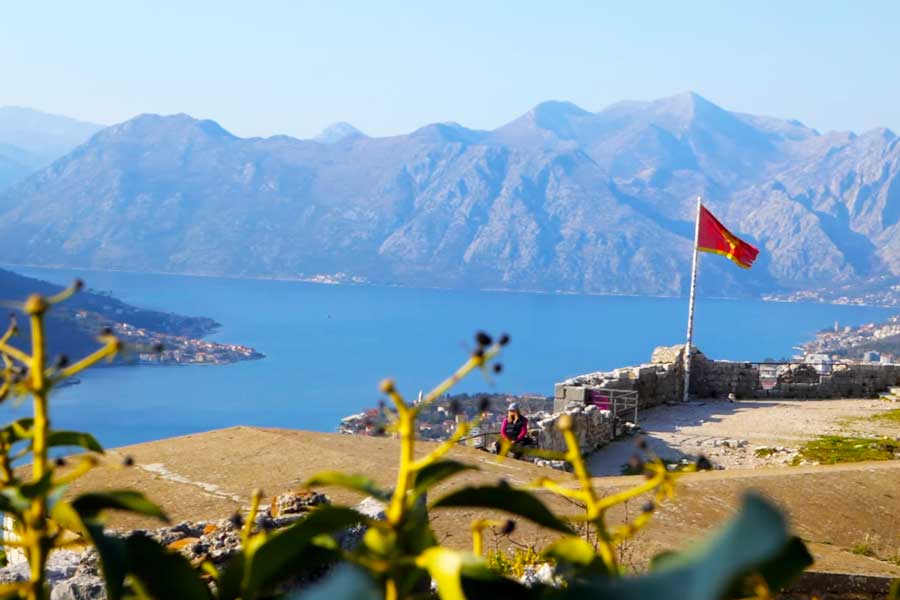
No photo prepares you for Kotor Fortress’s summit panorama – it’s alive, changing by minute. Dawn bathes the bay gold as fishing boats head out; morning haze lifts to reveal Perast’s baroque churches sharp against blue water; midday sun turns yachts to sparkling confetti across turquoise fjords. Sunset? Fiery orange skies reflect off the bay, turning Kotor Old Town into glowing embers nestled against black mountains.
Pick your vantage: east ramparts frame Lovćen’s massif where Montenegro’s kings are buried; south walls reveal the bay’s impossible S-shape curling toward Tivat airport; west platforms stare down at Old Town’s Cathedral of St. Tryphon and Maritime Museum. Strategic genius reveals itself – walls exploit every terrain advantage, funneling attackers into crossfire zones, blocking sea views from invaders below. Wild goats pose photogenically; eagles sometimes wheel overhead. Bring snacks, claim a ruined window frame, and let the view wash away every step’s pain.
Hidden gems along the Kotor Fortress trail
Beyond the summit, trail treasures reward slow climbers. Gurdic Spring Bastion (20min up) offers spring water soldiers drank and first big bay views – perfect shaded picnic spot. Our Lady of Remedy Church (40min) hides faded 16th-century frescoes of warrior saints; peer inside for Byzantine atmosphere. Midway viewpoint platforms reveal Dobrota’s 3km shoreline packed with sea captain palaces – count the church towers poking through cypress trees.
Wildlife steals hearts: semi-tame goats beg for crackers (they love apple cores), cats claim every sunny ledge, bee hotels buzz with mountain honey-makers. Secret paths branch off main trail to forgotten gun emplacements and World War II observation posts – locals know, but signs don’t advertise. April-May wildflowers turn slopes purple; September figs ripen along walls. These aren’t Instagram bait – they’re Kotor’s soul revealed step by sweaty step.
Practical guide to Kotor Fortress: tickets, hours, getting there
Tickets: €8 winter/€15 peak summer (cash euros only at Sea Gate or North Gate booths); children free. Unofficial Ladder of Kotor bypasses booths but adds 15 rugged minutes. No online sales.
Hours: Trail open 24/7 year-round; ticket booths 8AM-10PM peak (May-Sep), 8AM-6PM shoulder, dawn-dusk winter. Last ascent ~1hr before booth close.
Access: Walk 5-10min from Kotor bus station or cruise port to Sea Gate. €2 local bus loops bay. Park outside walls (€2/hr). Stay in Old Town for door-to-door.
Duration/Difficulty: 1.5-3hr RT, 2.5km, 1350 steps/260m gain. Moderate fitness; sure feet essential (no wheelchairs).
Facilities: No toilets/restrooms on trail. Summit has basic restaurant (grilled meats €10-15, beers €3). Water sellers midway.
Weather: Skip rain (slippery death-trap). Heat exhaustion risk summer midday.
Combine morning hike + Old Town lunch (Njeguši prosciutto burek) + afternoon speedboat trip to the Blue Cave for a perfect full day exploring both mountain and sea.
Best times to hike Kotor Fortress & beat the crowds
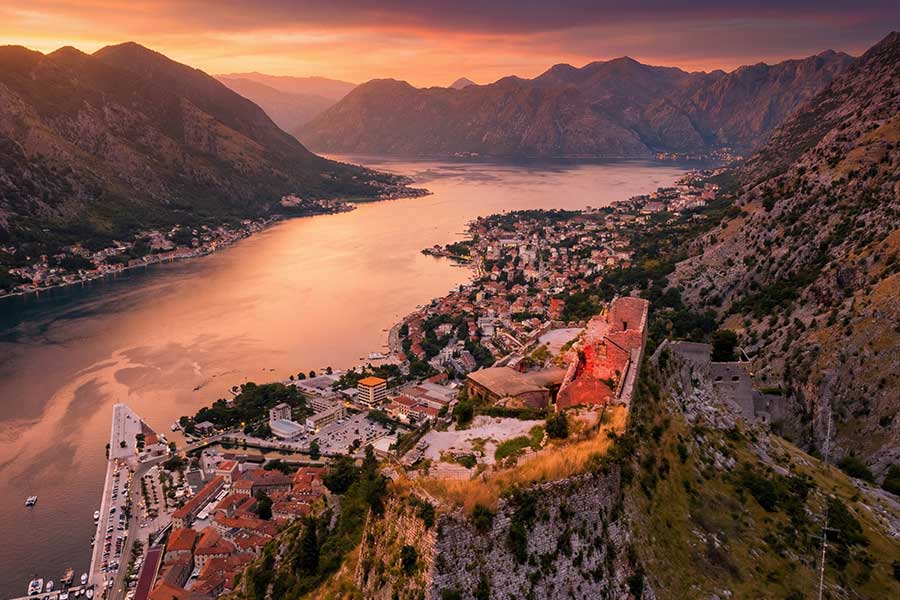
Timing transforms your Kotor Fortress experience from crowded chore to personal triumph. Dawn (7-9AM summer, 8-10AM shoulder): Magical golden light bathes the bay as first fishing boats depart, trail empty except wild goats, temps perfect 15-22°C – booths open ~8AM, summit yours alone for 30 golden minutes before buses arrive. Ultimate photographer’s hour.
Spring (April-May): Wild thyme/purple orchids carpet slopes, 18-24°C mild days, thin pre-cruise crowds – flowers perfume air, fewer sweat-soaked tourists huffing beside you.
Autumn (September-October): Post-summer bliss with 20-25°C warmth, dramatic sunset glows (start 4PM summit ~6PM), bay cruises fewer, golden foliage accents views.
Midweek any season: Monday-Wednesday slashes 70% crowds vs weekends/cruise days.
Sunset hikes (4-5PM start): Bay ignites orange-pink as sun dips behind Lovćen, romantic for couples, but summit restaurant closes ~7PM and descent darkens fast – pack headlamp (€5 local shops), not for beginners.
Avoid absolutely: Cruise midday 10AM-4PM May-Sep (trail ant trail), summer 1-4PM (35°C+ dehydration risk), rain (steps lethal ice-rink). Winter off-season (Nov-Mar) delivers crisp solitude, snowy summit magic for hardy souls (~5°C, short days).
Locals hike evenings post-6PM summer for cool breezes – join for authentic vibe.
Essential gear & preparation for Kotor Fortress
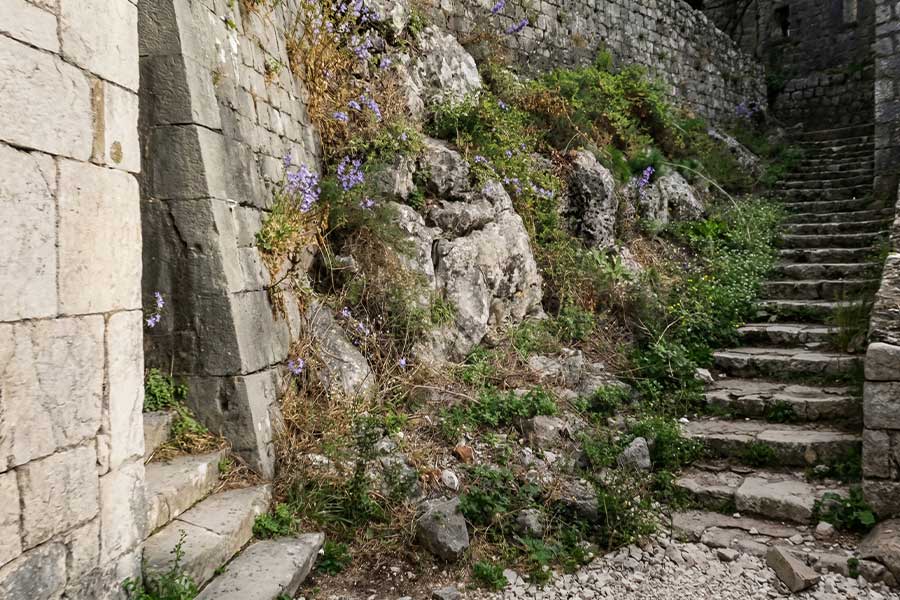
Kotor Fortress doesn’t forgive poor prep – pack smart or suffer. Absolute must-haves: Sturdy closed-toe shoes with grip (hiking sneakers best; NO flip-flops/sandals – ankles snap on uneven steps), at least 1.5L water (trail fountains unreliable; summit €2 bottles pricey), wide-brim hat/sunscreen (exposed zigzags bake skin), light windbreaker/fleece (summit 8-12°C cooler, gusts 40kmh+ rip hats).
Highly recommended: Energy bars/trail mix (midway baklava €1 tempts but crashes sugar), small backpack (20L max – leave big luggage hotel), sunglasses (glare off bay blinding), knee sleeves if prone (descent brutal), portable charger (photo frenzy drains phones), euros small bills (€1/2/5 for sellers).
Nice extras: Trekking poles (€5 rental Old Town lighten knees), wet wipes (sweat apocalypse), goat treats (apple slices – photo gold).
Prep routine: Hydrate morning coffee-strong, light breakfast (yogurt/fruit sustains), stretch calves/quads 10min pre-start. Test fitness on Old Town stairs day before.
What NEVER bring: Glass bottles (shatter risk), heavy camera gear (sweat damage), nice clothes (ruin inevitable), overconfidence (90% underestimate steps).
Local wisdom: “Climb slow like Venetian soldiers – summit waits eternal.”
Kotor Fortress restaurants & summit dining
Summit San Giovanni Restaurant (main fortress top): Perched on battlements with unobstructed bay panoramas, this stone hut serves hearty Montenegrin fare 9AM-sunset. Must-try: Prosciutto & cheese platter (€12 – Njeguši specialties smoked mountain ham, creamy kajmak), Ćevapi with lepinja (€15 – 10 grilled minced-meat sausages, flatbread, onions, ajvar relish), Lamb peka (€25/person, order ahead – slow-cooked under bell with potatoes). Beers €3, rakija €2/shoot, homemade baklava €3. No reservations needed (small, first-come), cash only, veggie options limited. Views compensate basic decor – eat outside cannon platforms.
Midway Gurdic Spring sellers (20min up): Local grannies with baskets offer Fresh baklava (€1/slice – honey-drenched phyllo, walnuts), Goat milk yogurt (€2/cup – creamy mountain tang), cold water/lemonade (€1). No seating, support tradition fueling climbs.
Post-hike Old Town stars (reservations recommended summer):
- Galion (Seafront promenade, 5min walk): Bay-view terrace, black risotto (€18 – squid ink pasta sea treasure), octopus peka (€28 – tender 8hr slow-cook), mussels buzara (€22 – wine-garlic broth). Reserve online +381 32 325 000; waterfront prime.
- Konoba Catovica Mlini (Morinje village, 20min drive): Hidden bay cove, scampi buzara (€32 – langoustine tomato-wine bath), veal under sac (€28 – bell-cooked melt), wild boar goulash (€25). Book +381 32 371 500 essential; romantic escape.
- Lady Pi-Pi (Old Town Šuranj alley): Cozy stone tavern, Njeguši prosciutto (€15 platter), trout from Bukovica lake (€20 grilled), homemade pasta (€16 lamb ragu). Walk-in ok off-peak, reserve peak +381 67 019 919.
Celebrate legs with bay sunset – you’ve earned Montenegro’s finest.
FAQ about Kotor Fortress
What exactly is Kotor Fortress?
Kotor Fortress refers to St. John’s Fortress (San Giovanni) crowning St. Ivan mountain 280 meters above Kotor Old Town, reached by hiking 1,350 Venetian-era steps through UNESCO fortifications for breathtaking 360-degree Boka Bay panoramas that showcase the town’s red roofs, fjord-like waters, Perast village, and Lovćen peaks.
Where does the Kotor Fortress hike officially start?
The official hike begins at the Sea Gate (Glavna Vrata) booth in Kotor Old Town where you purchase €8-15 tickets, or the quieter North Gate booth 5 minutes north – both paths merge into the famous Ladder of Kotor zigzag walls climbing the mountain slope.
How much do Kotor Fortress tickets actually cost?
Adult tickets for Kotor Fortress cost €8 during low season (November-March) and €15 during peak summer (June-September), payable in cash euros only at Sea Gate or North Gate booths – children under 12 enter completely free, and unofficial paths like Ladder of Kotor avoid fees altogether.
How long does the full Kotor Fortress round-trip hike really take?
The complete round-trip Kotor Fortress hike takes 1.5 to 3 hours depending on fitness, covering 2.5 kilometers total distance with 260 meters of elevation gain across 1,350 uneven stone steps – fit hikers summit in 45 minutes and descend in 30, while average walkers need 60-90 minutes up with rests and 45-60 minutes down.
What incredible views await at the Kotor Fortress summit?
At Kotor Fortress summit you enjoy a stunning 360-degree panorama featuring Kotor Old Town’s compact red rooftops nestled against the mountain base, the dramatic serpentine arms of Boka Bay stretching 30 kilometers to the open Adriatic, charming Perast village with its floating churches across the water, countless luxury yachts tracing silver wakes on turquoise fjords, and the towering Lovćen mountain range piercing dramatic clouds in the distance.
Is the Kotor Fortress hike suitable for average fitness levels?
Yes, the Kotor Fortress hike is manageable for people with average fitness as it’s rated moderate difficulty with plenty of shaded benches and viewpoints for rests along the 1,350 steps – expect 60-90 minutes to summit if pausing frequently, though those with knee issues should use trekking poles and descend slowly to avoid strain.
Our Most Popular Tours To Sarajevo
We offer many tours that include a visit to Sarajevo and its most popular locations:
- Full Day tour from Sarajevo to Belgrade (Most Popular)
- Full Day tour from Sarajevo to Međugorije & Mostar
- Full Day Tour from Sarajevo to Travnik and Jajce
- Full-Day 5 Cities Tour from Sarajevo to Herzegovina (Mostar)
- Full day Tour from Sarajevo to Dubrovnik (Kotor or Split)
Don’t Hesitate To Say Hi!
Got any questions about our tours or the city? Don’t hesitate to contact us anytime for more info and booking.
Use the following phone number and email: