
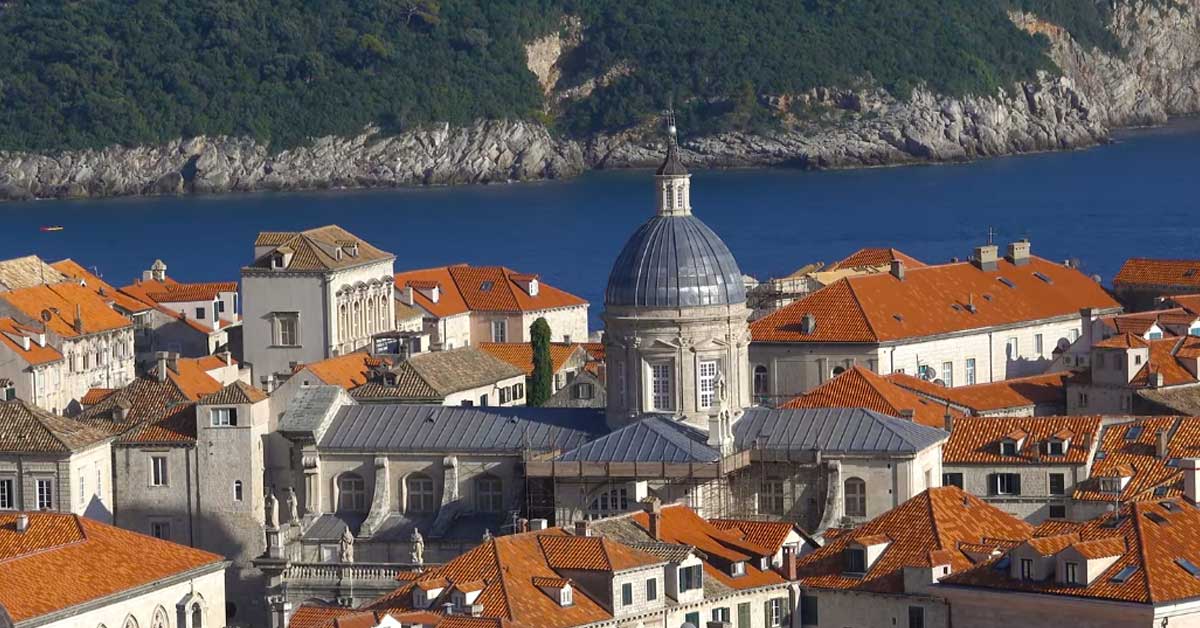
When you walk into Dubrovnik Cathedral for the first time, the weight of history hits you in an unexpected way. It is not the ceilings, though they are vaulted and impressive. It is not the altars, though they are ornate and beautiful. It is the knowledge that you are standing inside a building that was built after absolute catastrophe, designed as an act of will against nature’s indifference and completed through decades of determination when the city’s treasury was depleted and its future uncertain.
Dubrovnik Cathedral, formally called the Cathedral of the Assumption of the Blessed Virgin Mary, is one of those rare religious monuments that works simultaneously on multiple levels. It is an architectural masterpiece of Roman Baroque design. It is a treasury of priceless artwork and sacred relics. It is a symbol of a city’s resilience and its refusal to be diminished by disaster. And it is a functioning church where people still gather to pray, transforming it from museum into living spiritual space.
If you are visiting Dubrovnik and asking yourself whether the cathedral is worth time and money to enter, or if you are simply curious about how medieval cities recovered from destruction, this guide explains everything. You will learn the cathedral’s thousand-year history, understand why the 1667 earthquake changed everything, discover what treasures exist inside and understand how to experience the building in a way that honors its meaning. Just a short walk from the cathedral, the Dubrovnik Synagogue, offers a more intimate yet deeply moving insight into the city’s Jewish heritage.
Table of Contents
The Thousand-Year Journey of Dubrovnik Cathedral: From Legends to Reconstruction
The history of Dubrovnik Cathedral spans over a thousand years and contains at least four completely different buildings constructed on the same sacred site. The story begins with legend.
In 1192, an English king named Richard the Lion Heart was returning from the Third Crusade when his ship was caught in a storm near the island of Lokrum, just offshore from Dubrovnik. According to historical records, he survived this shipwreck and reached the island safely. In gratitude for his salvation, Richard made a vow to donate money for the construction of a grand church in the city that had offered him shelter. This donation fundamentally shaped Dubrovnik’s religious architecture. The cathedral that emerged from Richard’s generosity was a Romanesque basilica of considerable size and artistic ambition.
This Romanesque cathedral, which dominated Dubrovnik’s skyline for five centuries, was described by contemporary writers as unrivaled throughout the entire region of Illyria. It featured a three-aisled design with a transept and was topped with a dome, an engineering achievement that required sophisticated construction knowledge. The interior contained multiple altars decorated with artwork, and the entire structure communicated permanence and spiritual authority.
Then came April 6, 1667. On that date, one of the most destructive earthquakes ever recorded in European history struck Dubrovnik. The quake lasted approximately three minutes, but those three minutes transformed the city irreversibly. Approximately 5,000 people, roughly one-third of the city’s population, died. Buildings that had stood for centuries collapsed into rubble. The Romanesque cathedral, that five-hundred-year-old structure, was reduced to ruins in moments.
In the immediate aftermath, Dubrovnik faced an existential question. The city was devastated. Its treasury was depleted. Many of its residents were dead or injured. Rebuilding seemed impossible. Yet the Senate of Dubrovnik made a decision that revealed something crucial about how they understood their city’s identity. They would not merely repair what had been lost. They would rebuild the cathedral grander and more impressive than before, using the latest architectural styles and the finest craftspeople available in Europe. The cathedral would become a symbol that Dubrovnik had not merely survived. It had transcended the disaster through will and faith.
The instrument of this transformation was Stjepan Gradić, a Dubrovnik intellectual who had risen to become a curator at the Vatican Library in Rome. Gradić understood both the practical problems facing his native city and the cultural networks through which solutions could be found. He lobbied the Pope for support. He leveraged his connections with prominent Italian architects. He essentially became the project manager for Dubrovnik’s spiritual reconstruction.
The Architects Behind Dubrovnik Cathedral: Design and Modern Ideas
The architect selected to design the new cathedral was Andrea Bufalini of Urbino, one of the leading Baroque architects of his time. Bufalini did not come to Dubrovnik in person. Instead, he sent a detailed model of the proposed cathedral, drawn in the sophisticated Baroque style that was reshaping European architecture. The design featured a three-aisled basilica with a prominent dome, a configuration that would create a sense of verticality and drama through the interplay of volumes and light.
Bufalini’s design was ambitious precisely because it was not merely nostalgic. Instead of simply reproducing the lost Romanesque cathedral, Bufalini proposed something new. The Baroque style represented the cutting edge of European architectural thinking in the late 17th century. It emphasized drama, emotion and movement. It used curved lines, elaborate ornament and careful manipulation of light to create psychological impact. By choosing to rebuild in the Baroque style, Dubrovnik was choosing to look forward, not backward.
Construction began in 1673 with Paolo Andreotti, a Genoa-based architect who took primary responsibility for realizing Bufalini’s design. Multiple other Italian architects worked on the project over the following four decades, each contributing their expertise. Pier Antonio Bazzi arrived from Genoa in 1677. Francesco Cortese managed construction from 1669 until his death in 1670. Most significantly, friar Tommaso Napoli of Palermo worked on the project from 1689 to 1700, making crucial modifications to the original design. Napoli introduced cross vaults to the interior ceiling and designed thermal windows at the upper level that flood the interior with natural light, creating brightness and airiness that contrasted with the darker Romanesque interior that had been destroyed.
Finally, in 1713, a full forty years after construction began, local Dubrovnik architect Ilija Katičić completed the cathedral. The fact that a Dubrovnik architect finished the work is symbolically important. The early years depended on imported Italian expertise, but the final completion belonged to the local craftspeople who had been learning alongside the Italian masters. The cathedral was, in the end, both international and local, bringing together the best of European Baroque architecture with the particular knowledge and skill of Dubrovnik’s own builders.
Architectural Magnificence of Dubrovnik Cathedral: Design and Purpose
The cathedral that emerged from four decades of construction is, by any measure, a remarkable achievement. The exterior facade features four Corinthian columns that frame the main portal, representing the height of classical architectural vocabulary adapted to Baroque sensibilities. Above the central entrance rises a large window with a triangular gable, topped with a balustrade decorated with statues of saints. The facade is symmetrical, emphasizing order and proportion.
The interior is where the cathedral’s true power becomes apparent. The nave stretches upward with a height that creates a sense of spiritual elevation. Three aisles run the length of the building, separated by massive columns that have the scale to support the vaults above them. The dome at the crossing of nave and transept dominates the interior space, flooded with light from thermal windows that Napoli designed. This strategic lighting is one of the cathedral’s most effective features. Medieval cathedrals often felt dark and mysterious. This cathedral feels open and illuminated, making the spiritual space feel welcoming rather than forbidding.
The main altar occupies the sanctuary and is backed by a monumental painting by Titian, one of the greatest Renaissance masters. Titian’s work depicts the Assumption of the Virgin Mary, the theological event that the cathedral is dedicated to. The painting likely dates to 1552 and is a polyptych, meaning it consists of multiple panels united in a single composition. Titian’s color palette and emotional intensity transform the altar area into a focal point where art and spiritual devotion merge.
Other altars throughout the cathedral contain paintings by Italian and Dalmatian masters of the 17th and 18th centuries. Each one deserves individual attention if you have time. But the primary artistic statement is made by Titian’s work. When light hits the painting at the right angle, particularly in late afternoon when sunshine comes through the western windows, the colors seem to glow with almost supernatural intensity.
The Treasury of Dubrovnik Cathedral: Relics and Sacred Art
If the cathedral’s architecture and artwork alone make it worth visiting, the Cathedral Treasury elevates it to a place of genuine historical and spiritual significance. The treasury is housed in a separate chamber and contains one of the most important collections of relics and sacred objects in the Mediterranean.
The treasury holds 132 reliquaries dating from the 11th century to the 19th century. These are not abstract spiritual concepts. They are concrete physical objects. Reliquaries are containers, often exquisitely crafted from precious metals and adorned with gems or enamel, that hold the actual remains of saints. In the medieval and early modern world, relics were not curiosities. They were objects of genuine spiritual veneration and sources of pilgrimage. Their presence in a city enhanced that city’s prestige and spiritual authority.
The most important relics in Dubrovnik’s treasury belong to Saint Blaise, the patron saint of Dubrovnik. Saint Blaise was a 4th-century Armenian bishop who was martyred during religious persecution. According to legend, he had miraculous powers to heal the sick and protect the vulnerable. The reliquaries containing his remains are among the most elaborate and valuable objects in the treasury. Dubrovnik’s goldsmiths created intricate containers from precious metals to house his head, arms and legs. These reliquaries date to the 11th and 12th centuries, making them over nine hundred years old. Their craftsmanship is extraordinary. Fine filigree work, carefully placed gemstones and enamel work showcase technical skills that modern craftspeople would struggle to replicate.
Beyond Saint Blaise, the treasury contains relics associated with dozens of other saints. There is a reliquary containing wood from the True Cross, the cross upon which Jesus Christ was crucified according to Christian tradition. This particular reliquary is exceptionally important because it features Byzantine enamel work and is recognized as one of the most valuable Byzantine liturgical objects preserved in its original form in Croatia. Its presence in Dubrovnik indicates the city’s historical connections to the Byzantine Empire and its role in the medieval Mediterranean trade networks.
The treasury also preserves paintings by Petar Mattei, a Dubrovnik painter who created allegorical works related to themes of death, resurrection and redemption. These paintings are displayed alongside the reliquaries, creating a unified environment designed to inspire religious contemplation. The combination of physical relics, precious metalwork and religious art was meant to transport visitors into a spiritual state where the material and immaterial worlds seemed to intersect.
Entering the treasury requires either purchasing a separate ticket or joining a guided tour. The experience is quite different from viewing the cathedral itself. The treasury is intimate and intimate, often containing only a handful of visitors at any given time. The reliquaries are displayed in cases under controlled lighting. The emotional atmosphere is more contemplative than the cathedral proper.
Dubrovnik Cathedral in War and Restoration: A Recent History
The cathedral survived the 1979 Montenegro earthquake relatively intact, requiring only moderate repairs. But it could not escape the conflict of the 1990s. During the Siege of Dubrovnik in December 1991, when the city came under artillery bombardment, the cathedral was directly hit by at least one shell. The damage was visible and significant, with windows blown out and structural elements damaged.
However, the damage was far less than what might have occurred. The cathedral’s massive stone walls and sturdy construction protected it from potentially catastrophic destruction. Compared to other medieval buildings in the city, the cathedral emerged remarkably well. This resilience was due to the quality of the original construction and the fact that the cathedral’s structure had proven its durability over three centuries.
After the war, the cathedral was restored as part of the broader reconstruction effort of Dubrovnik’s Old Town. The restoration followed strict historical principles, using materials and techniques that matched the original construction as closely as possible. Damaged stones were repaired or replaced. Windows were reconstructed based on historical documentation. The interior was carefully cleaned and any damage to artworks was addressed.
This restoration reveals something important about how contemporary Dubrovnik understands its monuments. Rather than attempting to hide evidence of damage, the restoration preserves the visual memory of what happened. If you look carefully at the cathedral’s exterior, you can still see areas where shell damage and subsequent repair are visible. This transparency about the building’s recent history is unusual and significant. The cathedral is not presented as if nothing happened. Instead, it is presented as something that endured, was damaged and was healed. This becomes part of its meaning.
Visiting Dubrovnik Cathedral: Practical Information
The cathedral is located on the eastern side of the Luža Square in Dubrovnik’s Old Town, directly adjacent to Sponza Palace. If you are standing at the Pile Gate on the western end of Stradun and facing east toward the Ploče Gate, walking straight will bring you directly to the Luža Square after about ten minutes. The cathedral’s main entrance faces the square.
Entrance to the cathedral itself is free. You can walk in, observe the interior, examine the artwork and meditate in the pews without paying. However, entering the Cathedral Treasury requires a separate ticket, usually around five euros. The treasury is open seasonally with reduced hours in winter months.
Budget approximately thirty to forty-five minutes to see the cathedral properly. This allows time to walk through the interior, look at the different altars, contemplate the main Titian painting and generally absorb the space. If you also visit the treasury, add another thirty minutes.
The best times to visit are early morning before cruise ship passengers arrive or late afternoon when most tourists have returned to their hotels. The light in late afternoon, particularly in spring and fall, creates beautiful effects within the cathedral as sunlight streams through the windows. Photographs are typically permitted but without flash, which protects the interior artworks from damage.
The cathedral remains an active church, not solely a tourist attraction. If your visit coincides with a service, you are welcome to attend. Many visitors find attending a service provides a deeper understanding of the space than visiting when it is empty of worshippers. During the Dubrovnik Summer Festival in July and August, concerts and religious services are sometimes held in the cathedral, transforming it into a performance venue.
FAQ – Dubrovnik Cathedral Frequently Asked Questions
Who funded the original Romanesque cathedral?
King Richard the Lionheart of England donated funds for the 12th-century Romanesque cathedral after surviving a shipwreck near Lokrum island in 1192 on his return from the Third Crusade.
What destroyed the original cathedral?
The catastrophic earthquake of April 6, 1667 destroyed the Romanesque cathedral that had stood for nearly 500 years. Approximately one-third of Dubrovnik’s population died in the earthquake.
Who designed the current Baroque cathedral?
Andrea Bufalini of Urbino designed the cathedral in Roman Baroque style. Paolo Andreotti from Genoa was the primary architect during construction, with other Italian architects including Tommaso Napoli and Pier Antonio Bazzi contributing significantly.
How long did it take to build the current cathedral?
Construction took forty years, beginning in 1673 and completed in 1713 by local Dubrovnik architect Ilija Katičić.
What is the most famous artwork in the cathedral?
The main altar features a polyptych by Titian depicting the Assumption of the Virgin Mary. The painting likely dates to 1552 and is one of the most important Renaissance artworks in Dubrovnik.
When is the best time to visit?
Early morning or late afternoon provides better lighting and fewer crowds than midday. Sunset light in spring and fall creates particularly beautiful effects inside the cathedral.
Our Most Popular Tours To Sarajevo
We offer many tours that include a visit to Sarajevo and its most popular locations:
- Full Day tour from Sarajevo to Belgrade (Most Popular)
- Full Day tour from Sarajevo to Međugorije & Mostar
- Full Day Tour from Sarajevo to Travnik and Jajce
- Full-Day 5 Cities Tour from Sarajevo to Herzegovina (Mostar)
- Full day Tour from Sarajevo to Dubrovnik (Kotor or Split)
Don’t Hesitate To Say Hi!
Got any questions about our tours or the city? Don’t hesitate to contact us anytime for more info and booking.
Use the following phone number and email: