
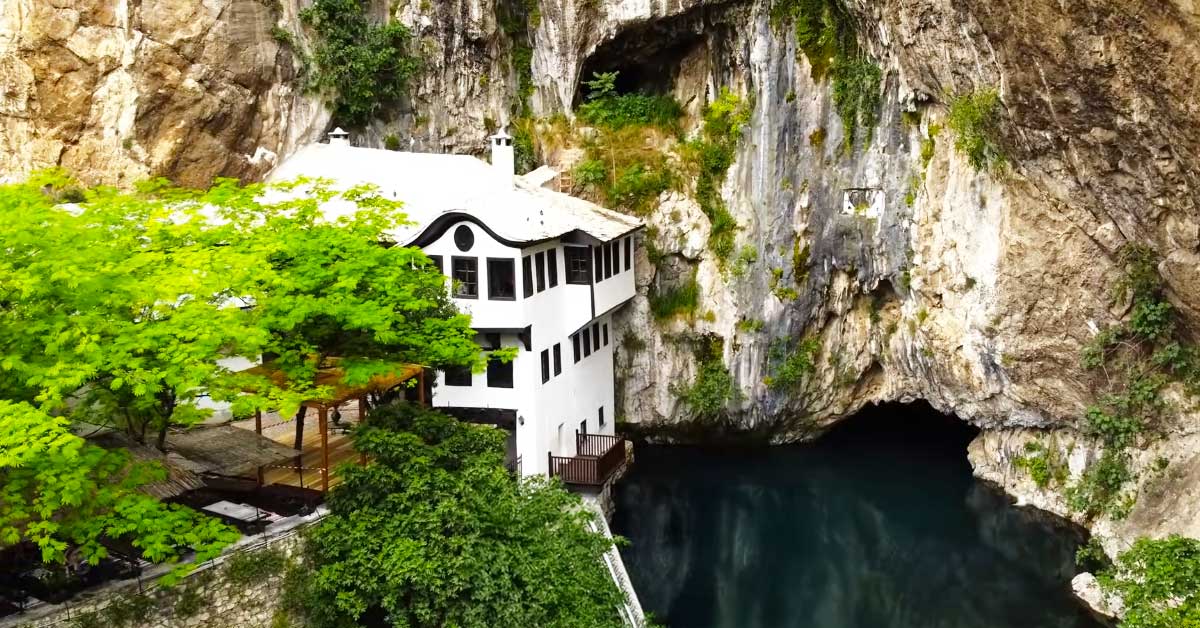
Imagine a 16th-century wooden monastery clinging impossibly to the face of a towering limestone cliff, where the thunderous Buna River emerges from Europe’s largest karst spring right at its doorstep. Mist rises from ice-cold waters gushing 350 cubic meters per second, while Sufi dervishes once chanted praises in rooms echoing with centuries of devotion. Blagaj Tekke stands as Bosnia’s most mesmerizing fusion of nature and spirituality, a serene oasis where Ottoman mysticism meets raw geological power. This detailed guide to Blagaj Tekke explores its profound history, practical visit strategies, and hidden charms that make it an essential Mostar day trip for travelers seeking beauty beyond the ordinary.
The site’s hypnotic allure stems from perfect harmony, emerald river foaming against terraced stone walls, trout farms bubbling alongside prayer rooms, olive trees twisting from cracks where saints supposedly flew on golden bulls. No commercial clutter mars the scene; instead, families fish lunch from the Buna while hikers emerge awed from fortress ruins above. Twelve kilometers southeast of Mostar, Blagaj Tekke draws 500,000 visitors yearly for its photogenic drama and peaceful aura, blending Halveti-Bektashi Sufi heritage with karst wonders. Hike cliffside paths, sip coffee with cliff views, dive spring-fed pools, experiences etching memories deeper than Instagram likes.
Legends enchant every stone: Sari Saltuk, 13th-century holy man, legendarily arrived flying bull-back; Bogomil sanctuary predated Ottomans, its energy lingering. Dawn visits capture mist-shrouded magic, dusk golden-hour glow. This guide delivers insider paths, meal spots, transport hacks for transcendent visits. The cliff whispers; listen.
Table of Contents
Where Is Blagaj Tekke Located?
Blagaj Tekke occupies a dramatic location at the very source of the Buna River, just 12 kilometers southeast of Mostar within the picturesque Blagaj village of Bosnia and Herzegovina’s Herzegovina-Neretva Canton. Constructed around 1520 during the early Ottoman period, the monastery actually stands atop the ruins of a much older Bogomil sanctuary dating back to the 15th century, a pre-Ottoman Christian heretical sect that practiced secretive rituals in the same caves now sacred to Sufism. The complex serves as a traditional tekke (or khanqah), functioning as a lodge for the Halveti order of dervishes who gathered thrice weekly for zikr chanting sessions that echoed through the valley for centuries.
The famous Ottoman traveler Evliya Çelebi first documented the site during his 1664 visit, marveling at its established fame throughout the empire and describing the daily rhythms of dervish life centered around prayer, contemplation, and communal meals. Architecturally, the tekke features a classic Ottoman layout adapted masterfully to the cliffside terrain: visitors first enter through a shaded porch leading to the semahane (whirling ritual hall), followed by the musafirhana (guest quarters for pilgrims), kitchen facilities that once fed traveling Sufis, a kahve-odžak (traditional coffee room) for philosophical discussions, and intimate turbe (mausoleums) housing the tombs of revered saints Sari Saltuk and Acik-basa.
Complementing the human architecture stands the Buna Spring (Vrelo Bune), recognized as continental Europe’s most powerful karstic spring with a constant flow of 320-350 cubic meters per second emerging perpetually at 12°C from deep within the limestone-dolomite cave system. This natural phenomenon creates the misty, roaring backdrop that defines Blagaj Tekke’s character, while the river flows just 9 kilometers before joining the Neretva downstream. Currently included on UNESCO’s tentative World Heritage list for both cultural and natural significance, the site survived devastating floods, multiple wars, and 20th-century political upheavals through 2015 restoration projects funded by international preservation organizations. Today it remains an active spiritual center overseen by a resident sheikh who continues traditional zikr ceremonies, welcoming visitors who approach with respect alongside trout farm lunches and cliffside photography sessions.
History of Blagaj Tekke
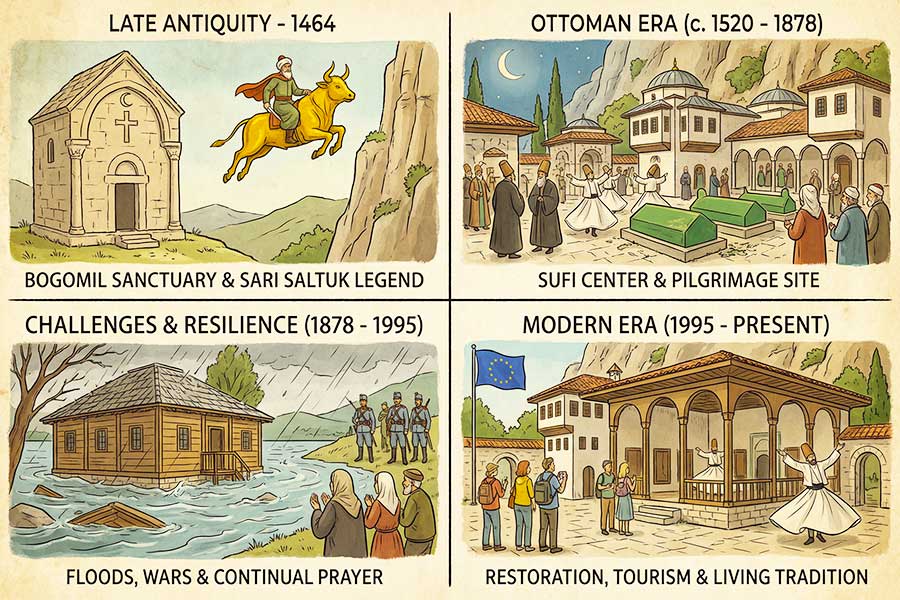
Archaeological evidence reveals continuous sacred use at Blagaj Tekke’s location dating back to Late Antiquity, with a confirmed medieval Bogomil sanctuary operating there until the Ottoman conquest of 1464 when records first mention the site in a 1454 document. The dual-faith character persisted as Ottoman Halveti Sufis constructed their tekke around 1520 directly atop these Christian ruins, embracing the site’s established spiritual energy while introducing Islamic mysticism. According to cherished Bektashi legend, 13th-century holy man Sari Saltuk miraculously arrived at the cliff face flying on a golden bull sent by divine command, instantly recognizing the location’s sanctity and establishing the first prayer gatherings that evolved into the formal monastery.
Through the 17th and 18th centuries, Blagaj Tekke flourished as a regional Sufi center hosting dervishes from various orders including Bektashi travelers who maintained the green-cloth covered tombs of Sari Saltuk and his disciple Acik-basa as focal points for pilgrimage. Evliya Çelebi’s detailed 1664 account praised the complex’s architecture and routines, noting established imperial fame that drew spiritual seekers throughout the Balkans. The site endured multiple challenges including destructive fires and massive spring floods that repeatedly threatened the wooden structures, yet dervish resilience ensured continual rebuilding and ritual preservation through whispered prayers believed to hold back the waters.
Austro-Hungarian occupation beginning in 1878 brought tobacco cultivation to surrounding fields but largely left the tekke undisturbed, while Yugoslavia’s communist era recognized it as protected cultural heritage without interfering with ongoing worship. Remarkably, during the devastating 1992-1995 Bosnian War when nearby Mostar suffered siege destruction, Blagaj Tekke escaped significant damage, maintaining continuous operations as a spiritual refuge. Postwar tourism explosion brought both preservation funding from EU cultural programs and necessary 2015 restorations that carefully renewed original wooden beams and interior decorations without compromising authenticity. Today a resident caretaker sheikh upholds traditional zikr ceremonies three times weekly, Tuesday, Thursday, and Saturday evenings, preserving rituals of mejdan lectures, semah whirling dances, and halvet solitary contemplation within the same walls walked by generations of mystics.
The Monastery Structure in Blagaj Tekke
Visitors first approach Blagaj Tekke through a beautifully shaded front porch that opens into the semahane, or ceremonial hall where dervishes traditionally performed their whirling zikr rituals accompanied by ney flute melodies and rhythmic hand clapping that echoed across the Buna canyon. To the right extends the musafirhana, a series of cozy guest rooms designed specifically for traveling Sufi pilgrims who journeyed long distances seeking spiritual instruction, each chamber featuring simple wool rugs and low wooden benches oriented toward Mecca. The communal kitchen preserved nearby once prepared modest meals of lentil soups, flatbreads, and herbal teas shared during post-prayer gatherings that strengthened community bonds among the brotherhood.
At the complex’s spiritual heart lies the turbe, or mausoleum containing the green-cloth draped tombs of Sari Saltuk and his disciple Acik-basa, constructed with deliberately low ceilings that create intimate reverence while allowing river mist to drift through carved wooden lattice screens. The hamam Turkish bathhouse provided ritual cleansing for dervishes before prayers, its smooth limestone floors and arched steam chambers still bearing faint traces of centuries-old usage patterns. Ascending narrow stairs reveals the cillah, a tiny solitude cell where advanced mystics undertook 40-day halvet retreats of complete silence and fasting, emerging transformed according to Sufi tradition. The kahve-odžak coffee room facilitated philosophical discussions over strong Bosnian kahva served in tiny fildžan cups, fostering the intellectual tradition central to Ottoman Sufism.
Current visitors pay a modest €4 entry fee (as of 2026) that directly supports preservation efforts, receiving guidance from the resident caretaker who patiently explains Sufi cosmology and ritual significance while answering thoughtful questions. Photography proves respectful throughout but flash strictly prohibited within the turbe to honor the sacred atmosphere, while the 30-minute interior exploration reveals details like intricately carved mihrab prayer niches and wooden beams bearing 16th-century mason marks. The persistent combination of river roar, mist spray, and stone resonance creates an almost tangible spiritual vibration that lingers long after departure, distinguishing Blagaj Tekke from more conventional religious sites.
Buna River Spring in Blagaj Tekke
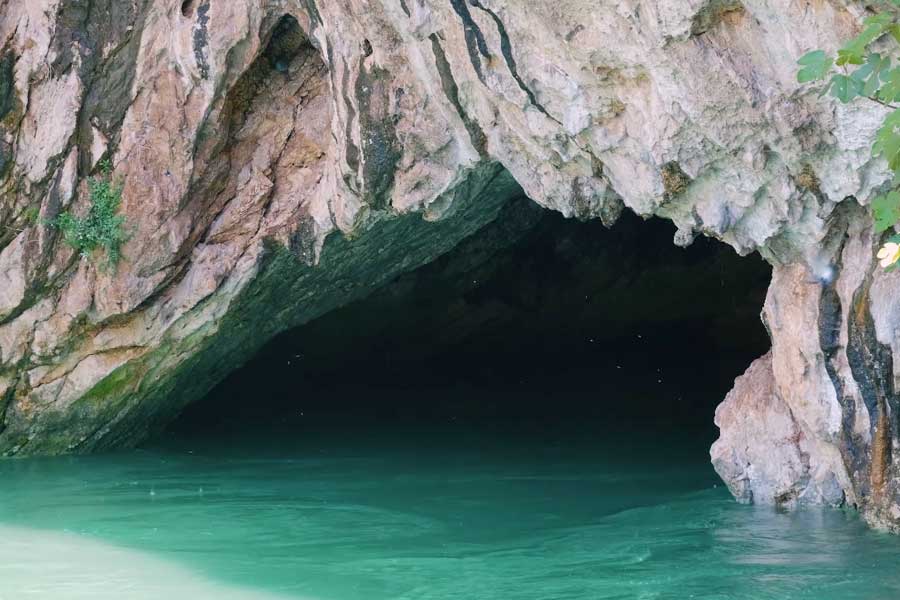
Directly beneath Blagaj Tekke’s terrace plunges the Buna Spring (Vrelo Bune), continental Europe’s most powerful karstic phenomenon where 320-350 cubic meters of crystal-clear water surges every second from deep within a limestone-dolomite cave system at a constant 12°C temperature year-round. This geological marvel drains approximately 6 kilometers of underground river from the Mostar plateau through sinkholes and subterranean channels, exploding dramatically from a massive cave mouth framed by the same cliff supporting the monastery above. The resulting mist perpetually shrouds the site in rainbows during morning sunlight while providing ideal habitat for endemic softmouth trout that thrive in the oxygen-rich currents.
Local trout farms lining the riverbanks cultivate these prized fish through traditional net systems, supplying neighboring restaurants with morning catches that reach tables within hours while maintaining sustainable wild populations downstream. Brave summer visitors occasionally swim in calmer pool sections despite the bracing temperature, discovering pebbled beaches perfect for picnics amid dramatic canyon scenery where sheer rock faces plunge directly into foaming emerald waters. Kayakers rent paddle craft for €10 per hour to navigate the cave mouth shadows where fish leap dramatically and the river’s full power becomes viscerally apparent up close.
Spring floods represent both threat and legend, massive water surges have historically threatened the tekke itself, with villagers attributing survival to Sari Saltuk’s protective prayers rather than engineering alone. The free spring area features well-maintained terrace paths offering multiple vantage points for photography and contemplation, while nearby mills once powered by diverted waters reveal centuries-old water management techniques adapted to this unique environment. This elemental power dramatically amplifies Blagaj Tekke’s spiritual atmosphere, creating nature’s own sacred accompaniment to centuries of human devotion.
Things to Do at Blagaj Tekke
Begin your Blagaj Tekke visit during early morning mist when the terrace offers golden solitude for contemplative walks above the roaring Buna Spring, listening for distant zikr echoes from the semahane while watching rainbows form in the spray. Enter the sacred interiors for guided explanations of Sufi cosmology, pausing longest in the turbe where green-cloth saints’ tombs inspire whispered personal prayers amid centuries-old wooden resonance. Rent kayaks from nearby operators for €10 per hour to paddle silently through cave mouth shadows where endemic trout leap suddenly and canyon walls amplify every paddle stroke.
Watch trout farmers demonstrate traditional net casting during morning hours, then enjoy the just-caught harvest grilled riverside while steam rises from sizzling plates against cliff backdrop. Embark on the 30-minute steep hike to Blagaj Fortress ruins crowning the cliffs above, discovering panoramic valley views from duke’s former seat and queen’s legendary birthplace amid wild thyme-scented slopes. Wander spring-fed olive grove trails during spring wildflower season or summer fig abundance, discovering hidden benches carved into living rock for quiet reflection.
Attend live dervish zikr ceremonies Tuesdays, Thursdays, and Saturdays when caretaker sheikh leads hypnotic chanting sessions blending breath work, rhythmic hand movements, and ney flute melodies that harmonize uncannily with river roar below. Capture golden hour photography framing the tekke against canyon sunset, or brave summer swims in calmer Buna pools where 12°C waters refresh dramatically after cliff explorations. Families picnic pebble beaches while children skip rocks across emerald currents, creating joyful memories amid sacred scenery. These two-hour immersions reveal Blagaj Tekke’s profound multi-layered appeal encompassing spirituality, nature, history, and timeless beauty.
Food and Culture in Blagaj Tekke
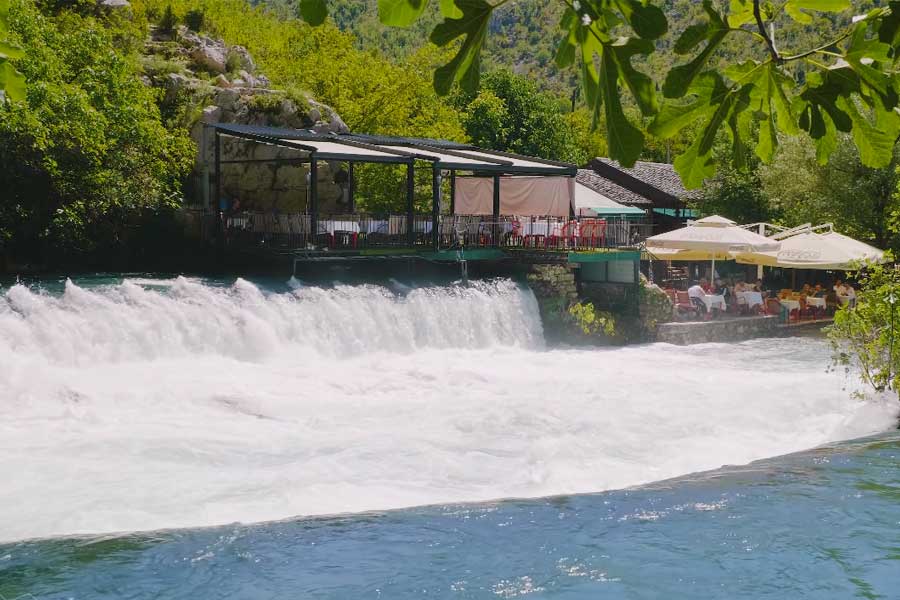
Savor authentic Herzegovinian hospitality at Konoba Dervish House directly opposite Blagaj Tekke’s entrance, where the signature whole Buna trout arrives grilled to crispy perfection with butter, lemon, and wild herbs for €12, its freshness guaranteed by morning farm-to-table delivery. Their renowned lamb peka slow-cooks eight hours beneath glowing embers in traditional lidded clay bells, emerging fork-tender with potatoes and vegetables for €18 per generous portion easily serving two hungry hikers. Classic ćevapi platters feature ten handmade veal-beef sausages nestled in warm lepinja bread alongside chopped onions and creamy kajmak for €8, while vegetarians delight in japrak, tender grape leaves stuffed with herbed rice, pine nuts, and vegetables, for €6 per plate. Finish with house-made baklava layers dripping warm honey over crushed walnuts priced at €3, paired with shots of fiery pear rakija (€2) distilled from local orchards. The cliffside terrace offers unobstructed river-monastery views; complete dinners average €15-28 per person with summer reservations recommended via phone during peak weekends.
Upstream at Restoran Vrelo Bune, savor elaborate trout meze platters combining smoked, grilled, and chilled preparations with yogurt-dill dips and flatbreads for €14, alongside comforting polenta bowls crowned with slow-simmered lamb ragu for €10 featuring meat sourced from nearby mountain pastures. Breakfast features homemade fig jam with fresh pomegranate juice squeezed tableside (€3 per jar), complementing flaky burek pastries filled with soft cheese or spinach. Blagaj Tekke’s living culture manifests through thrice-weekly Sufi zikr ceremonies where visitors respectfully witness hypnotic chanting, breath synchronization, and semah whirling that blends seamlessly with Buna’s eternal roar.
Caretaker sheikhs patiently share Sari Saltuk legends and Bogomil sanctuary echoes predating Ottoman arrival, while Ramadan transforms surrounding konobas into festive iftar gathering spots with communal feasts breaking daily fasts. Seasonal wildcrafting yields herbal teas from mountain thyme and sage foraged along fortress trails, served alongside thoughtful conversations about Sufi cosmology and Bosnia’s multicultural spiritual heritage. Visiting folk musicians occasionally grace riverside evenings with tamburica strings and accordion melodies celebrating centuries-old traditions, creating joyful evenings where strangers become extended family through shared plates and stories beneath starlit canyon walls.
Practical Tips for visiting Blagaj Tekke
Plan your Blagaj Tekke adventure during spring months from April through June or autumn from September through October, when comfortable daytime temperatures between 18 and 25 degrees Celsius coincide with lush wildflower displays along fortress trails and significantly thinner tourist crowds compared to peak summer. Summer brings intense 30-degree heat and parking challenges near the entrance, while winter flooding occasionally closes riverside paths though the monastery itself remains accessible for contemplative visits. Mostar lies just 12 kilometers northwest via well-maintained local road; taxis charge €15 for the quick 15-minute transfer, while public buses numbered 10 or 11 depart regularly from Mostar’s Spanish Square for €2.50 each way taking about 20 minutes. Beyond the bridge itself, Mostar offers an incredible range of experiences that make it worth more than just a quick stop, including mystical monasteries, refreshing waterfalls, and atmospheric old town explorations detailed in our guide to the 5 unmissable things to do in Mostar.
Visitors should budget €25-40 daily for the Blagaj Tekke experience including the €4 monastery interior entry fee, €15 for memorable trout lunches, and €6 for comfortable round-trip transport from Mostar. Bosnia-Herzegovina convertible marks serve as currency though euros prove widely accepted; carry sufficient small bills since trout restaurants prefer cash transactions. Consider basing yourself in Mostar at comfortable options like Hostel Miran for €25 nightly or book the charming Blagaj Pension Adria offering river terrace rooms for €40 with breakfast included. Essential gear includes sturdy shoes with excellent grip for slippery riverside rocks and fortress trails, swim towels for summer Buna pools, lightweight long-sleeve layers for modest monastery entry, and reusable water bottles to refill from cold spring sources.
Optimize your itinerary by arriving at Blagaj Tekke around 9 a.m. to experience morning mist before crowds gather, dedicating 45 minutes to guided interior tours and terrace contemplation, enjoying riverside trout lunch from 11:30 to 12:15, ascending the fortress ruins during cooler early afternoon hours until 1:30, then returning to Mostar by 2 p.m. to avoid peak heat. Download Maps.me for detailed offline navigation of footpaths and unmarked fortress trails, plus a weather app monitoring spring flood risks. Dress modestly for semahane entry covering shoulders and knees regardless of gender, avoid flash photography within the turbe out of reverence, and park in designated €1 per hour lots at the village base followed by a pleasant five-minute walk to the entrance. Embrace local customs by accepting offers of herbal tea from caretakers, removing shoes before sacred interior spaces, and maintaining quiet during any ongoing zikr ceremonies.
FAQ: Common Questions on Blagaj Tekke
Does Blagaj Tekke merit a full day trip from Mostar?
Blagaj Tekke absolutely justifies a complete day trip from Mostar, combining its stunning cliffside monastery, Buna Spring spectacle, fortress ruins, and trout farm lunches into two profoundly memorable hours.
How do public buses reach Blagaj Tekke from Mostar center?
Public buses numbered 10 and 11 depart regularly from Mostar’s Spanish Square, charging €2.50 each way for the 20-minute journey that drops passengers within easy walking distance of Blagaj Tekke.
When proves the optimal season for experiencing Blagaj Tekke?
Spring from April through June and autumn from September through October provide Blagaj Tekke’s finest conditions with comfortable temperatures, blooming wildflowers, and minimal tourist congestion.
What costs entry to explore Blagaj Tekke’s interior rooms?
Blagaj Tekke charges €4 for access to the turbe mausoleum and semahane prayer hall, while the surrounding spring area and riverside paths remain completely free to all visitors.
Is swimming safe in the Buna River near Blagaj Tekke?
Summer swimming proves safe in Blagaj Tekke’s calmer Buna River pools despite 12°C temperatures, though visitors should avoid strong spring currents and always supervise children closely.
Which nearby attractions complement a Blagaj Tekke visit?
The panoramic Blagaj Fortress ruins require a 30-minute hike offering sweeping valley vistas, trout farm lunches provide authentic flavors, and Kravice Waterfalls lie just 30 minutes distant for refreshing swims.
Our Most Popular Tours To Sarajevo
We offer many tours that include a visit to Sarajevo and its most popular locations:
- Full Day tour from Sarajevo to Belgrade (Most Popular)
- Full Day tour from Sarajevo to Međugorije & Mostar
- Full Day Tour from Sarajevo to Travnik and Jajce
- Full-Day 5 Cities Tour from Sarajevo to Herzegovina (Mostar)
- Full day Tour from Sarajevo to Dubrovnik (Kotor or Split)
Don’t Hesitate To Say Hi!
Got any questions about our tours or the city? Don’t hesitate to contact us anytime for more info and booking.
Use the following phone number and email: