
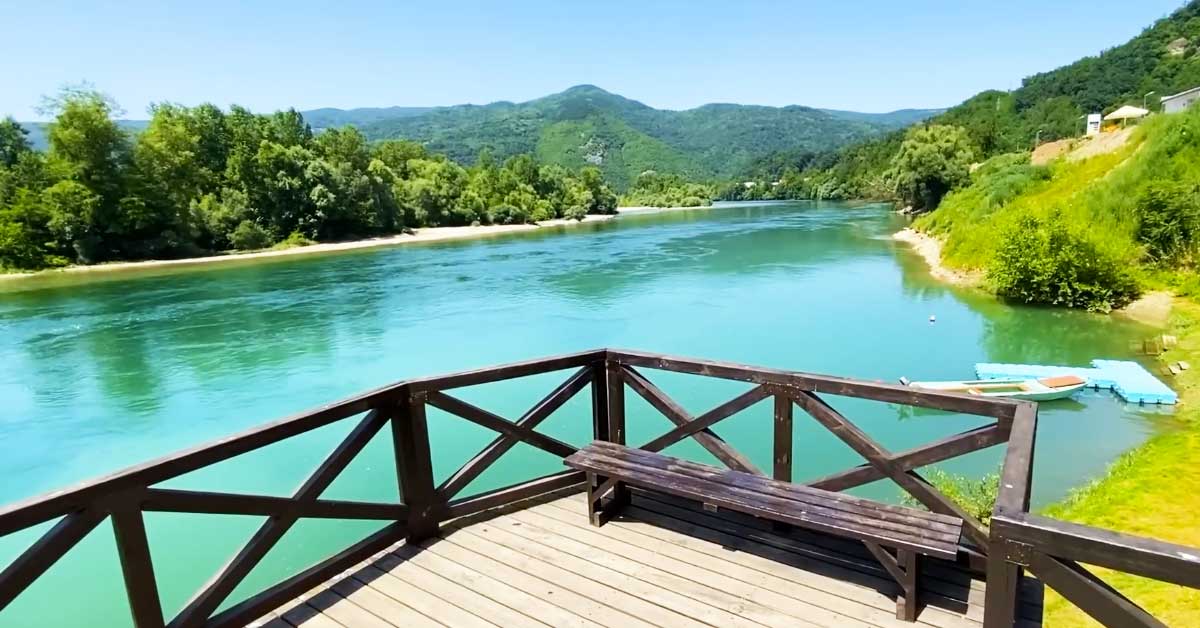
Picture yourself standing on the edge of a cliff where the earth drops away a thousand meters, revealing the Drina River carving through limestone like a liquid emerald ribbon separating Serbia from Bosnia. Behind you, ancient forests whisper secrets while brown bears shuffle through undergrowth completely unaware of your presence. This is Tara National Park, Serbia’s 25,000-hectare wilderness fortress where ice age relics survived and modernity hasn’t corrupted.
What distinguishes Tara isn’t just spectacular geology but living fossils thriving against odds—Serbian spruce that survived glaciers, over 1,200 plant species, and sixty brown bears representing eighty percent of Serbia’s entire population. Humans have barely scratched the surface despite 290 kilometers of trails leading to ten breathtaking viewpoints where perspectives shift from intimate forest glades to vast canyon panoramas.
Table of Contents
Introduction to Tara National Park
Tara National Park encompasses the Tara and Zvijezda mountain ranges in western Serbia near Bajina Bašta, established in 1981 to protect nearly 25,000 hectares of diverse mountain ecosystems where the highest point reaches 1,591 meters at Kozji Rid peak. The Drina River carves dramatic gorges through limestone creating sheer drops from 1,000 meters to 250 meters above water level, forming the natural western boundary separating Serbia from Bosnia and Herzegovina with extensive views spanning both countries.
Mixed forests dominate over eighty percent of the park’s surface, creating dense canopy habitats supporting approximately 1,200 documented plant species including the endemic Serbian spruce that miraculously survived Pleistocene glaciation when ice sheets obliterated its relatives across Europe. The park harbors 140 bird species including golden eagles, 53 mammalian species dominated by Serbia’s largest brown bear population exceeding sixty individuals, plus 19 fish species thriving in cold mountain streams and Perućac Lake.
Positioned approximately 200 kilometers southwest of Belgrade requiring three hours by car, the park operates from Mitrovac village where visitor centers provide maps, bear safety briefings, and guided tour bookings. Ten arranged overlooks including celebrated Banjska Stena deliver vertiginous thrills standing atop thousand-meter cliffs, while Perućac Lake boat cruises reveal canyon perspectives impossible from land-based viewpoints.
History of Tara National Park
Geological processes spanning millions of years shaped Tara’s dramatic topography beginning with Tertiary period uplifts creating proto-mountain ranges subsequently carved by Quaternary ice ages into sharp ridges and deep valleys visible today. The Serbian spruce survived glaciation cycles by retreating into protected Drina canyon microclimates, evolving unique adaptations including shallow root systems perfect for clinging to vertical limestone ledges. By the time glaciers retreated 10,000 years ago, these trees had become living fossils representing flora extinct elsewhere across Europe.
Medieval Serbian kingdoms established monasteries including Rača Monastery founded in the 13th century at Tara’s eastern foothills, while Ottoman occupation introduced grazing pressures that modified forest compositions though remote valleys remained untouched. Scientific recognition began during the 19th century when botanists identified Serbian spruce as distinct species, though systematic protection waited until Yugoslavia’s 1981 establishment of national park status implementing forestry restrictions and wildlife conservation programs.
Brown bear populations had declined drastically through unregulated hunting, prompting strict protections beginning in the 1990s that allowed recovery from perhaps fifteen individuals to current populations exceeding sixty specimens. Post-Yugoslav era brought increased tourism development including expanded trail networks and professional guide services, while UNESCO consideration for World Heritage listing began in 2020 emphasizing Serbian spruce endemic status.
Geological Wonders of Tara National Park
Tara National Park’s defining feature remains the Drina River Gorge cutting through Carboniferous and Triassic limestone formations with sheer canyon walls plunging from ridgetop elevations exceeding 1,000 meters to river levels around 250 meters. The Drina flows emerald-green due to limestone dissolution, its course meandering through Bosnia before forming the Serbian border where tectonic uplift forced it to carve downward through resistant rock over millions of years. Viewpoints including Banjska Stena at 1,065 meters provide vertiginous perspectives revealing the river’s serpentine path where Perućac Lake’s mirror surface reflects surrounding cliffs.
Karst processes dominate surface geology with sinkholes, springs, and cave systems riddling limestone beneath forested slopes, while the waterfall Veliki Skakavac on Beli Rzav River cascades over resistant dolostone creating multi-tiered falls surrounded by moss gardens thriving in constant spray. Mountain peaks rise above treeline into alpine meadows where frost-shattered scree slopes support specialized plant communities including endemic Balkan species.
The geological diversity creates ecological complexity sustaining extraordinary biodiversity, where limestone chemistry influences soil supporting calciphile plants while acidic coniferous needle litter fosters different botanical assemblages, creating mosaic habitats maximizing species richness.
Wildlife Abundance in Tara National Park
Brown bears reign as Tara’s flagship species, with current populations around sixty individuals representing Serbia’s densest concentration and roughly eighty percent of national totals. Strict protections since the 1990s allowed recovery from perhaps fifteen bears, though management challenges emerged as males began ranging into agricultural areas despite supplemental feeding stations. Satellite tracking revealed females with cubs maintaining compact home ranges while solitary males wander extensively, crossing the Drina into Bosnia where hunting remains legal.
Bear-watching tours position small groups at strategic observation points during dawn and dusk when animals emerge to forage meadows for berries and vegetation, with participants maintaining silence in camouflaged blinds. Beyond bears, Tara harbors Eurasian lynx, gray wolves, wild boar, European pine martens, and chamois navigating impossible cliff ledges.
Perućac Lake supports fifty breeding pairs of common mergansers alongside diverse waterfowl, while avian diversity reaches 140 documented species ranging from tiny goldcrests to massive golden eagles. The forests teem with invertebrate life including rare butterflies and endemic beetles restricted to Serbian spruce habitats, establishing Tara as critical Balkan biodiversity reservoir.
Adventures Awaiting in Tara National Park
Begin exploration with the iconic hike to Banjska Stena viewpoint, an eight-kilometer round trip ascending 400 vertical meters through dense forests before emerging at clifftop overlooks where the Drina canyon drops away so abruptly that first-timers instinctively step backward. The well-marked trail from Mitrovac takes roughly two hours, with interpretive signs explaining Serbian spruce ecology and bear habitat requirements before trees suddenly end at exposed limestone platforms.
For a different perspective, hike to Kozja Stena (Goat Rock), another spectacular viewpoint located near the Perućac Lake dam. Though slightly less famous than Banjska Stena, Kozja Stena offers equally dramatic vistas of the canyon and is often less crowded, allowing for deeper solitude. Perućac Lake offers gentler adventures through organized boat cruises departing from the dam facility, two-hour journeys navigating the artificial reservoir while revealing canyon perspectives impossible from land. Kayakers rent equipment for self-guided explorations while stand-up paddleboarders maintain balance across mirror-calm morning waters.
Cycling enthusiasts tackle over 75 kilometers of designated mountain bike routes from gentle forest tracks to technical singletrack, with the trail to Rača Monastery combining moderate difficulty with cultural rewards. Bear-watching tours represent the park’s most exclusive adventure, with professional guides providing safety briefings and positioning groups for dawn and dusk viewing sessions when bears actively forage, creating emotional impacts that connect participants to Europe’s vanishing wilderness.
Savoring Tara National Park Cuisine
Konoba Drina Viewpoint along the road toward Banjska Stena offers canyon vistas while serving mountain specialties including thick bean soup prebranac with smoked pork at 10 euros, and grilled trout from local streams simply prepared at 12 euros. Traditional lamb shoulder marinated in garlic and rosemary cooks over hardwood coals for hours until meat falls from bone at 18 euros serving three diners, while local apiaries supply exceptional honey harvested from bees foraging wildflower meadows perfect drizzled over yogurt.
Kaluđerske Bare restaurants serve expanded menus including ćevapi platters at 8 euros, hearty goulash stews, and autumn wild mushroom specialties highlighting foraged porcini and chanterelles that locals gather from secret forest locations. Finish meals with šnenokle poached meringues floating in vanilla custard at three euros, or sample rakija fruit brandies at 2 euros each.
Cultural traditions prove equally important, with families gathering for Sunday lamb roasts accompanied by live tamburica music and folk singing, strangers welcomed with genuine mountain hospitality that nourishes both body and spirit.
Planning Your Tara National Park Visit
Late spring from May through June and early autumn from September through October provide optimal conditions when temperatures range between 15 and 25 degrees Celsius perfect for hiking. Spring brings wildflower explosions and peak bear activity as animals emerge hungry from dens, while autumn transforms forests into golden tapestries contrasting with evergreen Serbian spruce.
Summer delivers warm lake swimming conditions though afternoon thunderstorms require waterproof gear, while winter offers snowshoeing through silent forests though many facilities close and road access becomes challenging. Belgrade lies approximately 200 kilometers northeast requiring three hours by car via highway E763, or public buses departing five times daily for six to eight euros arriving at Bajina Bašta requiring taxi transfer to Mitrovac.
Budget 40 to 80 euros daily covering guesthouse accommodation at 30 euros nightly, restaurant meals at 15 euros, plus bear-watching tours at 40 euros or boat cruises at 20 euros. Essential packing includes sturdy waterproof hiking boots, layered clothing for rapid temperature changes, and binoculars for wildlife viewing. Respect park regulations prohibiting campfires outside designated areas and enforcing strict prohibitions against disturbing wildlife that protect fragile ecosystems for future generations.
Frequently Asked Questions About Tara National Park
What makes Tara National Park special compared to other Serbian protected areas?
Tara National Park distinguishes itself through unique combination of endemic Serbian spruce forests surviving since the ice age, Serbia’s largest brown bear population exceeding sixty individuals representing eighty percent of the national total, and the dramatic Drina River canyon plunging over a thousand meters creating one of Europe’s deepest gorges with spectacular viewpoints.
How safe is hiking in Tara National Park with brown bears present?
Hiking in Tara National Park proves very safe when following basic bear safety protocols including making noise while walking to avoid surprising animals, properly storing all food, and maintaining respectful distances if encounters occur, with park rangers emphasizing that bears generally avoid humans and attacks remain extraordinarily rare.
Can families with young children enjoy Tara National Park activities?
Families with young children find numerous suitable activities including gentle lakeside walks around Perućac, short educational trails with interpretive signs, boat cruises offering wildlife viewing without strenuous hiking, and the disability-accessible trail, though challenging cliff-edge hikes like Banjska Stena require older children with hiking experience.
What accommodation options exist within Tara National Park boundaries?
Accommodation options include Hotel Omorika and Hotel Beli Bor at Kaluđerske Bare offering comfortable rooms with restaurant facilities, family-run guesthouses in Mitrovac village providing authentic experiences at lower prices, and designated camping areas for tent enthusiasts seeking immersive wilderness experiences under protected forest canopies.
When does Tara National Park offer best bear-watching opportunities?
Tara National Park delivers best bear-watching opportunities during late spring from May through June when animals emerge hungry from winter hibernation, and early autumn September through October when bears actively fatten for upcoming winter requiring intensive foraging that increases daytime activity and encounter probabilities during guided observation sessions.
Our Most Popular Tours To Sarajevo
We offer many tours that include a visit to Sarajevo and its most popular locations:
- Full Day tour from Sarajevo to Belgrade (Most Popular)
- Full Day tour from Sarajevo to Međugorije & Mostar
- Full Day Tour from Sarajevo to Travnik and Jajce
- Full-Day 5 Cities Tour from Sarajevo to Herzegovina (Mostar)
- Full day Tour from Sarajevo to Dubrovnik (Kotor or Split)
Don’t Hesitate To Say Hi!
Got any questions about our tours or the city? Don’t hesitate to contact us anytime for more info and booking.
Use the following phone number and email: