
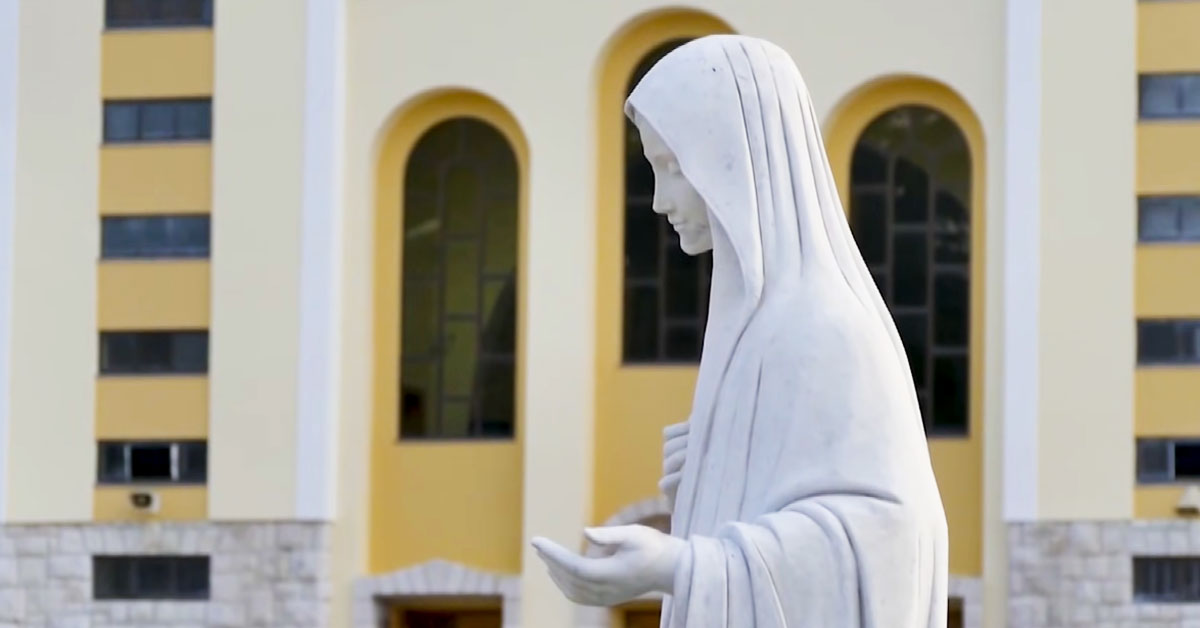
Imagine arriving in a peaceful village cradled between rugged hills, where the air carries whispers of prayer and countless candles flicker against the evening sky. Here, six children from ordinary farm families claimed to see the Virgin Mary beginning in 1981, transforming this quiet corner of Bosnia into one of the world’s most visited spiritual destinations. Međugorje draws millions seeking solace, healing, and renewal, offering a profound experience that transcends religious boundaries. Whether you’re drawn by faith, curiosity about reported miracles, or simply the village’s serene beauty, this comprehensive guide provides everything you need to plan a meaningful visit filled with sacred climbs, multilingual worship, and heartfelt connections.
What sets Međugorje apart lies in its tangible sense of transformation, visitors often describe leaving with renewed purpose after climbing rocky paths lined with rosary stations, participating in candlelit processions, or witnessing emotional confessions flowing in thirty different languages. The village maintains an authentic, unpolished charm without commercial excess, where local families welcome pilgrims into simple guesthouses and share meals heavy with Herzegovinian flavors. Located just 25 kilometers southwest of Mostar, Međugorje proves remarkably accessible while feeling worlds away, blending Mediterranean warmth with deep spiritual energy. You’ll find yourself balancing physical challenges like steep hill ascents with moments of profound stillness in ancient churches, creating memories that resonate long after departure.
Generations of stories enrich every corner, tales of rosary beads that mysteriously survived mountain falls, healings attributed to prayers at sacred sites, and chance encounters leading to lifelong friendships among strangers united by common hope. From dawn meditations overlooking vine-covered valleys to evening gatherings under starlit skies, Međugorje reveals its gifts gradually to those who approach with open hearts. This guide combines detailed practical advice, rich historical context, and personal insights to ensure your journey becomes truly transformative rather than just another checklist.
Table of Contents
Where to Find Međugorje: The Spiritual Heart of Herzegovina
Međugorje sits peacefully in Bosnia and Herzegovina’s Herzegovina-Neretva region within the municipality of Čitluk, nestled between two prominent hills at an elevation of about 200 meters above sea level. The village comprises several small hamlets including Bijakovići, Vionica, Miletina, and Šurmanci, home to roughly 2,300 mostly Croat residents who form the parish of Saint James the Apostle. Everything changed on June 24, 1981, when six local children reported their first vision of the Virgin Mary on nearby Podbrdo Hill, an event that quickly escalated into daily apparitions drawing international attention despite communist authorities’ attempts to suppress the gatherings.
The parish church of Saint James, constructed in 1969 and expanded during the apparition years, serves as the undisputed spiritual heart of Međugorje, hosting continuous multilingual masses, confessions, and adoration services that accommodate up to 100,000 pilgrims during major festivals. The six visionaries—Ivanka Ivanković-Elez, Mirjana Dragičević-Soldo, Vicka Ivanković-Mijatović, Marija Pavlović-Lunetti, Ivan Dragičević, and Jakov Čolo, claim the Virgin Mary identified herself as the “Queen of Peace,” delivering messages emphasizing prayer, fasting, penance, and conversion through the sacraments. While the local bishop maintains skepticism and Vatican investigations have neither confirmed nor fully denied the supernatural nature of these events, Pope Francis authorized official pilgrimages in 2019, acknowledging the site’s undeniable spiritual fruits.
Today Međugorje welcomes over one million visitors annually, generating significant economic benefits for the region through tourism while maintaining its focus on spiritual renewal. Major events like the Youth Prayer Festival in August attract massive international crowds featuring concerts, catechesis, and masses celebrated by global church leaders. The village’s Mediterranean climate supports comfortable year-round visits, though spring and autumn offer the most pleasant conditions for outdoor activities like hill climbs. Beyond its religious significance, Međugorje provides access to stunning natural attractions including nearby Kravice Waterfalls, making it appealing to diverse travelers seeking both spiritual depth and natural beauty.
History of Međugorje
Međugorje’s modern identity crystallized during the summer of 1981 when two girls hiking on Podbrdo Hill near Bijakovići first spotted a shimmering figure they described as a beautiful woman in a shimmering white dress holding a rosary. By the following day, four more children, Ivan, Jakov, Vicka, and Mirjana, joined Ivanka and Marija in experiencing what they claimed were daily apparitions of the Virgin Mary, who reportedly communicated messages of peace and urged humanity toward reconciliation with God. Local Franciscan priest Father Jozo Zovko quickly became a shepherd for the growing crowds, facing arrest by Yugoslav communist police who viewed the gatherings as political threats during Tito’s final years.
As word spread through clandestine networks, thousands began arriving daily despite roadblocks and intimidation tactics, with the children maintaining remarkable consistency in their descriptions even under intense police interrogation. The apparitions continued uninterrupted through the political upheavals of Yugoslavia’s dissolution and the brutal 1992-1995 Bosnian War, during which Međugorje served as a refugee haven and medical aid center under Croatian Defence Council control. The visionaries, now all adults living ordinary family lives except for Ivan who remains single, claim Mary still appears to them regularly, five receive one annual apparition each on their anniversary dates, while Marija receives a public message on the 25th of every month.
Church authorities responded cautiously: Mostar Bishop Pavao Žanić declared the events non-supernatural in 1986, subsequent Vatican commissions in 1991 and 2010 reached similar conclusions, yet the undeniable spiritual impact prompted Pope John Paul II’s private support and Pope Francis’s 2019 decision permitting organized pilgrimages “without making a judgment about the supernatural origin.” In May 2024, the Vatican issued a “nihil obstat” allowing devotion while maintaining doctrinal caution regarding the visionaries themselves. This complex history, marked by persecution, war survival, and evolving ecclesiastical positions, underpins Međugorje’s enduring global appeal as a place where faith encounters mystery.
Apparition Hill in Međugorje
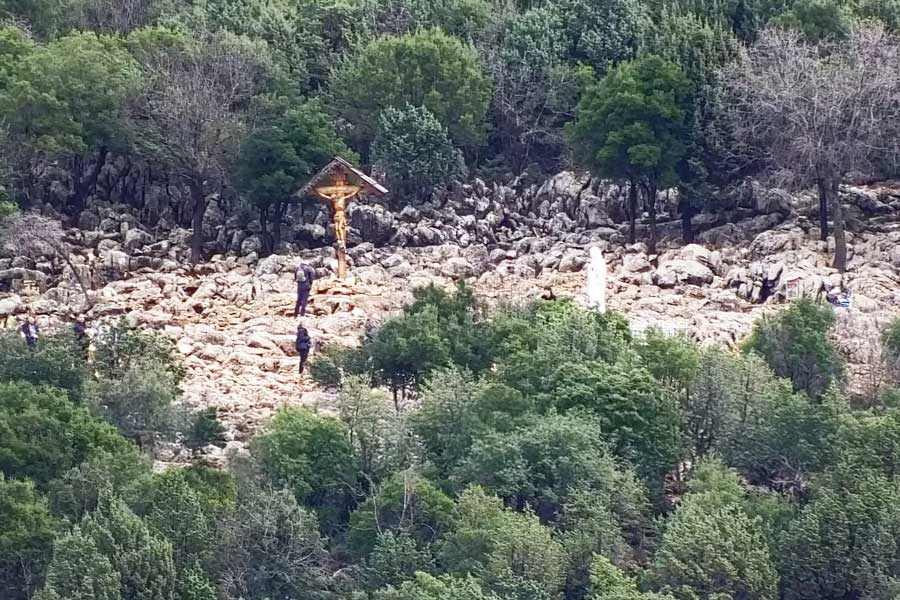
Begin your spiritual journey at Podbrdo, or Apparition Hill, where the six visionaries experienced their first encounter with the Virgin Mary on June 24, 1981, forever changing the village’s destiny. This rocky outcrop rising sharply behind the Bijakovići hamlet requires a moderate 15-20 minute climb of approximately 150 vertical meters from the main road, presenting a physical challenge that many pilgrims undertake barefoot as an act of penance. Along the winding path, fourteen large bronze relief panels depict the traditional rosary mysteries, joyful, sorrowful, glorious, and luminous—inviting visitors to pause and meditate on each Hail Mary while taking in increasingly expansive views of the surrounding valleys.
At the summit, a striking bronze statue of the Queen of Peace crafted by Italian artist Dino Felici marks the exact location of the first apparition, surrounded by piles of rosary beads, handwritten prayer intentions, and stone cairns built by pilgrims carrying rocks symbolizing personal burdens. About halfway up, the Blue Cross marks a particularly significant spot where the Virgin reportedly urged the visionaries to pray the rosary more fervently during a tense moment with pursuing police. Early morning ascents reward visitors with golden light bathing the landscape, while evening pilgrimages see countless candles illuminating the path like earthly stars. Vicka Ivanković-Mijatović occasionally leads groups here during summer months, sharing personal stories that deepen the site’s emotional resonance.
Many report physical and spiritual healings on this trail, with rosaries mysteriously remaining unbroken despite tumbling down rocky sections, a phenomenon locals attribute to divine protection. The hill remains free to access at all hours, though sturdy closed-toe shoes, water, and sun protection prove essential regardless of season. As you descend, reflect on how this unremarkable slope became a global symbol of hope, drawing everyone from world leaders to ordinary seekers to its sacred stones.
St James Church in Međugorje
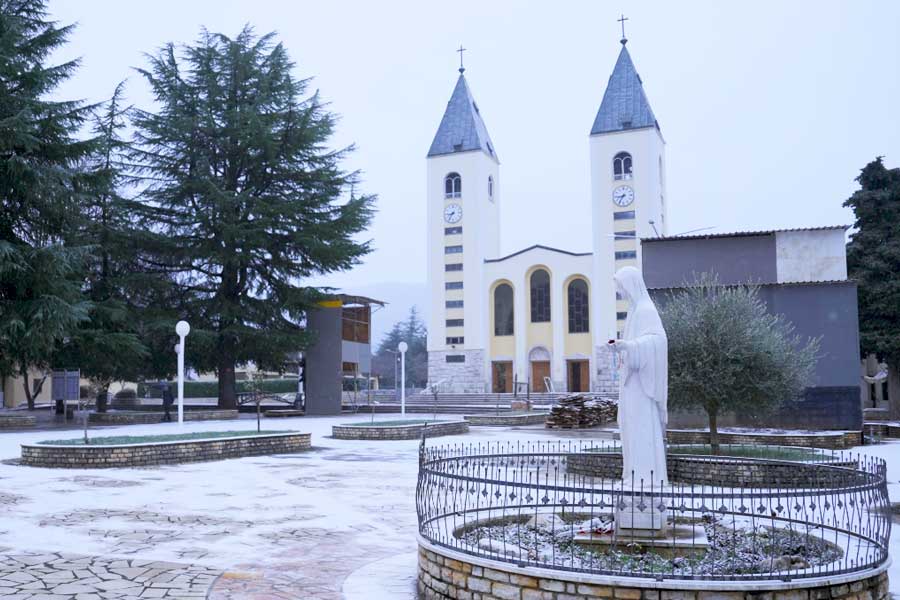
No visit to Međugorje feels complete without experiencing the Church of Saint James the Apostle, constructed in 1969 and serving as the undisputed spiritual epicenter since the apparitions began. This modern concrete structure distinguished by its twin towers and extensive stained-glass windows accommodates hundreds inside while its vast outdoor altar regularly hosts massive gatherings exceeding 100,000 during major feasts. Daily masses celebrate in at least seven languages with English typically at noon, while confession lines form continuously in over thirty languages, creating a symphony of global reconciliation that moves first-time visitors to tears.
The interior houses precious relics including first-class relics of saints and numerous Marian images donated by pilgrims from around the world, while the Adoration Chapel maintains perpetual Eucharistic exposition beneath a constantly burning sanctuary lamp. Behind the main altar stands the striking Risen Christ statue by local sculptor Drago Čivić, which some claim weeps tears of blood during significant spiritual moments—a phenomenon that draws reverent crowds. Just outside, the Peace Rosary Garden features life-sized statues depicting the Luminous Mysteries, providing shaded stations for personal prayer amid blooming roses planted by visiting popes and cardinals.
Evening prayer programs feature powerful rosaries led by village priests, with thousands gathering in the square illuminated by countless candles held aloft—a sight that consistently ranks among pilgrims’ most cherished memories. Arrive early for seating during peak times, as the church fills quickly yet maintains an atmosphere of joyful expectancy rather than competition. Completely free to enter and open daily from early morning until late night, Saint James Church embodies Međugorje’s ecumenical embrace, welcoming Catholics alongside Orthodox Christians, Protestants, and spiritual seekers of all traditions.
Cross Mountain in Međugorje
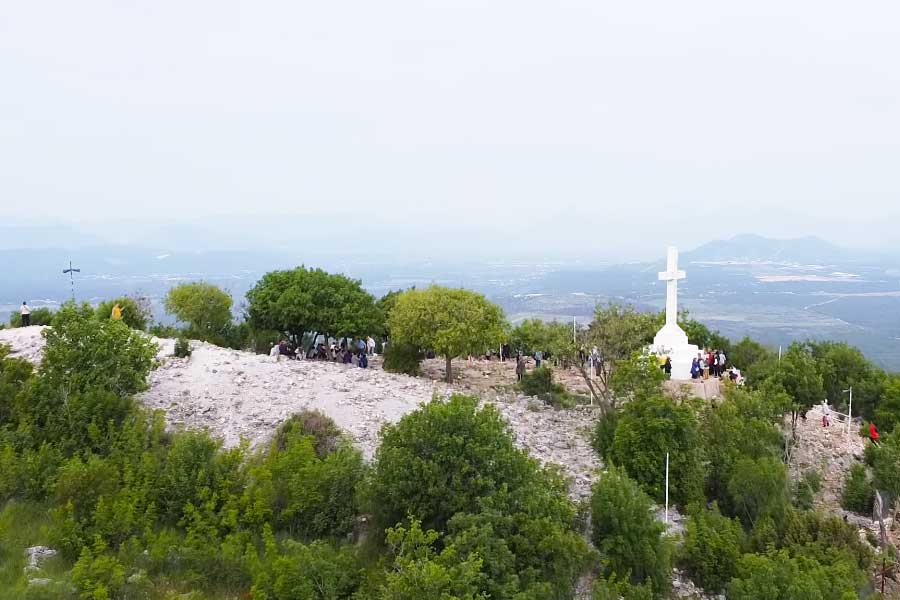
Prepare for one of Međugorje’s most physically demanding yet spiritually rewarding experiences by climbing Križevac, or Cross Mountain, where a massive 18.5-meter concrete cross erected in 1934 commemorates the 1,900th anniversary of Christ’s Passion. The journey begins with a two-kilometer hike from Saint James Church featuring fourteen imposing bronze relief panels depicting the Stations of the Cross, positioned along a steep, rocky path that challenges even fit hikers and typically requires about one hour of steady ascent.
Many pilgrims carry wooden crosses provided along the route or fashion their own from nearby branches, stopping at each station to read accompanying prayers and meditate on Christ’s journey to Calvary. The summit reveals a windswept plateau where the towering cross dominates the landscape, offering sweeping panoramas across vine-covered valleys toward distant mountains while the village appears as a peaceful miniature below. Local tradition holds that Father Bernardin Smoljan commissioned the cross through parishioner donations during challenging economic times, symbolizing communal faith triumphing over hardship.
Special night climbs occur on New Year’s Eve and major feast days, when thousands ascend carrying illuminated candles that transform the mountainside into a river of light flowing upward. While physically taxing on knees and lungs, most visitors emerge profoundly renewed, often leaving personal items or written prayers at the cross base. The trail remains free and open around the clock, though dawn and dusk provide the most atmospheric conditions with cooler temperatures and dramatic lighting. Knee pads or trekking poles significantly ease the descent for those unaccustomed to such terrain.
Things to Do in Međugorje
Structure your first day around Međugorje’s essential spiritual rhythm by attending morning mass at Saint James Church followed by confession, then embark on the Apparition Hill climb while temperatures remain comfortable, pausing frequently to pray the rosary mysteries illustrated along the path. Return to the village center for lunch at one of the family-run konobas before tackling the more strenuous Cross Mountain ascent in early afternoon, carrying a small cross and meditating on each station as countless pilgrims have done before you.
Afternoons often feature visits to the visionaries’ homes, Vicka Ivanković-Mijatović and Marija Pavlović-Lunetti maintain regular afternoon prayer rooms where they share personal testimonies and answer questions, while advance booking proves essential during peak seasons. Witness the Risen Christ statue behind the church where many report profound emotional experiences, lighting votive candles for personal intentions in the surrounding chapels. Participate in the evening prayer program featuring rosary, international music, and Benediction, joining thousands gathered joyfully in the church square regardless of native language.
Dedicated pilgrims join the Stations of the Cross procession up Križevac at dawn or starlit vigils at the Blue Cross, while others explore the Cenacolo Community founded by former addict Slavenka for tours showcasing radical transformation through prayer and work. Take a refreshing day trip to nearby Kravica Waterfalls for swimming in turquoise pools surrounded by limestone cliffs, returning refreshed for the nightly rosary. During August’s Youth Festival, immerse yourself in concerts, international catechesis sessions, and massive masses that create electric atmosphere uniting young pilgrims from every continent. Throughout your stay, browse the numerous religious goods shops for rosaries, crucifixes, and books containing the visionaries’ messages, many swear by the locally made “unbreakable” rosaries blessed on Apparition Hill.
Food and Culture in Međugorje
Delight your taste buds at Konoba A La Carte located centrally near Saint James Church, where house-specialty lamb peka slow-cooked for eight hours in a traditional clay pot under embers costs €15 per generous portion and serves two easily. Their perfectly grilled fresh trout sourced daily from the nearby Neretva River arrives simply seasoned with lemon and pepper for €12, while the hearty ćevapi platter featuring ten handmade sausages nestled in warm lepinja bread with chopped onions and kajmak cream runs €8. Vegetarians appreciate the flavorful japrak, tender grape leaves stuffed with herbed rice and vegetables, for €5, and everyone indulges in the house-made kremšnita, layers of flaky pastry and velvety custard topped with whipped cream, priced at €3. Pair meals with shots of homemade rakija plum brandy for €2, with complete dinners averaging €12-25 per person; reservations recommended only during August festival peak when calling ahead secures your table.
Just steps from the church entrance, Pizzeria Leonardo serves reliable thin-crust margherita pizza for €7 alongside hearty gnocchi in rich tomato sauce for €8, perfect for quick refueling between prayer sessions. Cool off with artisanal gelato cones featuring local flavors like fig and walnut for €2 each. Međugorje’s vibrant culture manifests through multilingual liturgical celebrations at Saint James featuring international choirs, nightly rosary processions filling the main square with thousands holding illuminated candles, and visionary literature available in every bookshop detailing Mary’s monthly messages. Local Croat families embody extraordinary hospitality by frequently inviting pilgrims home for coffee and prayer after recognizing sincere devotion. The annual Peace Youth Festival transforms the village into a global youth celebration with concerts by contemporary Christian artists, powerful catechesis from renowned speakers, and massive outdoor masses that foster deep intergenerational bonds beneath Mediterranean stars.
Practical Tips for Međugorje
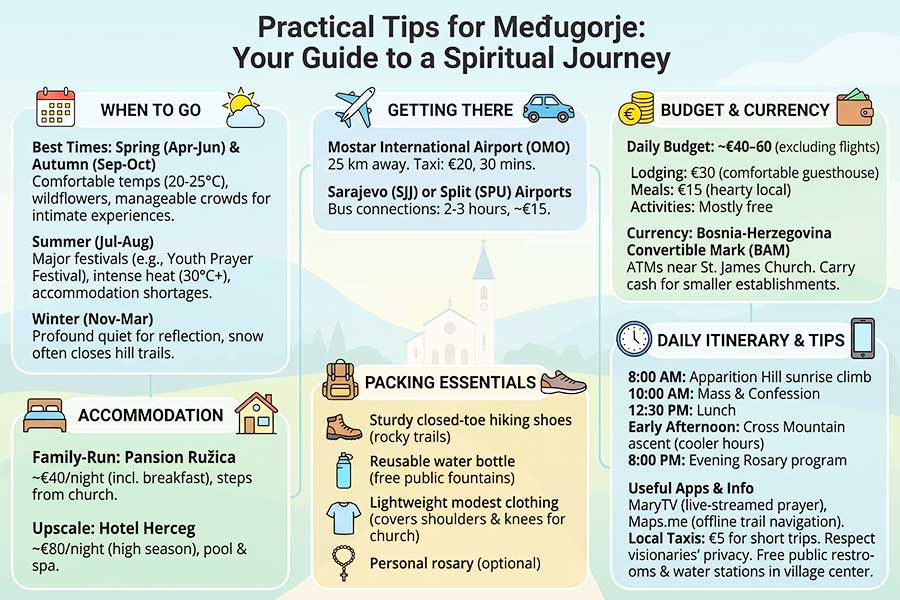
Plan your visit to Međugorje during spring months from April through June or autumn from September through October, when daytime temperatures hover comfortably between 20 and 25 degrees Celsius, wildflowers carpet the hillsides, and tourist crowds remain manageable for more intimate spiritual experiences. Summer brings the excitement of major festivals including August’s Youth Prayer Festival but also intense 30-degree heat and accommodation shortages, while winter offers profound quiet for reflection though snow often closes hill trails. Most international travelers fly into Mostar International Airport just 25 kilometers away where taxis cost €20 for the 30-minute transfer, or connect via buses from Sarajevo or Split airports taking 2-3 hours for around €15.
Budget approximately €40-60 per day for a Međugorje visit excluding international flights, allocating €30 for comfortable guesthouse lodging, €15 for hearty local meals, and minimal additional costs since most spiritual activities remain free. The Bosnia-Herzegovina convertible mark serves as currency with ATMs conveniently located near Saint James Church, though carrying sufficient cash proves wise for smaller family establishments. Book accommodations like family-run Pansion Ružica for €40 per night including breakfast just steps from the church, or opt for upscale Hotel Herceg offering a pool and spa for €80 nightly during high season. Pack sturdy closed-toe hiking shoes essential for rocky hill trails, reusable water bottles to refill at free public fountains, lightweight modest clothing covering shoulders and knees for church visits, and optionally a personal rosary.
Organize each day efficiently by arriving at Apparition Hill by 8 a.m. for the sunrise climb, returning for 10 a.m. mass followed by confession, enjoying lunch around 12:30, ascending Cross Mountain during cooler early afternoon hours, and joining the evening rosary program at 8 p.m. Download the MaryTV app for live-streamed prayer services and Maps.me for detailed offline trail navigation. Local taxis charge €5 for short trips between the church and trailheads. Always respect the visionaries’ privacy by avoiding unannounced visits to private homes and follow posted prayer room schedules. Public restrooms and drinking water stations operate free throughout the village center.
FAQ: Common Questions on Međugorje
Does the Catholic Church officially approve Međugorje apparitions?
The Catholic Church permits pilgrimages to Međugorje and endorses prudent devotion while maintaining no official supernatural confirmation regarding the reported apparitions.
How does one travel from Mostar Airport to Međugorje?
Taxis provide direct 30-minute transfers from Mostar Airport to Međugorje for €20, or local buses run frequently from Mostar city center costing 3-5 euros.
What represents the best season for visiting Međugorje?
Spring from April to June and autumn from September to October offer Međugorje’s most comfortable weather with mild temperatures and fewer crowds than summer peaks.
How challenging proves the climb up Apparition Hill?
Apparition Hill presents a moderate 15-20 minute rocky ascent suitable for most fitness levels when wearing appropriate sturdy footwear and carrying water.
Which accommodations work best for Međugorje first-timers?
Family pensions near Saint James Church like Pansion Ružica provide ideal Međugorje locations for first-timers at €40 nightly including breakfast and walking distance to all sites.
What should first-time visitors prioritize during Međugorje stays?
First-time Međugorje visitors should prioritize morning mass at Saint James Church, Apparition Hill climb, evening rosary participation, and personal confession for complete spiritual immersion.
Our Most Popular Tours To Sarajevo
We offer many tours that include a visit to Sarajevo and its most popular locations:
- Full Day tour from Sarajevo to Belgrade (Most Popular)
- Full Day tour from Sarajevo to Međugorije & Mostar
- Full Day Tour from Sarajevo to Travnik and Jajce
- Full-Day 5 Cities Tour from Sarajevo to Herzegovina (Mostar)
- Full day Tour from Sarajevo to Dubrovnik (Kotor or Split)
Don’t Hesitate To Say Hi!
Got any questions about our tours or the city? Don’t hesitate to contact us anytime for more info and booking.
Use the following phone number and email: