
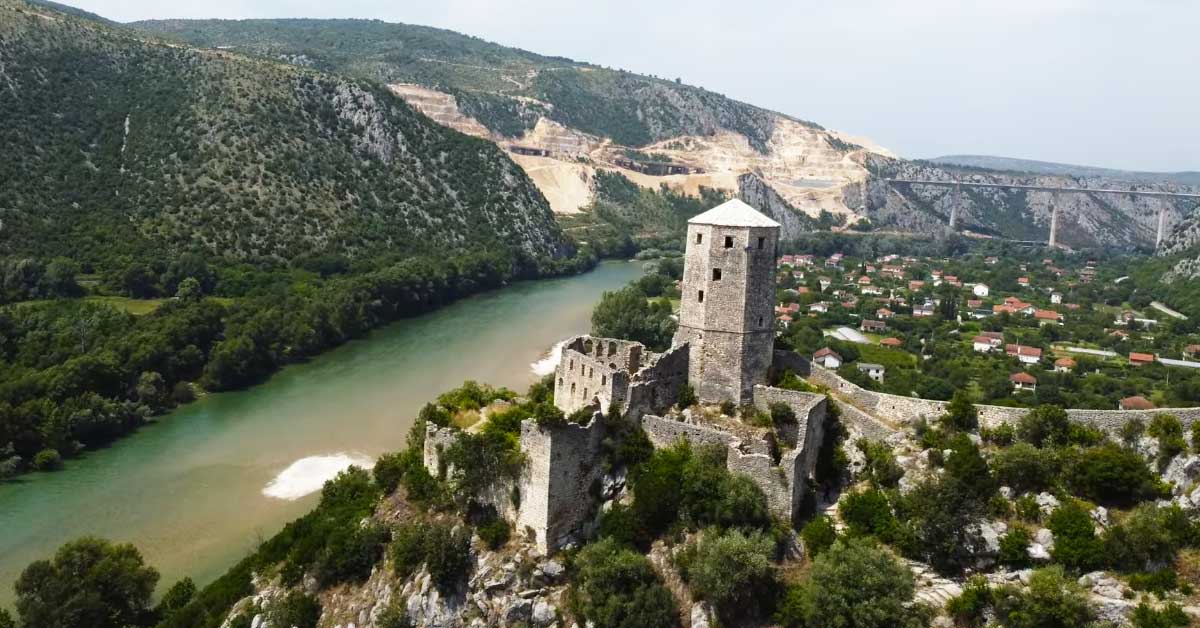
Imagine a medieval village perched dramatically on a rocky ridge, where slender Ottoman minarets rise gracefully against the sky and the Neretva River rushes far below like a living force of nature. Stone houses cluster together as if sharing centuries-old secrets, their weathered walls catching the golden light of sunset in a way that feels almost magical. Počitelj stands as a living testament to time, a place where the echoes of sultans and soldiers blend seamlessly with the laughter of today’s visitors. This comprehensive guide to Počitelj reveals everything from its rich history to hidden gems, ensuring your visit becomes a story worth retelling for years to come.
What makes Počitelj so captivating is its unspoiled authenticity, there are no chain stores or crowded markets here, just narrow cobblestone streets lined with artisan workshops and ancient arches where locals brew strong Bosnian coffee. Picture yourself climbing steep paths to fortress towers for breathtaking views of the river valley, or pausing in the quiet shade of a 16th-century mosque to hear the call to prayer carried on the breeze. Just 30 kilometers south of Mostar, Počitelj offers the perfect escape for anyone seeking a blend of adventure, culture, and natural beauty. Whether you’re chasing panoramic sunsets or savoring freshly grilled river trout by the water’s edge, this village delivers moments that linger long after you’ve left.
The legends of Počitelj add depth to every visit, tales of dervishes whose prayers protected the fortress from devastating floods, or midnight apparitions said to patrol the ramparts. From early morning hikes through olive groves to evening strolls under star-filled skies, the village reveals itself slowly, rewarding patient explorers with genuine connections to its past. This guide combines detailed insights, practical advice, and vivid storytelling to help you experience Počitelj not just as a destination, but as a journey through living history.
Table of Contents
Introduction to Počitelj
Počitelj nestles along a dramatic rocky ridge in Bosnia and Herzegovina’s Herzegovina-Neretva Canton, approximately 30 kilometers south of Mostar beside the emerald Neretva River. The village first appears in historical records from 1383, when it served as a strategic holding of the powerful Hum lord Sandalj Hranić. Ottoman forces claimed it in 1464 under Mehmed II the Conqueror, transforming the modest Slavic watchpost into a formidable stronghold. By 1664, the famous traveler Evliya Çelebi described its 72 stone houses, four mosques, bustling market, and distinctive clock tower, praising its role as a vital guardian of regional trade routes.
The village’s architecture masterfully blends medieval defensive design with Ottoman elegance, featuring local limestone that glows warmly in the late afternoon sun. Narrow, steeply inclined streets were carefully planned to channel potential invaders into vulnerable positions, while robust ramparts, watchtowers, and the commanding citadel created layered fortifications. During the 17th century, around 500 residents prospered through trade in silk, wool, and weapons, forming a self-sufficient community amid Herzegovina’s rugged terrain. Austro-Hungarian administration beginning in 1878 removed its military function and added architectural touches like the clock tower, while Yugoslavia officially recognized it as a cultural monument in 1954.
Although briefly occupied during the 1992-95 conflict, Počitelj escaped the widespread destruction seen in nearby Mostar. In 2003, UNESCO designated it a national monument, celebrating the exceptional harmony between its fortifications and surrounding landscape. Today, just 31 permanent residents care for this treasure, welcoming day visitors eager to climb its heights for stunning river panoramas. Though compact enough for a 1-2 hour exploration, Počitelj leaves a profound impression as a distilled essence of Bosnia’s complex heritage.
History of Počitelj
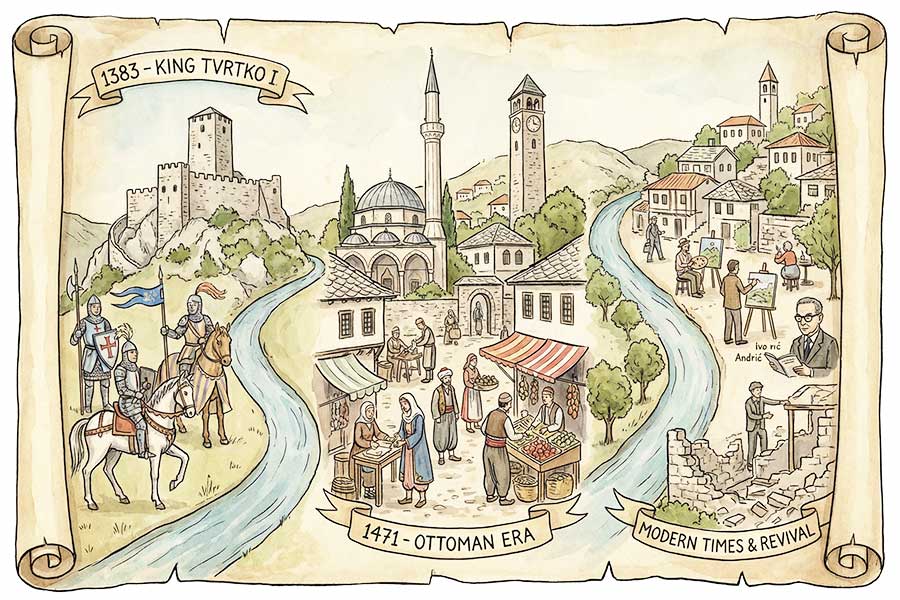
Before the Ottoman era, Počitelj served as a Slavic stronghold in 1383 under nobleman Sandalj Hranić, who used its elevated cliffs to monitor vital trade caravans moving from Dubrovnik up the Neretva valley. Simple wooden fortifications protected early inhabitants, but the Ottoman conquest of 1464 brought sweeping changes. Sultan Mehmed II commissioned the citadel’s foundational structure by 1472, equipping its towering 22-meter main tower with ten cannons strategically positioned to control river passage.
The 17th century marked Počitelj’s golden age under Ottoman rule, as benefactor Isa-beg Ishaković funded architectural masterpieces including the Čelebi Mehmed Hayredin Mosque in 1563, distinguished by its elegant octagonal minaret. The Hadži Ruvim Mosque followed in 1694, complemented by a charitable imaret for pilgrims, a communal hammam, and a caravanserai for merchants. Evliya Çelebi documented approximately 74 houses housing 800 people, with lively bazaars where goldsmiths crafted intricate pieces and weavers produced fine textiles. Though devastating fires struck in the 1700s, the resilient community rebuilt stronger structures capable of withstanding bandit attacks and local uprisings.
The late 19th century brought Austro-Hungarian occupation in 1878, which dismantled the fortress cannons for industrial use and constructed a unique clock tower combining Islamic timekeeping with Slavic bell traditions. Yugoslavia’s interwar period romanticized Počitelj as cultural heritage, and Tito’s government developed modest tourism infrastructure. During the 1990s conflict, Croatian forces briefly held the village as a military position, but it sustained only minor damage, allowing relatively swift postwar recovery aided by European Union restoration grants since the 2000s. Remarkably, modern construction has never compromised the village’s pristine skyline, preserving Počitelj as one of Europe’s finest surviving Ottoman hill settlements.
The Citadel in Počitelj
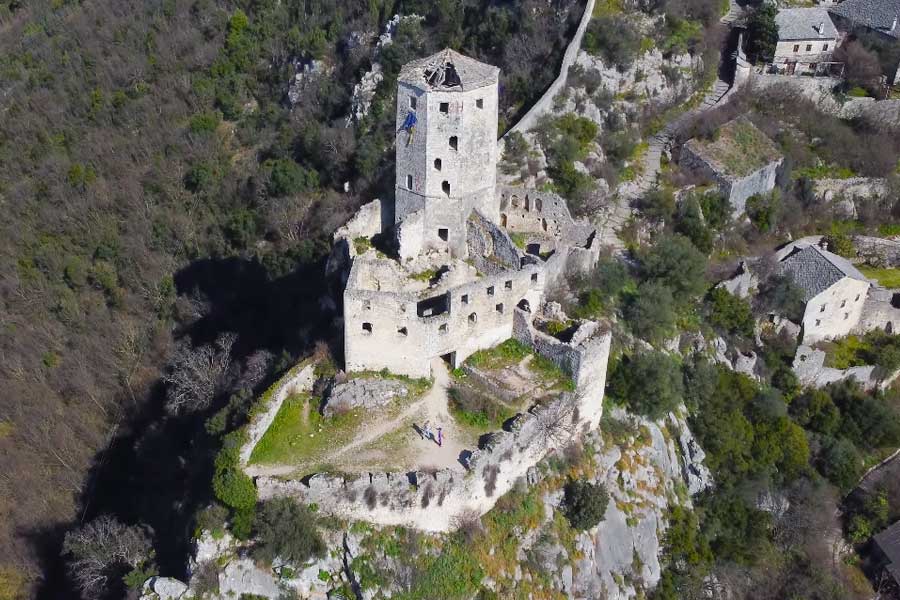
Begin your exploration by ascending to Počitelj’s magnificent citadel, a 15th-century marvel that stretches 200 meters along the rocky ridge with walls up to three meters thick that appear to defy gravity above steep drops. Visitors enter through a cleverly designed zigzag path passing ancient cannon embrasures, where ten powerful guns once thundered against river invaders below. The centerpiece 22-meter main tower offers spectacular 360-degree panoramas, revealing the Neretva River’s jade curves winding through the valley, the distant silhouette of Velež Mountain, and upstream gorges fading toward Konjic.
Constructed atop earlier Slavic foundations after the 1464 conquest, the citadel housed 300 soldiers who successfully repelled numerous revolts and protected against devastating floods. Local legend attributes its survival during 17th-century deluges to the prayers of a dervish saint whose devotion literally anchored the structure. A modest entry fee of €2 contributes directly to preservation efforts, and early morning visits guarantee cooler temperatures and unobstructed views. As evening approaches, sunset bathes the stone in dramatic fiery hues, while the clear night sky reveals stars appearing unusually early. Bring binoculars to spot soaring eagles riding the thermals above the ramparts, this fortress doesn’t merely overlook Počitelj; it defines its very character.
Mosques of Počitelj
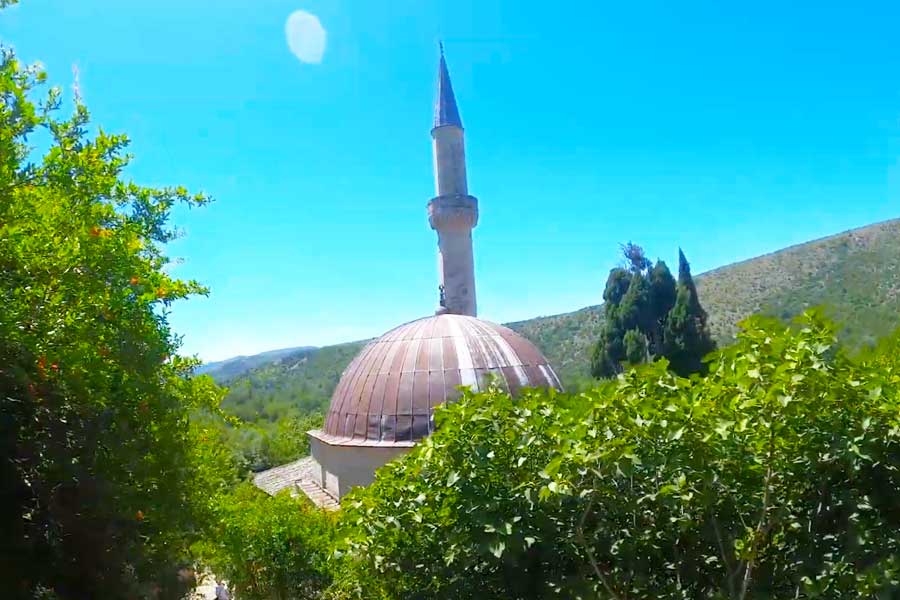
Seek quiet reflection in Počitelj’s historic mosques, each offering a window into centuries of spiritual life. The Čelebi Mehmed Hayredin Mosque, completed in 1563, captivates with its graceful octagonal minaret that occasionally allows climbs for expansive bazaar views. Inside, intricately carved stalactite mihrabs and prayer rugs softened by generations create an atmosphere of timeless devotion. The smaller Hadži Ruvim Mosque from 1694 features beautifully restored frescoes, and visitors might catch the gentle rhythms of Sufi zikr gatherings if timing aligns perfectly. The Sinan-begova Mosque from the late 1500s welcomes guests to its shaded arched porches overlooking tranquil courtyards where scholars once gathered for theological discussions.
These sacred spaces embody Ottoman piety through simple yet profound design elements, softly bubbling ablution fountains and interiors emphasizing stone’s natural purity rather than ornate decoration. The five daily calls to prayer fill the village alleys with haunting melodies that harmonize beautifully with the distant river’s roar. Visitors should remember to remove shoes upon entry, dress modestly, and maintain silence out of respect. Restoration work completed after 2007 revitalized delicate mihrab details, while commemorative plaques honor original benefactors like Ishaković. Far from dusty relics, these mosques remain active centers of worship where local residents gather each Friday, offering hikers welcome moments of cool respite amid Počitelj’s steep climbs.
Hammam and Han in Počitelj
Experience echoes of Ottoman luxury at the 16th-century hammam, now serving as an intimate gallery space within Počitelj. This octagonal bathhouse once hosted regional governors refreshing after hunts, its smooth limestone floors still bearing faint traces where servants poured steaming water from copper vessels. Arched ceilings designed to trap humidity create an intimate atmosphere, while ruined pools hint at former marble opulence. Immediately adjacent stands the han, or caravanserai, with its ground-floor stables that sheltered pack animals and upper chambers where merchants rested while overlooking the lively bazaar below. Creaking wooden stairs lead to vantage points perfectly framing the village’s minarets against dramatic cliffs.
Originally constructed for practical purposes, the hammam prepared warriors for battle while the han facilitated Silk Road commerce, trading local figs for fine Venetian glassware. Although 18th-century fires damaged portions of both structures, their resilient frameworks endured. Both sites welcome visitors free of charge, with the hammam gallery displaying evocative sketches of daily Ottoman life. Standing within these spaces transports you instantly to the world of a bey’s envoy enjoying a relaxing steam bath, a vivid reminder of Počitelj’s role as a thriving regional hub.
Clock Tower in Počitelj
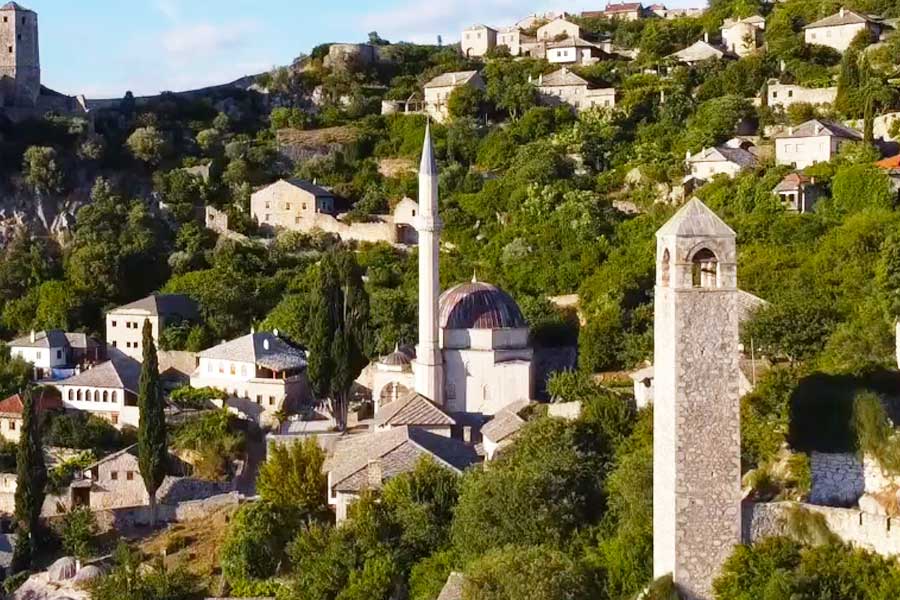
Pause to admire Počitelj’s distinctive clock tower, known locally as the šehovnica, which beautifully illustrates the village’s cultural crossroads. Built on a 17th-century Ottoman foundation and enhanced with a 19th-century Austro-Hungarian belfry, it uniquely combines traditional Islamic timekeeping dials with resonant Slavic bells. Positioned at the village’s heart, it once regulated both bustling bazaar commerce and precise prayer timings for the 500-strong community.
This architectural hybrid symbolizes the seamless blending of Eastern precision and Western order that characterizes Počitelj. Local folklore suggests its midnight tolling summons protective spirits to patrol the surrounding walls. While the upper levels remain closed to visitors, the sturdy base stones invite touch and close examination. For photographers, framing the tower with the Neretva River in the background creates postcard-perfect compositions that capture the village’s timeless character.
Things to Do in Počitelj
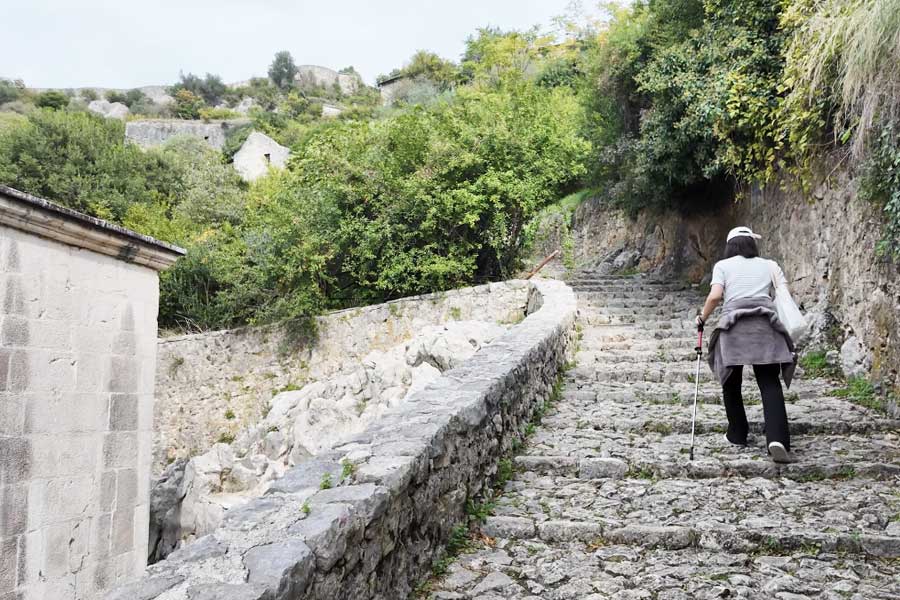
Embark on the exhilarating fortress hike that serves as Počitelj’s signature adventure, beginning at dawn with approximately 300 steps winding through fragrant olive groves toward the citadel summit. Pause along the way at ancient cisterns that sustained defenders during prolonged sieges, then reach the top for breathtaking panoramas of the Neretva River plunging 200 meters below while eagles circle gracefully overhead. Descend via the zigzag path past weathered cannon slits, perhaps enjoying a simple picnic of fresh figs atop the walls just as sentries did centuries ago. This one-hour round trip can extend into longer ridge explorations where agile wild goats occasionally appear among the rocks.
Next, lose yourself in the artisan alleys where weavers work wool in stone konaks redolent with dried sage, inviting genuine conversations about traditional crafts while you haggle good-naturedly over lavender soaps or handwoven baskets. Photography enthusiasts will find endless inspiration, compose minarets rising dramatically against sheer cliffs, or capture village cats lounging regally on ancient arches like contented pharaohs. Cool off with invigorating dips in the Neretva’s pebbled beaches, where the bracing 15°C waters refresh after climbs; nearby locals often share simple grilling spits for freshly caught trout.
For active souls, rent kayaks for €10 per hour from the village base and paddle quietly beneath looming ramparts, watching fish leap from the shadows. Evenings reward stargazers who climb the walls to discover pristine night skies where the Milky Way appears as a luminous river overhead. During summer, the Mali Monstruum arts festival brings vibrant music and performances to the han courtyards, while offbeat experiences include foraging wild mountain herbs for tea alongside locals or learning basic weaving techniques. Three immersive hours in Počitelj yield memories richer than weeks elsewhere.
Food and Culture in Počitelj
Satisfy your appetite at the renowned Konoba Čardak, dramatically positioned on a cliff edge at the village base (contact +387 36 620 031), where the signature Neretva trout arrives grilled to perfection with lemon and pepper seasoning for €12. Their generous ćevapi platters feature ten spicy sausages served in warm lepina bread with fresh onions for €8, while vegetarians appreciate the flavorful japrak, vine leaves stuffed with rice and herbs, for €5. Finish with honey-drenched baklava at €3 per piece, paired with shots of potent homemade rakija plum brandy for €2. This small family-run spot rarely requires reservations except during peak summer weekends, with meals averaging €15-25 per person.
Along the Neretva promenade, Plava Voda specializes in platters combining prosciutto with creamy smoked mješina cave-aged cheese for €10, alongside juicy pljeskavica burgers at €7 made from premium local beef. Help yourself to ripe figs dropping free from ancient trees nearby. Počitelj’s cultural heartbeat reveals itself through Sufi zikr gatherings whose rhythmic whispers occasionally escape the mosques, Friday markets offering jars of wildflower honey and fruit jams for €3 each, and spontaneous invitations to share tea in traditional konaks where elders recount grandfathers’ stories of defending the fortress walls. Locally produced wines from nearby Blagaj vineyards complement the vistas beautifully at €4 per glass. Seasonal festivals fill the alleys with lively fiddle music and traditional dance, nourishing both body and spirit in true Herzegovinian hospitality.
Practical Tips for Počitelj
The ideal times to experience Počitelj fall during spring from April to May or autumn from September to October, when comfortable temperatures between 18 and 24 degrees Celsius coincide with blooming wildflowers and minimal tourist crowds. Summer months from June through August bring intense 35-degree heat and tour buses that overcrowd the narrow paths, while winter snowfall and ice render steep trails hazardous for hiking. Most international visitors fly into Sarajevo or Split airports before taking buses to Mostar and onward local services southbound for smooth connectivity.
Travelers should budget between 20 and 30 euros per day when visiting Počitelj, allocating roughly 10 euros for meals, 5 euros for entries and local transport, and 10 euros for optional activities like kayak rental. The Bosnia-Herzegovina convertible mark serves as currency, though cash remains essential since card acceptance proves unreliable in such small establishments. Consider basing yourself in Mostar at comfortable hostels like Hostel Bojo for 25 euros nightly, as Počitelj’s limited guesthouses book quickly during high season. Always pack plenty of water, sun protection hats, and sturdy shoes with good grip, since the fortress climbs offer no shade and dew frequently slicks the ancient stones.
Structure your perfect day in Počitelj by arriving around 9 a.m. for the fortress ascent, spending one hour exploring the towers, dedicating another hour to alleys and mosques, enjoying a 45-minute leisurely lunch, and departing by 1 p.m. to avoid peak afternoon heat. Download Google Maps for offline navigation and iOverlander for nearby campsite recommendations. Show respect in mosques by removing shoes and dressing modestly with covered shoulders and knees. Drive the M17 highway with particular caution due to numerous hairpin turns and heavy truck traffic. Embrace eco-conscious practices by avoiding all litter, as local residents hold the Neretva River in deep reverence.
FAQ: Common Questions on Počitelj
Is Počitelj worth visiting from Mostar?
Yes, Počitelj absolutely deserves the 30-minute journey from Mostar, as its dramatic fortress views and concentrated history create profound impact in minimal time.
How do you get to Počitelj?
Frequent buses run from Mostar for 2 to 3 euros, or drive the scenic M17 highway with convenient parking available at the village base.
What is the best time to visit Počitelj?
Spring and fall provide the best conditions for visiting Počitelj, offering mild temperatures, beautiful blooming landscapes, and significantly fewer tourists than summer.
Are there entrance fees for Počitelj attractions?
The citadel requires a 2-euro entry fee while mosques and other sites remain free, with all proceeds supporting preservation of this UNESCO-recognized monument.
Can you stay overnight in Počitelj?
Limited guesthouses accommodate overnight stays in Počitelj, though Mostar serves as a more practical base with abundant options and easier daily access.
Is Počitelj family-friendly?
Počitelj proves very family-friendly with manageable short hikes, refreshing river swims, and exciting elevated views, though parents should carry very young children on steeper sections.
Our Most Popular Tours To Sarajevo
We offer many tours that include a visit to Sarajevo and its most popular locations:
- Full Day tour from Sarajevo to Belgrade (Most Popular)
- Full Day tour from Sarajevo to Međugorije & Mostar
- Full Day Tour from Sarajevo to Travnik and Jajce
- Full-Day 5 Cities Tour from Sarajevo to Herzegovina (Mostar)
- Full day Tour from Sarajevo to Dubrovnik (Kotor or Split)
Don’t Hesitate To Say Hi!
Got any questions about our tours or the city? Don’t hesitate to contact us anytime for more info and booking.
Use the following phone number and email: