
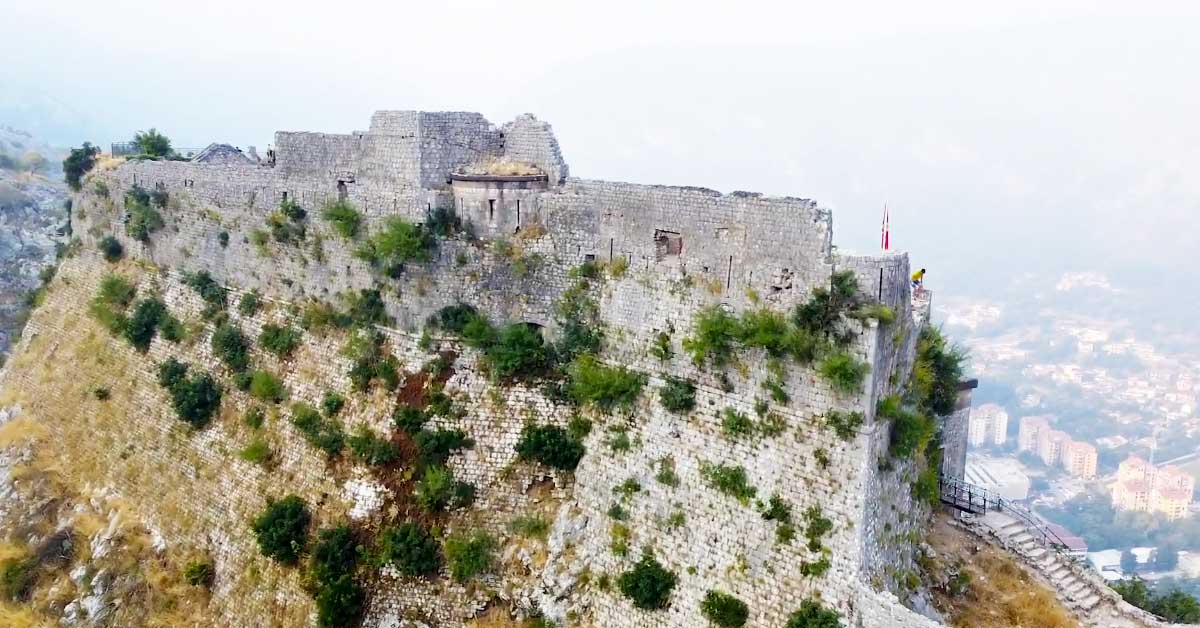
Picture this: you’re standing at the northern edge of Kotor’s medieval Old Town, looking up at a mountain slope that seems impossibly steep, and there snaking up its face like a massive stone serpent is the Ladder of Kotor – 70 perfect hairpin switchbacks carved into the cliffs, climbing 940 meters from sea level to the high Krstac Pass where Montenegro’s fjord-like Bay of Kotor will unfold beneath you in all its glory. This isn’t just a hiking trail; it’s one of Europe’s most photogenic mountain paths, a 19th-century engineering marvel that turns every turn into a new revelation of red-roofed villages, sparkling yachts, and mountain peaks that pierce the clouds.
The Ladder of Kotor, known locally as “Skalada Kotor,” was built by the Austro-Hungarian Empire when they controlled Montenegro’s coast, specifically to create a reliable supply route from the busy port of Kotor up to the royal capital of Cetinje hidden in the mountains above. Legend has it that mules dragged King Nikola’s prized billiard table from Vienna up these exact switchbacks, proving the path could handle even the most stubborn cargo. Unlike the nearby Kotor Fortress hike that charges admission, the Ladder of Kotor is completely free to climb, making it the perfect choice for budget adventurers who still want access to those legendary Boka Bay panoramas that make jaws drop around the world.
What sets the Ladder of Kotor apart from typical tourist hikes is how it reveals Montenegro layer by layer. You start surrounded by Kotor’s Venetian palaces and Catholic churches, pass wild goats leaping between olive trees, discover forgotten World War II bunkers crumbling into the hillside, and finally emerge at a mountain pass where the entire Bay of Kotor transforms from busy harbor to endless fjord stretching 30 kilometers toward the open Adriatic. Along the way, local grandmothers sell fresh baklava from baskets at scenic overlooks, semi-tame cats beg for attention on sun-warmed stones, and every 10th switchback delivers a better view than the last. Whether you taxi up to Krstac Pass and hike down in 3 leisurely hours or start from sea level for a 5-6 hour triumph, the Ladder of Kotor gives you Montenegro’s postcard beauty without the entry fees or crowds.
Table of Contents
History of Ladder of Kotor: from goat trails to Austrian engineering
The Ladder of Kotor began as rough Illyrian goat trails around 100 BC, when tribes first recognized the high ground above Boka Bay controlled vital Adriatic trade routes between Venice and Constantinople. These primitive paths served shepherds moving flocks between coast and mountains, barely wide enough for a single mule carrying salt or olives.
Byzantine engineers improved sections in the 6th century AD during Justinian’s campaigns against Slavic invasions, adding stone reinforcements and watchposts for rapid troop movement from bay to highlands. Medieval Serbian Nemanjić kings expanded connectivity in the 12th-13th centuries, linking their inland empire to prosperous Venetian commerce flowing through Kotor’s port.
The iconic 70 hairpin turns visible today were engineered by 19th-century Austrian military after they claimed Montenegro’s coast in 1814. Needing reliable supply lines from Kotor to mountain capital Cetinje, they mapped precise U-shaped switchbacks between 1820s-1840s that mules could navigate. Legend says Prince-Bishop Petar II Petrović-Njegoš tested the path by hauling his Vienna billiard table 940m uphill to his palace.
During World War I, the Ladder supplied Austrian forces until Italian occupation in 1918. World War II Partisans used upper sections for escapes and observation, leaving concrete bunkers still visible today. Post-Yugoslavia disrepair transformed it into a hiker’s paradise tracing millennia of mountain passage history.
Step-by-step Ladder of Kotor hiking experience
Your Ladder of Kotor adventure begins at Kotor’s River Gate, the northernmost exit from the UNESCO-listed Old Town where cruise ships never quite reach. Unlike the main Sea Gate swarming with tour groups, this entrance feels like a local secret – no ticket booth demands euros, no crowds jostle for position, just a quiet stone archway leading onto Tabačina Road where the trail immediately announces itself with a sharp left zigzag up the slope.
First 30 minutes (switchbacks 1-15, gentle warm-up): The path starts deceptively manageable, wide enough for two mules abreast, climbing steadily beside the rushing Scurda River canyon where you’ll hear water tumbling over rocks long before you see it. Olive trees cling improbably to 45-degree slopes, their silver leaves shimmering in Adriatic sun. Your first proper viewpoint arrives around switchback 10 – Kotor Old Town suddenly appears below framed by fortress walls, the bay’s turquoise water sparkling all the way to Dobrota village 3 kilometers distant across the water. Local cats sun themselves on warm stones, completely ignoring your passage.
45-90 minutes (switchbacks 16-35, steady challenge): The trail narrows and steepens, hand-forged iron railings appear (thank the Austrians), and every 5th turn delivers escalating bay drama. Around switchback 25, you pass the optional detour to Our Lady of Remedy Church – a tiny 1518 chapel blasted into the cliff face where Venetian soldiers prayed between patrols. Inside, faded frescoes of warrior saints peer through cracks, while shaded stone benches invite your first proper rest. Grandmothers appear mysteriously with baskets of baklava (€1 per diamond-shaped piece dripping honey) and goat milk yogurt (€2 per clay cup) – the sweetest trail fuel in Montenegro.
90 minutes-2.5 hours (switchbacks 36-60, serious grind): This is where mules earned their keep. Steps shorten to knee-killer height, gradients hit 20-25%, and pine trees offer merciful shade from summer scorch. World War II bunkers crumble on your left – Partisan lookouts with rusted rangefinders still pointing seaward. Switchback 50 delivers the money shot: full Boka Bay panorama with Perast’s twin islands floating like green emeralds, Dobrota’s sea captain palaces stringing the opposite shore, and Vrmac ridge’s mirror-image fortifications climbing opposite your path. Wild thyme crunches underfoot, purple orchids explode from cracks come spring.
Final 30-45 minutes (switchbacks 61-70 to Krstac Pass): Legs scream, lungs burn, but the path widens toward road. Nevjesta Jadrana restaurant appears like salvation – wooden tables on cliff edge, smoke rising from peka bells. Krstac Pass welcomes you at 940 meters with Montenegro road signs pointing to Njegusi village (famous for smoked ham) and Cetinje (royal capital). You’ve conquered where billiard tables feared to tread.
Descent option: Taxi drivers wait (€20/person back to Kotor, negotiate), or reverse 2-3 hours downhill (easier on lungs, murder on knees).
Unmatched views from Ladder of Kotor
Ladder of Kotor doesn’t save the best for last – it reveals beauty switchback by switchback. Switchback 15: Kotor Old Town transforms from street-level chaos to perfect medieval miniature. Switchback 35: Dobrota’s Renaissance palaces line the bay shore like pearls. Switchback 50: Perast’s Lady of the Rocks church floats on its artificial island. Summit Krstac: Boka Bay’s complete S-curve unfurls 30km to open sea, Lovćen massif lords 50km distant, eagles wheel overhead while yachts trace silver wakes below.
Dawn reveals fishing boats’ golden trails; midday dazzles with turquoise-to-cobalt gradients; sunset ignites bay orange-pink against black mountains. Rain adds misty drama, spring orchids frame every vista. Goats pose on cliffs, WWII bunkers add mystery – this isn’t scenery, it’s Montenegro’s living anatomy.
Practical guide to Ladder of Kotor hike
Tickets: The Ladder of Kotor is completely free with no ticket booths or entry fees anywhere along the trail – simply walk out Kotor’s River Gate (North Gate) onto Tabačina Road and start climbing immediately, bypassing the €15 Kotor Fortress admission entirely. Children hike free obviously, and there’s no opening hour restriction since it’s a public mountain path rather than a managed attraction.
Hours: Open 24 hours every day of the year as a legitimate mountain hiking trail, though you’ll want daylight for safety – roughly 6AM to 8PM in summer months, 7AM to 6PM in winter. No official closing time exists but local taxis stop running from Krstac Pass around sunset, and headlamps become essential for any evening descents.
Distance/Time: Exactly 6.4 kilometers one-way from Kotor River Gate to Krstac Pass with 940 meters of continuous elevation gain spread across 70 hairpin switchbacks – expect 5-6 hours total ascending from sea level or 3-4 hours leisurely descending from the pass. Round trip takes 8-10 hours if doing both directions.
Access: Five-minute walk from any Old Town accommodation to River Gate start point. From Tivat Airport it’s a 30-minute €25 taxi ride or €4 local bus. Cruise passengers at Kotor port take the €3 shuttle bus or 20-minute uphill walk. Free roadside parking exists just outside Old Town walls at €2 per hour during peak season.
Facilities: No public toilets, restrooms, or changing areas along the entire trail. Midway church benches provide shaded resting spots around the 40-minute mark. Water sellers appear seasonally with cold bottles (€1-2) and baklava (€1). Summit Nevjesta Jadrana restaurant offers full meals. Offline Maps.me app recommended for the unsigned upper sections.
Best times for Ladder of Kotor & crowd avoidance
Dawn (6-8AM summer): Perfect cool 15-22°C temperatures greet early risers with completely empty trails before the first cruise buses arrive, plus golden morning sunlight bathes Boka Bay in magical light ideal for photography – summit solitude guaranteed for the first hour.
Spring (April-May): Wild thyme and orchids carpet the slopes in purple while comfortable 18-24°C days and thin pre-cruise-season crowds create ideal hiking conditions with perfumed mountain air you’ll remember for years.
Autumn (September-October): Warm 20-25°C afternoons combine with dramatic sunset colors turning the bay fiery orange around 6PM, plus significantly fewer tourists than July-August peak make this the sweet spot for relaxed pacing.
Midweek advantage: Monday through Wednesday slashes weekend and cruise ship crowds by 70% regardless of season – perfect for authentic local experience.
Sunset timing (4PM start): Bay ignites in spectacular orange-pink as the sun dips behind Lovćen mountains, creating romantic atmosphere for couples, but pack headlamps since the descent darkens quickly after 7PM.
Complete avoids: Cruise ship midday 10AM-4PM May through September transforms the lower trail into an ant highway, while 1-4PM summer heat regularly hits 35°C+ with dehydration risk for unprepared hikers.
Essential gear for Ladder of Kotor hike
Absolute must-haves: Sturdy closed-toe hiking shoes with excellent grip since uneven steps turn deadly slippery when wet, minimum 2 liters of water carried from Kotor since trail fountains prove unreliable, wide-brim hat and SPF 50+ sunscreen for exposed switchback sections, lightweight windbreaker or fleece because summit winds drop temperatures 8-12°C cooler than sea level.
Highly recommended additions: High-energy snacks like nuts, dried fruit, or granola bars to maintain blood sugar through the long grind, collapsible trekking poles available for €5 rental in Old Town to dramatically reduce knee strain on both ascent and descent, sunglasses to combat blinding bay glare, and small euro bills (€1, €2, €5 notes) for midway water/baklava sellers.
Useful extras: Lightweight 20-25L daypack maximum to avoid back fatigue, portable phone charger for the inevitable photo marathon, wet wipes or small towel for sweat management, and apple slices or crackers as treats for trail goats who pose obligingly for pictures.
Leave behind completely: Flip-flops, sandals, or dress shoes that guarantee twisted ankles on irregular stone steps, heavy camera equipment prone to sweat damage and fatigue, glass bottles that shatter easily on rocky terrain, and large bulky luggage better stored at your accommodation.
Ladder of Kotor restaurants & summit dining
Nevjesta Jadrana at Krstac Pass (trail endpoint): This rustic stone restaurant perched on the mountain pass cliff edge serves as perfect summit celebration with unobstructed Boka Bay panoramas through every window. Signature dishes include Njeguši prosciutto and kajmak platter (€15 – paper-thin smoked mountain ham served with creamy sheep’s milk cheese and flatbread), ćevapi with lepinja (€12 – ten perfectly grilled minced meat sausages nestled in warm flatbread with diced onions and fiery ajvar relish), and lamb peka (€25 per person but requires 4-hour advance ordering – tender meat slow-cooked under iron bell with potatoes and wild herbs). Cold Montenegrin beer costs €3 per bottle while house rakija shots go for €2. Cash euros only, no reservations needed due to small size, limited vegetarian options but generous portions. Eat outside on wooden benches overlooking where your hike began hours below.
Midway grandmother vendors (switchbacks 25-35): Seasonal local women mysteriously appear along shaded sections with straw baskets offering freshly-made baklava (€1 per honey-dripping diamond slice packed with walnuts), homemade goat milk yogurt (€2 per clay cup offering perfect tangy refreshment), and ice-cold spring water or lemonade (€1-2). Support this authentic tradition that fuels generations of climbers.
Post-hike Kotor Old Town favorites (all within 10-minute walk, reservations recommended July-August):
- Galion (prime seafront promenade location): Elegant terrace dining with bay views features black risotto (€18 – squid ink pasta shimmering with seafood treasure), octopus peka (€28 – tender 8-hour slow-cooked tentacle melt-in-mouth perfection), mussels buzara (€22 – plump shellfish swimming in wine-garlic-tomato broth with crusty bread). Reserve online or call +381 32 325 000; prime waterfront tables fill fast.
- Konoba Catovica Mlini (Morinje village 20-minute scenic drive): Romantic hidden bay cove restaurant specializes in scampi buzara (€32 – sweet langoustines bathing in rich tomato-wine sauce), veal under sac (€28 – milk-fed calf slow-cooked under iron bell until falling off bone), wild boar goulash (€25 – dark game meat stew served with polenta). Essential advance booking at +381 32 371 500; perfect celebration escape.
- Lady Pi-Pi (quiet Šuranj alley in Old Town heart): Cozy stone-walled tavern delivers grilled sea bass from Bukovica Lake (€20 – perfectly crisped skin over lemon-herb flesh), Njeguši prosciutto tasting platter (€15 – three regional cures with local cheeses), homemade lamb ragu pasta (€16 – tender meat sauce clinging to fresh tagliatelle). Walk-ins fine off-peak but reserve peak season at +381 67 019 919.
Every earned bite tastes like victory after conquering Montenegro’s most iconic trail.
FAQ about Ladder of Kotor
What exactly is the Ladder of Kotor trail?
The Ladder of Kotor is a spectacular 19th-century Austrian-engineered hiking trail featuring exactly 70 hairpin switchbacks that climbs 940 vertical meters from Kotor’s River Gate up to Krstac Pass, offering free panoramic access to Boka Bay’s dramatic fjord landscape.
Where does the Ladder of Kotor hiking trail actually start?
The Ladder of Kotor trail starts right outside Kotor Old Town at the River Gate (also called North Gate) on Tabačina Road – walk five minutes from any Old Town accommodation and immediately begin the first zigzag up the mountain slope.
Is the Ladder of Kotor completely free to hike?
Yes, the Ladder of Kotor costs absolutely nothing since no ticket booths or entry fees exist anywhere along the trail – it provides the same fortress summit views as the paid Kotor Fortress path but completely free.
How many hours does the full Ladder of Kotor hike require?
The complete Ladder of Kotor hike takes 5-6 hours ascending from Kotor to Krstac Pass or 3-4 hours descending from the pass back to town, covering 6.4km one-way with 940m elevation gain across the famous 70 switchbacks.
What stunning views will I see on Ladder of Kotor?
Along the Ladder of Kotor you’ll witness escalating panoramas starting with Kotor Old Town’s red rooftops tumbling toward the bay, Dobrota village’s Renaissance sea captain palaces lining the opposite shore, Perast with its famous church islands floating in turquoise water, the entire serpentine Boka Bay fjord system, and finally Lovćen mountains dominating the distant horizon.
When is the absolute best time to hike Ladder of Kotor?
Dawn between 6-8AM offers perfect cool temperatures around 15-22°C, completely empty trails before cruise crowds arrive, and magical golden morning sunlight illuminating Boka Bay – spring and autumn provide ideal weather with fewer tourists than summer peak.
Our Most Popular Tours To Sarajevo
We offer many tours that include a visit to Sarajevo and its most popular locations:
- Full Day tour from Sarajevo to Belgrade (Most Popular)
- Full Day tour from Sarajevo to Međugorije & Mostar
- Full Day Tour from Sarajevo to Travnik and Jajce
- Full-Day 5 Cities Tour from Sarajevo to Herzegovina (Mostar)
- Full day Tour from Sarajevo to Dubrovnik (Kotor or Split)
Don’t Hesitate To Say Hi!
Got any questions about our tours or the city? Don’t hesitate to contact us anytime for more info and booking.
Use the following phone number and email: