
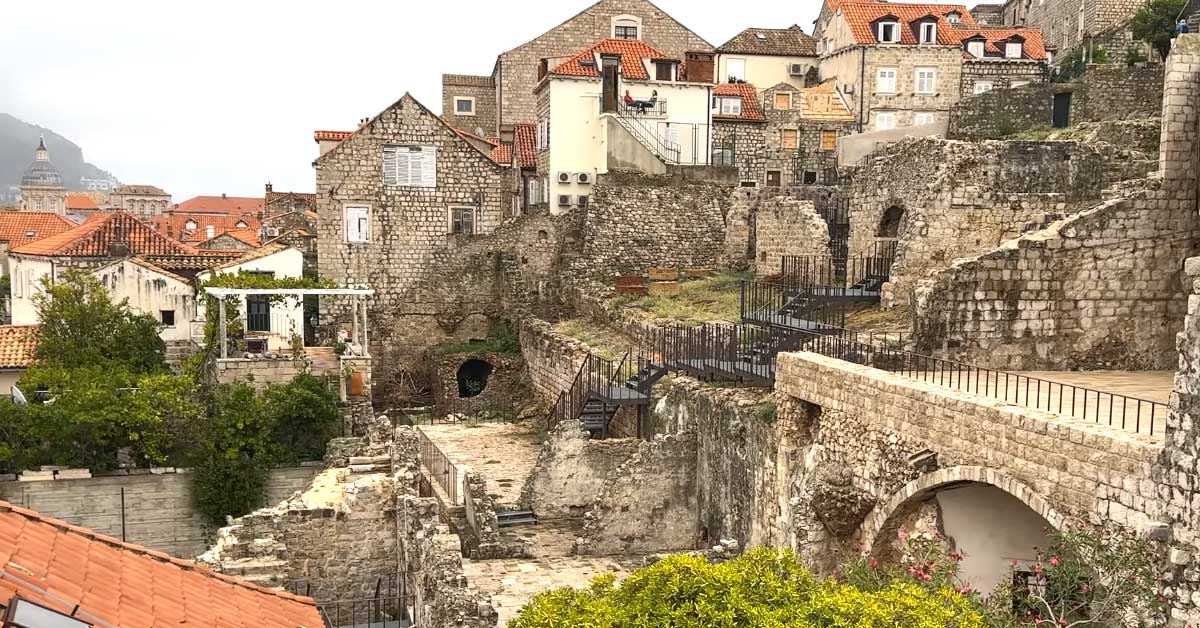
Imagine circling an entire medieval city from above, stepping where sentries once stood with swords at the ready, with the Adriatic crashing against cliffs far below and terracotta roofs glowing like embers under the relentless Dalmatian sun – that is Dubrovnik City Walls Walking, a 2-kilometer loop that packs more drama, views and layered history into two hours than most destinations manage in a full day of sightseeing. It is not some gruelling hike for fitness fanatics chasing Instagram miles, but a deliberate, rhythmic promenade along fortifications that shielded a cunning trading republic for centuries, turning every bastion, every narrow passage and every sudden vista into a moment that stops you mid-stride, camera forgotten, mouth half-open in quiet awe.
Dubrovnik City Walls Walking is the undisputed heartbeat of any visit to the Pearl of the Adriatic, this UNESCO World Heritage marvel where you trace the ramparts counterclockwise from the main Pile Gate entrance, or quieter alternatives like Ploče or Buža Gate, weaving past colossal bastions such as the star-shaped Minčeta Tower and the brooding forts of Bokar and Lovrijenac that loom like stone giants over the waves. Narrow paths force single file like medieval soldiers on patrol, steep stone stairs demand sure footing, and occasional shaded walkways offer merciful pauses, all while rewarding you with unrelenting 360-degree panoramas: the pine-cloaked mystery of Lokrum Island guarding the harbour. See all highlights in our Top 5 things to do in Dubrovnik. It is the walk that strips away the Hollywood gloss of Game of Thrones fame – King’s Landing was filmed here, after all – and reveals Dubrovnik as a living testament to human ingenuity, stubborn endurance and a love affair with the sea that built an empire from coral and salt. If you want to go one step further and imagine what defending Dubrovnik looked like far from the harbour, plan a side trip to the cliff top outpost of Sokol Grad near Dubrovnik, a remote mountain stronghold that guarded inland routes and shows a completely different side of the city’s military network.
What elevates this beyond a mere tourist checklist is the intimacy: you peer into private gardens heavy with bougainvillea, overhear laughter from rooftop terraces, spot cats sunning on hidden walls, and feel the stone still warm from centuries of sun. Dubrovnik City Walls Walking is not walked; it is absorbed, layer by layer, until the city below feels like a map you could draw from memory, every tower a story, every view a quiet victory.
Table of Contents
History of Dubrovnik City Walls Walking: fortifications of a republic
The roots of what we now cherish as Dubrovnik City Walls Walking stretch back to the 9th century, when Slavic settlers and Byzantine monks first huddled on a rocky island called Laus, erecting humble sea walls of stacked stone to fend off pirate raids from the open Adriatic. These were no grand barriers but desperate necessities in a world of Illyrian corsairs and shifting empires, fragile shields for a fledgling community that dreamed bigger than its defences.
By the 13th century, as Ragusa blossomed into a wealthy maritime republic – outmaneuvering Venice with shrewd diplomacy and Ottoman sultans with hefty tribute payments – these patchwork walls evolved into a more ambitious circuit encircling the newly united mainland and island. The true golden age of construction dawned in the 15th century, a frenzy of engineering funded by trade taxes on silk, spices and slaves, masterminded by local geniuses like Paskoje Miličević and Juraj Dalmatinac. What emerged was a masterpiece: up to 25 meters high, 6 meters thick at the landward base, stretching 1,940 meters around the city with 15 towers, 2 corner forts, 5 bastions and a moat that could flood on command. These were not mere walls but a symphony of defence – angled bastions to deflect cannonballs, arrow slits for crossbowmen, and massive gates like Pile with drawbridges and portcullises that screamed “try us.”
They proved their mettle time and again. In 1530, during a ferocious Turkish siege, Ragusa’s defenders – outnumbered 10 to 1 by Suleiman’s 40,000 troops – repelled the assault from these very ramparts, using boiling oil, hot sand and sheer audacity to send the invaders packing. The devastating 1667 earthquake levelled 80% of the city, killing 5,000, but miraculously spared most of the walls, which were rebuilt with Renaissance flourishes and Baroque resilience, blending medieval grit with emerging elegance. Venetian engineers tinkered, French occupiers under Napoleon admired, Austrians reinforced, and even during the brutal 1991-1992 Homeland War siege – when Yugoslav shells rained down for months – the walls stood largely unscathed, sheltering civilians and symbolizing unyielding Croatian spirit.
Today, Dubrovnik City Walls Walking is your portal into this millennium of survival: every crack whispers of sieges, every repaired stone of rebirth, turning a simple stroll into a history lesson etched in limestone.
The route of Dubrovnik City Walls Walking: section by section
Dubrovnik City Walls Walking follows a strict one-way counterclockwise loop lasting 1.5-2 hours (or more if you linger like you should), divided into four distinct sections that build like chapters in an epic tale, each with its own mood, challenges and revelations.
Begin at the iconic Pile Gate entrance for the classic experience: the western section climbs steadily past the cylindrical Puncjela Tower and squat Bokar Fort, guardians of the main land approach. Here, views sweep over the drawbridge moat, bustling Pile Bay with its kayakers and fish restaurants, and across to the imposing Lovrijenac Fort perched on its cliff like a falcon ready to dive. The stairs are gentle at first, warming you up as the city shrinks below.
The northern stretch is the climax, ascending sharply to the mighty Minčeta Tower at 25 meters – the highest, roundest point designed to repel artillery. Narrow paths here demand single file, brushing against sheer drops on one side and peeking into lush private gardens on the other; rooftops cascade like a terracotta avalanche toward the Dominican Monastery and the sea beyond. Wind picks up here, adding thrill.
Descending the eastern walls past St. John’s Fort and the massive Revelin Fort toward Ploče Gate, the vibe shifts to oceanic expanse: Lokrum Island dominates with its peacocks and botanic gardens, cruise liners glide like whales in the harbour, and the Adriatic sparkles in every shade of blue. This side offers shade from afternoon heat and benches for catching breath.
Finally, the southeastern walls near Buža Gate feel intimate and shaded, passing sea-facing “little doors” for cliff jumps into turquoise coves (if you’re brave). Looping back to Pile, you’ve conquered the full circuit – urban intimacy giving way to boundless horizon, every step a new frame in Dubrovnik’s portrait.
Walking these elevated paths also gives you a unique perspective down to iconic landmarks like the majestic Jesuit Stairs, a Baroque masterpiece perfect for photos after your walls adventure.
At the highlights of Dubrovnik City Walls Walking: towers and forts
Pausing at the icons elevates Dubrovnik City Walls Walking from stroll to pilgrimage. Minčeta Tower, the bulbous northern behemoth inspired by Renaissance ideals and named after a brave citizen, reigns supreme at 25 meters; spiral stairs lead to a platform where Dubrovnik sprawls in 360-degree glory – the perfect panorama shot, with Stradun arrow-straight below and islands dotting infinity.
Bokar Fort anchors the southwest, its round design optimised for naval threats, once housing gunpowder and now echoing with tales of cannon fire over Pile Bay. Across the water, Lovrijenac Fort – “Dubrovnik’s Gibraltar” – demands a detour: included in tickets, its cavernous halls hosted Game of Thrones’ Red Keep scenes, cannons inscribed with anti-Venetian mottos, and views that make you feel invincible.
Revelin Fort at Ploče Gate, a subterranean vaulted monster, guarded the eastern flank and now pulses as a nightclub, mashing medieval might with modern beats. Smaller gems like St. Luke’s Tower offer shaded respite, while Maffio Gubalović Tower hides in the east with sea-spray kisses. These aren’t backdrop props; they’re the personalities of Dubrovnik City Walls Walking, each demanding a moment to lean on the parapet and imagine the sentries who manned them.
Practical guide to Dubrovnik City Walls Walking
Access points for Dubrovnik City Walls Walking are Pile Gate (main, busiest swarm), Ploče Gate (east, smarter for solitude) and Buža Gate (southeast, scenic finale). Tickets run €40 adults (peak March-November), €20 off-season (December-February); €15 students/youth 7-18, free under 7; valid 72 hours including Lovrijenac and outer walls – snag online via official sites to bypass ticket-office chaos.
Hours flex with seasons: summer peaks at 8 AM-7 PM (June-August to 19:30 last entry), scaling down to 10 AM-5 PM spring/autumn, 10 AM-3 PM winter; closed Christmas, New Year’s, bad weather. Total 1.5-2 hours plus rests; 250m elevation via uneven stairs, no wheelchairs, no re-entry, light bags only (lockers at Pile).
Dubrovnik Pass skips walls, so budget standalone. Water fountains sparse, loos limited – plan ahead. Combine post-walk with Old Town shade or cliff-bar drinks.
While you are exploring the Old Town at street level, make sure you also stop by the iconic drinking spots described in our guide to Large & Small Onofrio’s Fountain in Dubrovnik, where you can refill your bottle for free and see how the historic aqueduct still shapes daily life.
Tips for Dubrovnik City Walls Walking: beat crowds and heat
Mastering Dubrovnik City Walls Walking means outsmarting the masses. Dawn at Ploče Gate (8 AM summer opening) flips the crowd flow, granting ghost-town paths and buttery light over rooftops. Dodge cruise-ship deluges (10 AM-2 PM); chase sunset last entries for molten skies, though heat lingers – hydrate fiercely.
Gear: breathable layers, grippy closed shoes (no flip-flops on slick stone), hat/sunscreen, 1L water minimum (no vendors aloft), light pack. Pace slow: shaded east for breaks, north for thrills. Off-season (Nov-Mar) or shoulders (April/May/Oct) deliver serenity; rain skips ensure safety.
Photos? Minčeta golden hour, Lokrum noon sparkle. Pro move: full loop then Lovrijenac solo. Dubrovnik City Walls Walking repays patience with possession of the city.
Why Dubrovnik City Walls Walking beats every viewpoint
No cable car or belvedere rivals the immersion of Dubrovnik City Walls Walking. From Srđ’s distant sweep, you admire; up here, you inhabit – brushing walls that repelled sultans, aligning your shadow with centuries of patrols. It’s multisensory: salt wind, gull cries, stone underfoot, laundry scents wafting up.
Views evolve intimately: one minute Stradun’s marble gleam, next Lokrum’s forbidden allure, then sea’s hypnotic churn. Game of Thrones trivia (Minčeta as House of the Undying) adds pop, but the real thrill is time travel – sensing the republic’s pulse in every parapet. It’s not optional; it’s the walk that owns Dubrovnik.
Best time of year for Dubrovnik City Walls Walking
Spring (April-May) blooms wildflowers along paths, mild temps (18-22°C) and thinning crowds post-winter. Autumn (Sept-Oct) mirrors with harvest light, sea swims viable. Summer scorches (30°C+), but dawn/dusk mitigate; winter’s rare openings (post-rain) grant solitude, moody clouds framing forts.
Shoulders win: fewer queues, vivid sunsets, locals outnumbering tourists. Track cruise calendars to sidestep peaks. Year-round, Dubrovnik City Walls Walking adapts – your season shapes the story.
FAQ about Dubrovnik City Walls Walking
What is Dubrovnik City Walls Walking?
It is a 2 km one-way counterclockwise loop atop 13th-16th century fortifications encircling Dubrovnik’s Old Town, blending history, towers and panoramic sea views over 1.5-2 hours.
Where to start Dubrovnik City Walls Walking?
Pile Gate (main, crowded), Ploče Gate (recommended quiet east start) or Buža Gate (southeast scenic); mandatory one-way path loops back regardless.
How much are tickets for Dubrovnik City Walls Walking?
€40 adults peak (Mar-Nov), €20 off-season; €15 youth/students 7-18, free under 7; covers Lovrijenac Fort, 72-hour validity, buy online for skip-the-line.
What are opening hours for Dubrovnik City Walls Walking?
8/9/10 AM openings to 7 PM summer (Jun-Aug latest), shorter spring/autumn/winter (10 AM-3 PM Jan-Feb); last entry 1 hour prior, weather-closed.
Best time for Dubrovnik City Walls Walking to avoid crowds?
Opening at Ploče Gate (8 AM summer) or late afternoon/sunset; skip cruise peaks 10 AM-2 PM; shoulders (Apr/May/Oct) ideal.
Is Dubrovnik City Walls Walking steep or difficult?
Moderate difficulty: uneven stairs, narrow paths, 250m elevation gain; sturdy shoes required, not wheelchair-friendly, suitable for fit walkers 1.5-2 hours.
Our Most Popular Tours To Sarajevo
We offer many tours that include a visit to Sarajevo and its most popular locations:
- Full Day tour from Sarajevo to Belgrade (Most Popular)
- Full Day tour from Sarajevo to Međugorije & Mostar
- Full Day Tour from Sarajevo to Travnik and Jajce
- Full-Day 5 Cities Tour from Sarajevo to Herzegovina (Mostar)
- Full day Tour from Sarajevo to Dubrovnik (Kotor or Split)
Don’t Hesitate To Say Hi!
Got any questions about our tours or the city? Don’t hesitate to contact us anytime for more info and booking.
Use the following phone number and email: