
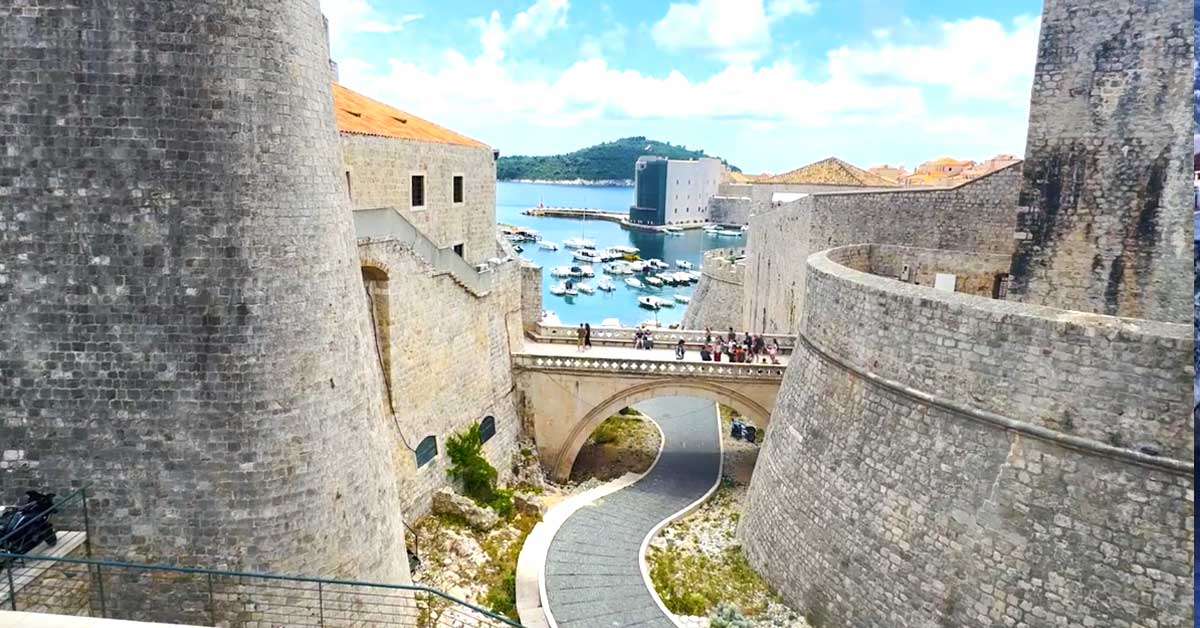
If Lovrjenac guards Dubrovnik from the west, Revelin stands sentinel on the east, rising from its own small island just beyond the Ploče Gate where the Old Town meets the sea. Revelin is less famous than Lovrjenac, receiving fewer tourists and fewer Game of Thrones references, which paradoxically makes it one of the most rewarding destinations for visitors seeking authentic medieval and Renaissance military architecture without the crowds. Walking across the drawbridge that connects the fortress to the mainland, you move from the bustling medieval streets into a completely different world – a military installation frozen in time, where every detail of architecture speaks to Renaissance military engineering and strategic thinking.
Revelin Fortress represents a later stage of Dubrovnik’s military evolution than Lovrjenac. While Lovrjenac is older and reflects medieval fortification concepts, Revelin embodies Renaissance military thinking specifically designed to withstand artillery bombardment. Revelin was not built primarily for active defense but as a garrison fortress, a place where soldiers were stationed, where supplies were stored and where the city could maintain military readiness in peacetime. Yet the fortress’s design reveals sophisticated understanding of Renaissance military principles and exceptional quality of construction that has allowed it to survive nearly 500 years with minimal deterioration.
This guide explores Revelin’s history, its architectural significance, what makes it different from other Dubrovnik fortifications and why visiting this island fortress provides insight into how medieval cities transitioned from medieval to modern military thinking.
Table of Contents
The History of Revelin Fortress: Renaissance Military Thinking
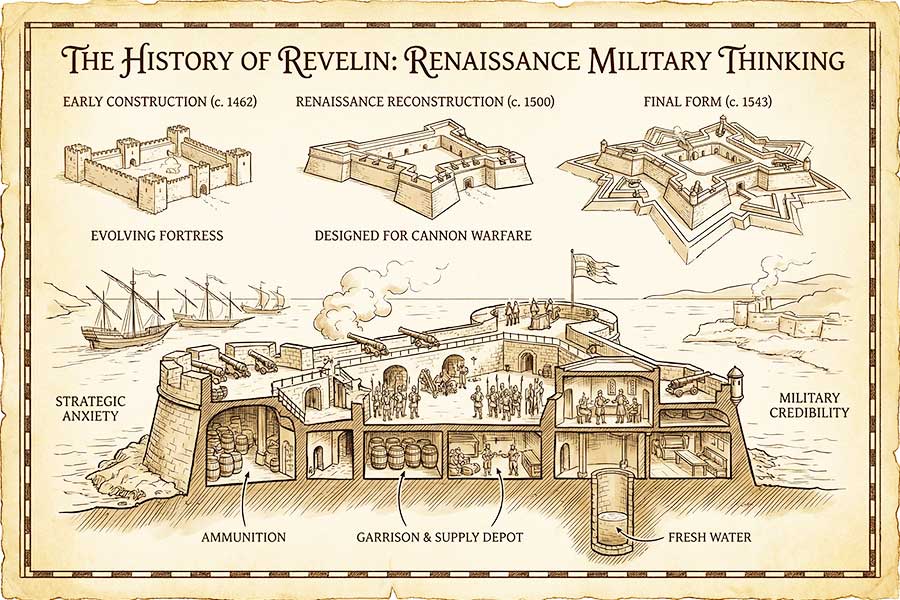
Revelin Fortress was constructed between 1462 and 1543, a period spanning early Renaissance through full flourishing of Renaissance military architecture. This long construction period reflects not indecisiveness but rather the gradual evolution of the fortress as military technology and strategic thinking changed during its building. The original structures were modified repeatedly as new understanding of artillery defense emerged and as threats facing Dubrovnik shifted.
The fortress was built on an island in the harbor that was already fortified in earlier medieval periods, but the Renaissance reconstruction was comprehensive. The old medieval structures were demolished and replaced with entirely new fortifications designed specifically for cannon warfare. This decision to rebuild rather than simply modify represents commitment of significant resources and suggests that Dubrovnik’s leadership understood Renaissance military innovation as essential to maintaining defensive viability against emerging Ottoman military power.
The fortress was built during a period of intense strategic anxiety for Dubrovnik. The Ottoman Empire was expanding aggressively throughout the Mediterranean, and Dubrovnik’s status as an independent city-state was increasingly precarious. The construction of Revelin, alongside improvements to other defensive works, represented Dubrovnik’s attempt to maintain military credibility even as political realities pushed the city toward diplomatic accommodation with Ottoman power. The fortress was essentially a statement: Dubrovnik possessed sophisticated military capability and determination to defend itself, even if diplomatic circumstances would eventually limit how actively it needed to deploy that capability.
Unlike Lovrjenac, which was continuously garrisoned and played active role in harbor defense, Revelin functioned more as a garrison fortress and supply depot. Soldiers stationed there maintained the fortress, stored weapons and ammunition and stood ready to respond to emergencies. The fortress contained quarters for soldiers, storage facilities for supplies and ammunition, command centers for officers and wells providing fresh water for the garrison.
Architectural Innovation of Revelin Fortress: A Masterpiece of Renaissance Military Engineering
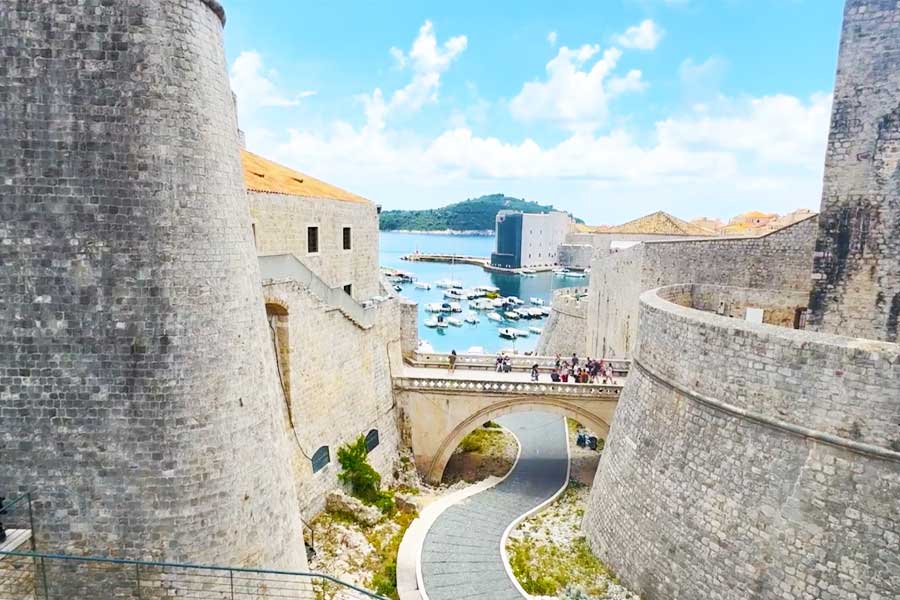
Revelin’s architectural design embodies key principles of Renaissance fortification that represented massive innovation compared to medieval fortress design. Medieval fortifications, like earlier parts of Lovrjenac, featured high walls with towers designed to dominate surrounding territory with archers and defenders positioned on top of walls. This design proved vulnerable to cannon artillery, which could breach high walls relatively easily. Renaissance military architects developed entirely new design approaches.
Revelin’s walls are lower and thicker than medieval fortress walls, specifically designed to absorb cannon bombardment without being breached. The lower profile meant that cannon fire could not strike the walls at angles that would cause maximum structural damage. The thick walls distributed impact forces and provided depth that bullets and cannon balls could not penetrate.
The fortress features bastions – protruding structures at corners and along walls – that allowed artillery mounted inside the fortress to defend the walls by firing along their length. This design meant that attackers could not reach a section of wall without coming under fire from cannon mounted in bastions. Every approach was covered. Every angle of attack faced defensive fire. This sophistication represents Renaissance military thinking applied to defense.
Gun emplacements are positioned throughout the fortress interior, showing where cannon were mounted during defensive operations. These positions were not random but carefully calculated to provide overlapping fields of fire, ensuring complete coverage of potential attack approaches. The spacing and positioning of gun emplacements demonstrates sophisticated understanding of ballistics and defensive geometry.
Casemates – enclosed gun positions within fortress walls – protected artillery from enemy return fire. These structures allowed defenders to operate cannon from relatively protected positions, reducing casualties among gun crews. The casemates also provided storage for ammunition and supplies, integrating military function with practical logistics.
The fortress’s overall shape is geometric and symmetrical, reflecting Renaissance emphasis on mathematical proportion and orderly design. This is not merely aesthetic preference but functional choice. Symmetrical design meant that defensive principles worked equally well from any approach. There were no weak points due to irregular design. The fortress functioned as integrated defensive system where each element supported others.
Strategic Role of Revelin Fortress: Harbor Defense and Command Point of Dubrovnik
Revelin’s position on an island in the harbor, rather than on the mainland like Lovrjenac, provided unique strategic advantages. The island position meant that the fortress could not be approached by land. Assault would have to come by sea or across the narrow drawbridge. The drawbridge could be raised, completely isolating the fortress. This defensive advantage explains why medieval cities often fortified islands when possible.
The fortress’s elevated position provided commanding views of the harbor and surrounding sea. From Revelin, defenders could observe approaching vessels and direct harbor defense. This observation capability meant that Revelin functioned as lookout post as much as combat position. Information about approaching vessels could be rapidly communicated to the main city, allowing Dubrovnik to prepare defensive response.
The fortress also controlled the eastern harbor entrance, complementing Lovrjenac’s control of the western entrance. Together, Lovrjenac and Revelin created a defensive net where no vessel could enter or exit Dubrovnik’s harbor without coming under observation and potential fire from two separate fortifications. This double defense system meant that attackers could not simply overwhelm one fortress to gain harbor access. They would have to defeat two independent fortifications or find alternative approaches.
Revelin Fortress Construction: Enduring Materials and Timeless Quality
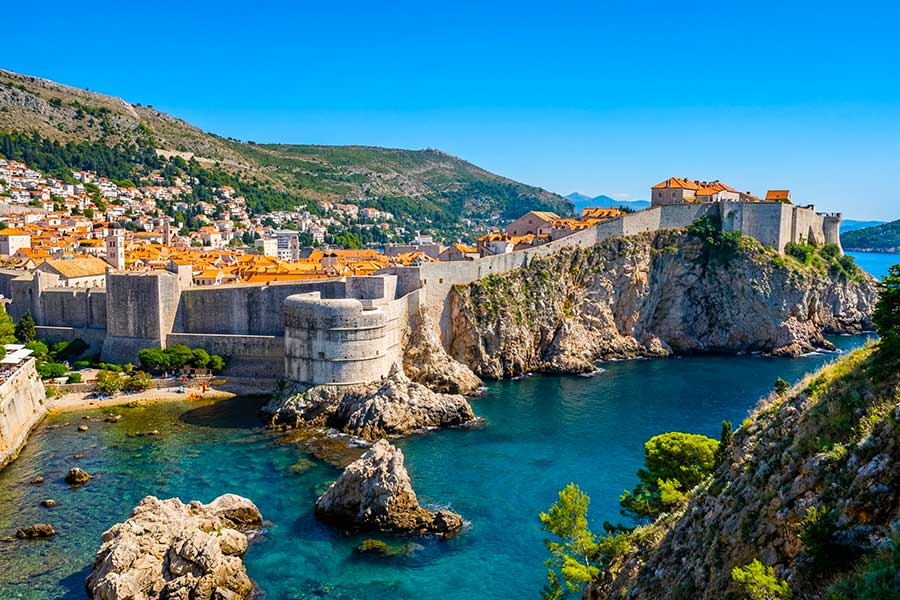
Examining Revelin’s construction reveals the quality of materials and workmanship invested in the fortress. The walls are built from large limestone blocks precisely cut and fitted together. The stone was sourced locally, meaning that quarrying, transport and installation were all substantial undertakings. The quality of stonework suggests that highly skilled masons were employed, people whose training and experience commanded significant compensation.
The precision of stone-fitting is remarkable. Stones are cut so accurately that minimal mortar was required to bind them together. This dry-fit construction meant that the fortress walls could settle and shift with temperature changes and minor earthquakes without developing cracks or structural failure. The walls have survived nearly 500 years with minimal deterioration, testimony to both material quality and construction technique.
The fortress’s interior spaces show sophistication in design and construction. Arched ceilings made from carefully cut stone distribute structural loads efficiently, allowing wide open spaces without requiring interior support columns. The proportions and geometry of these arches show mathematical understanding and architectural sophistication. These are not crude functional structures but carefully designed spaces created by craftspeople with professional training and aesthetic judgment.
From Military to Cultural: Revelin Fortress Today
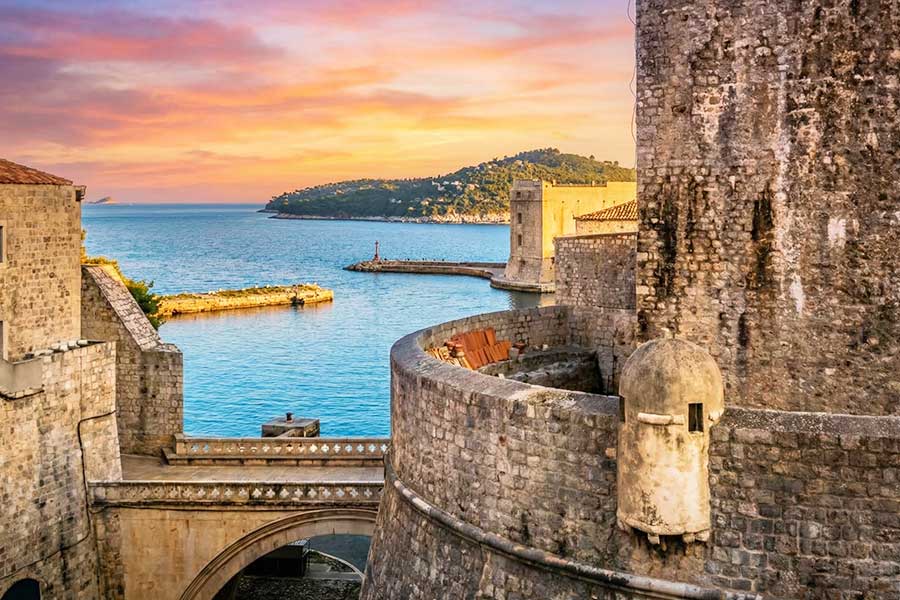
In recent decades, Revelin has transformed from active military installation to cultural venue while retaining its authentic military character. The fortress now hosts summer concerts, theatrical performances and cultural events that utilize the fortress’s dramatic setting and exceptional acoustics. The stone arches and enclosed spaces create natural amplification, making the fortress an ideal venue for live music and performance.
This transformation from military to cultural use demonstrates how medieval and Renaissance structures can adapt to contemporary purposes without losing historical authenticity. The fortress retains all original architectural features. Nothing has been demolished or substantially modified. Instead, the interior spaces that once held soldiers and ammunition now hold audiences and performers, maintaining the fortress’s role as gathering place while completely transforming its purpose.
The summer concert season transforms Revelin into vibrant cultural space. Performances range from classical concerts to contemporary music to theatrical productions. Sitting inside the fortress during performance, surrounded by Renaissance military architecture, creates unique sensory and emotional experience. You are simultaneously inside 500-year-old military fortification and contemporary cultural venue, experiencing two different historical moments in single setting.
Visiting Revelin Fortress: What to Expect
Revelin is located on a small island just beyond the Ploče Gate on Dubrovnik’s eastern side. Access is via a drawbridge connecting the island to the mainland. The walk from the Pile Gate through the Old Town to the Ploče Gate is approximately ten to fifteen minutes, then another two minutes to reach the drawbridge.
Admission: Approximately 5–10 euros for adult tickets. Admission may be waived when cultural events are scheduled, or separate event tickets may be required instead. The Dubrovnik Pass often includes access or provides discounts.
Hours: Opening hours vary depending on whether events are scheduled. Typically open daily 8 AM – 7 PM in summer, with shorter hours in winter. Confirm current hours before visiting, particularly if cultural performances are your primary interest.
Time Required: 30–45 minutes for thorough exploration of the fortress structure and spaces. If attending a concert or performance, plan additional time accordingly.
Physical Considerations: Stairs and uneven surfaces are common throughout the fortress. The island position and narrow drawbridge entrance may feel isolated to some visitors, though this isolation is part of the fortress’s historical character. Comfortable walking shoes are essential.
What to Bring: Bring water, particularly during warm months. There is minimal shelter from sun within the fortress. A camera is essential for photography given the dramatic architecture and harbor views. If attending a concert, you may want to bring light clothing even in summer, as stone interiors remain cool.
Views and Photography: The views from Revelin encompass Dubrovnik’s eastern city walls, the Old Town skyline and the Adriatic Sea beyond. The fortress exterior is particularly photogenic, especially during late afternoon light when stone walls glow with warm color. The drawbridge and fortress approach provide excellent compositional elements for photography.
Nearby Attractions and Combination Visits
Revelin sits in proximity to several major attractions. The Ploče Gate provides access to the eastern city walls for walking along Dubrovnik’s fortifications. The Dominican Monastery is located just inside the Ploče Gate. Sponza Palace is a short walk away. Fort St. John (Maritime Museum) is visible from Revelin across the harbor. Combining Revelin with walks along the eastern walls and visits to the Dominican Monastery creates efficient exploration of Dubrovnik’s eastern defensive and cultural zone.
FAQ – Revelin Fortress
How does Revelin’s design differ from Lovrjenac’s design?
Lovrjenac reflects medieval fortification concepts with earlier modifications for artillery. Revelin represents complete Renaissance redesign from foundation, built specifically for cannon warfare with lower walls, bastions for overlapping fire and casemates for protected artillery. Revelin embodies Renaissance military innovation more comprehensively than Lovrjenac.
Why was Revelin built on an island rather than on mainland like other fortifications?
Island position provided natural defense – assault could only come by sea or via drawbridge. The drawbridge could be raised, completely isolating the fortress from mainland attack. This geographic advantage explains why medieval fortifications were placed on islands whenever possible.
What was Revelin’s primary military function compared to Lovrjenac?
Lovrjenac was active harbor defense fortress continuously engaged with passing traffic and potential threats. Revelin functioned more as garrison fortress and strategic reserve, providing storage, soldier quarters and command facilities. Together they created integrated defensive system with complementary functions.
How does Revelin compare to other Mediterranean fortifications from the same period?
Revelin represents exceptional quality of Renaissance military architecture with materials and craftsmanship comparable to finest fortifications built elsewhere in Mediterranean. The fortress’s survival in nearly original condition allows direct comparison with partially destroyed or heavily modified structures in other locations.
Is Revelin worth visiting if I have limited time in Dubrovnik?
Yes. The fortress is compact, requires only 30–45 minutes to explore and provides authentic military architecture with minimal crowds compared to major tourist attractions. The perspective gained from Revelin enhances understanding of Dubrovnik’s overall defense strategy.
Can I visit Revelin independently or is it primarily used for events?
Revelin is open for visitor exploration during designated hours independent of events. You can visit the fortress structure and explore military features without attending scheduled performances, though event attendance provides different experience.
Our Most Popular Tours To Sarajevo
We offer many tours that include a visit to Sarajevo and its most popular locations:
- Full Day tour from Sarajevo to Belgrade (Most Popular)
- Full Day tour from Sarajevo to Međugorije & Mostar
- Full Day Tour from Sarajevo to Travnik and Jajce
- Full-Day 5 Cities Tour from Sarajevo to Herzegovina (Mostar)
- Full day Tour from Sarajevo to Dubrovnik (Kotor or Split)
Don’t Hesitate To Say Hi!
Got any questions about our tours or the city? Don’t hesitate to contact us anytime for more info and booking.
Use the following phone number and email: