
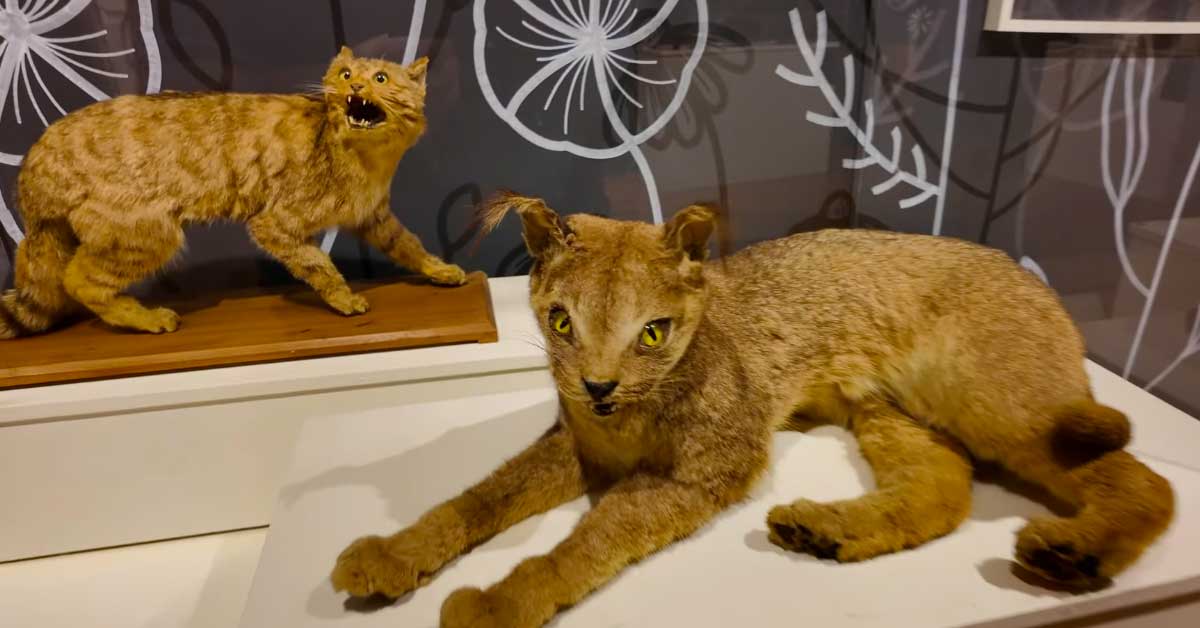
Tucked away in a quiet side street of Dubrovnik’s Old Town, far from the crowds on Stradun and the selfie sticks along the city walls, lies a museum that tells a completely different story about this region. Instead of baroque facades and medieval politics, here you meet fish with prehistoric faces, carefully pinned butterflies, rare sea turtles, extinct local mammals and jars filled with algae that once floated in the Adriatic over a century ago. It is the Dubrovnik Natural History Museum, and if you are even slightly curious about what lives in and around the sea you are staring at from the city walls, this is where the puzzle pieces click into place.
The Dubrovnik Natural History Museum is not huge, but it is surprisingly deep. Its roots reach back to 1872 and to a pharmacist‑shipowner who loved nature collecting so much that he helped create the city’s first “Museo Patrio” – the Patriotic Museum. What you see today in Andrović Palace is the modern incarnation of that early passion for cataloguing everything that swims, crawls, flies or sprouts around Dubrovnik.
This guide walks you through that story: how the museum was founded, why it moved so many times, what is actually inside those glass cases and why it might be exactly the break you need from the heat and crowds outside.
Table of Contents
A Short History of Dubrovnik’s Natural Curiosity
The beginnings of organized natural science in Dubrovnik are surprisingly old and surprisingly personal. In 1872, at the initiative of the Chamber of Trade and the Commune Council, Dubrovnik founded the “Museo Patrio” – the Patriotic Museum. The heart of this new institution was a private natural history collection owned by Antun Drobac, a pharmacist and ship‑owner born in 1810. Drobac had spent decades collecting minerals, animals and plants from the Dubrovnik region, convinced that a technical school and proper science rooms needed real specimens, not just books.
The Patriotic Museum officially opened in 1873, in the large hall of the Palace of the Commune. Alongside natural history, the museum also held cultural‑historical, archaeological and ethnographic collections, and even folk handicrafts – a kind of 19th‑century “everything in one place” museum.
After Drobac’s death in 1882, the museum’s natural history work passed into the hands of Baldo Kosić, an amateur naturalist, collector and specimen preparator born in 1829. Under Kosić, the study of Dubrovnik’s fauna flourished. He built almost complete collections of birds, fish, amphibians, reptiles and mammals of the area, often through meticulous fieldwork and patient preparation. Between roughly 1882 and 1917 he acquired 1,117 animal specimens for the museum, laying the foundation of what you see today.
As collections grew, space became a problem. In 1932 the museum moved to Fort St. John (Sveti Ivan) on the harbor and took the name Dubrovnik Museum, dividing its holdings into separate departments – natural history, cultural history, archaeology, ethnography and maritime heritage. By 1950 the natural history section occupied the whole first floor of Fort St. John.
Just two years later, in 1952, another move: the natural history department transferred to the Crijević–Pucić Palace and formally became the Natural History Museum. Collections kept expanding, dioramas were built, and again the building became too small. In 1957 the museum was merged with the Biology Institute of the Yugoslav Academy of Sciences and Arts and moved to the former Benedictine monastery on Lokrum island, where it finally opened to visitors in 1962.
Then nature itself intervened. The 1979 Montenegro earthquake severely damaged the Lokrum monastery building. The museum was closed, collections were returned to storage in Fort St. John, and for years the institution existed more on paper than in reality, at times with barely any professional staff.
Only in early 2009 did the Dubrovnik Natural History Museum re‑emerge in its current form, reopening to the public in the Andrović Palace in the Old Town. Today’s museum thus combines 150 years of collecting history with a relatively modern exhibition space in a Renaissance palace.
Where Is the Dubrovnik Natural History Museum and What Is It Like Inside?
The museum is located at Andrović Palace in the Old Town, on the street Svetog Dominika 4 – just a short walk from the Dominican Monastery and the eastern part of the city walls. From Stradun, you reach it in a few minutes by stepping away from the main flow of people into calmer side streets.
Inside, the museum spreads over four relatively compact floors connected by a staircase. Each level has themed rooms and exhibitions, but the overall feeling is intentionally “low‑key” rather than blockbuster. The focus is on clear, calm displays that let you actually see specimens and read explanations without rushing.
On the landings you will notice objects that belonged to the early naturalists who built these collections. Rather than being locked behind plain glass, these items are arranged into small “scenes” that evoke the working atmosphere of 19th‑century collectors and scientists: desks, tools, notebooks, labels, maps. It feels a bit like stepping into their study while they just stepped out for a moment.
Despite its relatively small size, the museum manages to cover a wide range of topics: Adriatic fish, marine mammals and reptiles, invertebrates, insects, plants, invasive species, protected species and extinct local fauna. The exhibitions are mostly bilingual, with explanations in Croatian and English that are detailed enough for adults but accessible enough for children who are genuinely curious.
Star Exhibits: From Monk Seals to Hammerhead Sharks
If there is one thing that makes the Dubrovnik Natural History Museum stand out, it is the quality of some individual specimens. This is not a random dusty collection of unknown animals. A number of pieces are genuinely rare or unique.
The museum owns an algae herbarium collected by naturalists Matija Botteri and Marija de Cattani, representing a systematic record of algae from the Adriatic and nearby waters. For botanists and marine biologists, this herbarium is a treasure: a window into what the area’s marine plant life looked like more than a century ago.
Among the vertebrates, some specimens read like a who’s‑who of Adriatic fauna. You will see:
- An otter from the Dubrovnik region
- A Mediterranean monk seal, one of the world’s most endangered marine mammals
- A leatherback sea turtle (Dermochelys coriacea), the largest sea turtle species, caught in the Adriatic in 1894
- A thresher shark (fox shark) with its distinctive long tail
- A smooth hammerhead shark with the characteristic head shape
- A very large tuna (head and tail preserved) caught near Hodilj close to Ston at the end of the 19th century
Some of these species are now extremely rare or completely extinct in local waters. The monk seal in particular is a poignant example: once present along the Croatian coast, it has largely disappeared from the Adriatic. Seeing the preserved animal in front of you drives home how fast human activity can transform an ecosystem.
The fish collection overall is substantial, having been built continuously since the museum’s founding in 1872. The most intense period of acquisition was between 1882 and 1917 under Baldo Kosić, but additions have continued through the 20th and 21st centuries. The museum’s “Fish of the Dubrovnik Area” collection documents over a century of changes in local species composition, including the arrival of Lessepsian migrants – species that entered the Mediterranean from the Red Sea through the Suez Canal.
In addition to vertebrates, the museum contains extensive invertebrate collections – shells, crustaceans, insects – often arranged in aesthetically pleasing ways. One of the more playful displays is a set of seashells suspended in transparent orbs, hanging in space like a minimalist modern chandelier, which visitors frequently describe as one of the coolest arrangements in the museum.
Modern Thematic Exhibitions: “Under Pressure” and Life in the Deep Sea
Although the core of the museum is historical, the curators have invested a lot of effort into designing modern, thematic exhibitions that explore current scientific topics. One of the standout examples is the “Under Pressure” exhibition about deep‑sea life.
This exhibition, created by curator Jadranka Sulić Šprem and underwater photographer Dalibor Andres, uses a mix of real specimens, models, lighting and sound to recreate the feeling of descending into the deepest parts of the ocean. The title plays on the Queen song “Under Pressure,” which plays as part of the soundscape, combined with immersive deep‑sea sounds.
The exhibition shows deep‑sea fish species from the southern Adriatic that naturally live at depths greater than 800 meters. These animals have adapted to extreme cold, near‑total darkness, limited food availability, high pressure and low oxygen. To help visitors understand these adaptations, the exhibition uses models with optical fibers to simulate bioluminescence – the ability of organisms to produce their own light.
Interactive touch screens allow you to “dive” virtually down to 10,984 meters, the maximum measured depth in the Mariana Trench, while learning at what depth light disappears, what the average ocean depth is and where the deepest points of the Atlantic and Indian oceans are. This kind of exhibit turns a quiet museum into a small, focused science center, especially attractive for children and teenagers.
Other themed exhibitions have included “Who are the Lessepsian Migrants?” and “Protected Species,” focusing on invasive species and conservation issues in the Adriatic. These displays make it clear that the museum is not just about cataloguing what used to exist, but about documenting ongoing change and raising awareness of environmental challenges.
Collections Behind the Scenes: Minerals, Fish, Turtles and More
Not everything in the Dubrovnik Natural History Museum is visible in the public galleries. Many specimens are kept in storage rooms and studied by scientists and visiting researchers.
The mineral collection, originally formed from Drobac’s private holdings and the Chamber’s contributions, once contained over 5,000 specimens displayed in wooden trays. Due to moves and wartime damage between 1931 and 1979, that number declined. Today the museum still preserves 585 mineral specimens in 444 inventory entries. Although smaller than before, the collection remains important for understanding local geology and the history of mining and trade in the region.
The fish collection, continuously expanded since 1872, is one of the museum’s core strengths. It covers coastal species, pelagic (open‑sea) fish, deep‑sea species and rare visitors. Every specimen has a label with collection location and date, meaning researchers can track where and when species occurred over the last 150 years.
The museum also holds notable herpetological (reptile and amphibian) collections. A highlight is the Balkan pond turtle, a protected species whose specimens help document the species’ historical range and variation. Similarly, the leatherback sea turtle specimen mentioned earlier is part of a dedicated collection of large marine reptiles.
Other thematic sub‑collections include:
- “Murmur of the Seas” – focusing on marine soundscapes and sea fauna
- “Protected Species” – specimens of animals that are now legally protected in Croatia
- “Dermochelys coriacea” – an in‑depth look at the leatherback sea turtle’s biology and conservation status
Together, these collections form an important scientific resource that goes far beyond what a casual visitor sees in the display rooms.
Visitor Experience: Is It Worth Your Time?
If you are used to massive national museums, the Dubrovnik Natural History Museum will feel small. Reviews frequently describe it as “low‑key,” “quiet,” and “not very big,” but also as “not boring” and “surprisingly immersive” if you give it a chance.
Spread over four floors, the visit typically takes 45–60 minutes if you read most labels and engage with the interactive parts, or as little as 30 minutes if you move faster. The museum is fully indoors, air‑conditioned and much less crowded than the city’s big historical attractions, making it an excellent midday escape from heat and noise.
Families with children often find it a welcome change. Kids can look at sharks, turtles, strange deep‑sea fish and suspended shell installations, all at eye level and without overwhelming crowds. The interactive “Under Pressure” exhibition and clear, visual explanations about invasive species and extinct animals give parents plenty to talk about with curious children.
For adults, the museum works best if you are interested in ecology, biology or environmental issues. The narrative about local extinction, invasive species, historical biodiversity and human impact on the Adriatic is subtle but powerful. Reading that a particular monk seal or turtle was caught near Dubrovnik in 1894 and then realizing you will never see such an animal in these waters today leaves an impression.
The museum’s atmosphere is intimate and calm. It is not a “must‑see” on every Dubrovnik list, but it is one of those places that quietly deepens your understanding of where you are. After seeing its exhibits, you will not look at the sea or local fish restaurants in quite the same way.
Practical Information: Opening Hours, Tickets and Location
The Dubrovnik Natural History Museum is part of the wider Dubrovnik Museums network, but it operates from its own dedicated building in Andrović Palace.
Opening hours:
- Summer (June 1 – October 31): Monday to Friday, 10:00 – 18:00
- Winter (November 1 – May 31): Monday to Friday, 10:00 – 17:00; Saturday, 10:00 – 14:00
- Closed on Sundays and public holidays year‑round
Staff working hours are generally Monday to Friday, 08:00 – 16:00. Always check the official museum website or local tourist information before your visit in case of temporary changes.
Ticket prices are modest compared to major Dubrovnik attractions. Guide listings indicate an adult ticket at around 6 euros, with reduced prices for children. Dubrovnik Pass sometimes includes discounts or bundled access to several museums, so check current conditions if you have one.
The museum’s address is Sv. Dominika 4 in the Old Town. From Stradun, head toward the Dominican Monastery and Ploče Gate; the museum is a short walk away on a side street.
FAQ – Dubrovnik Natural History Museum
When was the Dubrovnik Natural History Museum founded?
Its origins go back to 1872, when the Patriotic Museum (Museo Patrio) was founded using the private natural history collection of pharmacist and ship‑owner Antun Drobac and Chamber of Trade and Crafts material.
Where is the museum located today?
Since 2009, the Dubrovnik Natural History Museum has been housed in Andrović Palace in the Old Town, at Sv. Dominika 4.
What are the opening hours?
Summer (June 1 – October 31): Monday–Friday 10:00–18:00; Winter (November 1 – May 31): Monday–Friday 10:00–17:00, Saturday 10:00–14:00. The museum is closed on Sundays and public holidays.
How much time do I need to visit?
Most visitors spend 30–60 minutes exploring the four floors of exhibits, depending on how much they read and interact with displays.
What are the most important exhibits?
Highlights include specimens of Mediterranean monk seal, leatherback sea turtle caught in the Adriatic in 1894, thresher and hammerhead sharks, a large tuna, the algae herbarium and several extinct or locally extirpated species.
Is the museum suitable for children?
Yes. The size is manageable, displays are visual and not overwhelming, and interactive exhibitions and dramatic specimens like sharks and turtles tend to hold children’s attention.
Our Most Popular Tours To Sarajevo
We offer many tours that include a visit to Sarajevo and its most popular locations:
- Full Day tour from Sarajevo to Belgrade (Most Popular)
- Full Day tour from Sarajevo to Međugorije & Mostar
- Full Day Tour from Sarajevo to Travnik and Jajce
- Full-Day 5 Cities Tour from Sarajevo to Herzegovina (Mostar)
- Full day Tour from Sarajevo to Dubrovnik (Kotor or Split)
Don’t Hesitate To Say Hi!
Got any questions about our tours or the city? Don’t hesitate to contact us anytime for more info and booking.
Use the following phone number and email: