
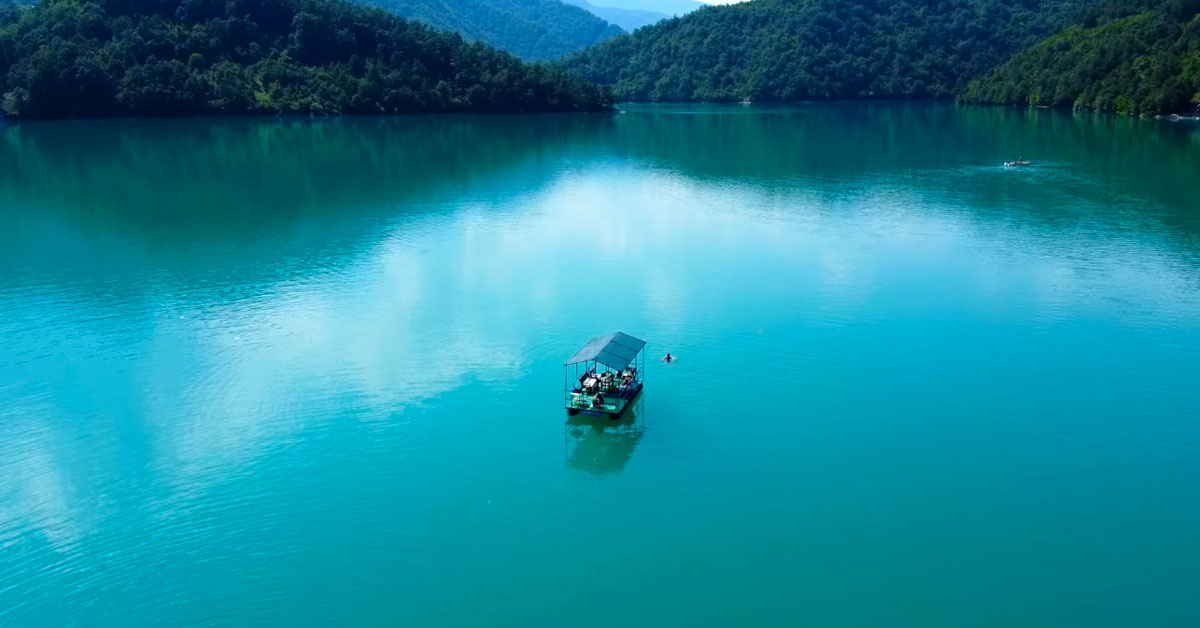
Imagine paddling a kayak through a 30-kilometer-long mountain canyon, turquoise water reflecting dramatic limestone cliffs soaring 600 meters above, the peaks of Prenj and Čvrsnica mountains framing every vista. The silence is profound – only paddle strokes, water lapping against kayak, and occasional bird calls penetrate the mountain amphitheater. After two hours of paddling through increasingly spectacular scenery, you discover a hidden beach accessible only by water, where crystal springs feed directly into the lake, creating pools of water so transparent you can count pebbles on the bottom. This is Jablanica Lake – Bosnia and Herzegovina’s most spectacular artificial lake and perhaps the Balkans’ most underrated outdoor adventure destination.
Jablanica Lake exists due to engineering ambition that transformed a wild river into managed resource. Constructed between 1947-1955 by the Yugoslav government as the country’s largest hydroelectric project, the 85-meter-tall Jablanica Dam created an artificial lake of stunning proportions: 30 kilometers long, covering 1,440 hectares, with maximum depth reaching 80 meters. While the dam’s creation was celebrated as industrial progress, it came at extraordinary human cost – approximately 4,500-5,000 people were forcibly displaced, their villages demolished, their ancestral lands permanently flooded, their livelihoods destroyed. Yet today, Jablanica Lake has paradoxically become one of Bosnia’s most beautiful natural destinations, though the tragedy underlying its creation remains largely unknown to casual visitors.
Contemporary Jablanica Lake is Bosnia’s premier kayaking and water sports destination, attracting adventure enthusiasts seeking dramatic scenery combined with manageable water conditions. Unlike the wild Neretva rapids near Konjic (Grade III-IV difficulty), Jablanica’s waters – held behind the dam – remain calm enough for beginners while providing scenery rivaling any mountain lake globally. The lake is rich with fish (trout, grayling, carp), surrounded by remote hiking trails, dotted with hidden beaches, and increasingly recognized as destination meriting multi-day visits rather than mere drive-by tourism.
Table of Contents
The Jablanica Dam and Artificial Lake – Engineering Triumph and Human Tragedy
The history of Jablanica Lake embodies contradictions that define much of 20th-century Yugoslav development – extraordinary engineering achievements purchased with human suffering, public celebration of industrial progress masking private catastrophe, and long-term environmental consequences only recently acknowledged.
Pre-Dam Neretva: Before 1950, the Neretva River flowed freely through this valley, a wild mountain watercourse with seasonal flooding that created tragedy but also natural cycles supporting established ecosystems. The valley floor supported settlements, agriculture, and human communities that had adapted to Neretva’s rhythms over centuries. The river itself was an obstacle to commerce – the unpredictable flow, occasional devastating floods, and lack of controlled water supply prevented economic development. Yet for those living along the river, the Neretva provided sustenance, identity, and connection to place.
Dam Construction (1947-1955): Yugoslavia’s communist government, newly independent under Tito, saw hydroelectric development as essential for industrial modernization and national power generation. The Jablanica project was conceived as centerpiece of Yugoslav industrial ambition – the largest hydroelectric installation in the nation, employing thousands of workers, requiring years of engineering, and promising to supply electricity to southern Bosnia and Herzegovina. The engineering itself was remarkable: construction required dealing with complex geology, massive concrete pouring in difficult terrain, and installation of six 30 MW Francis turbine-generators creating hydraulic head of 111 meters.
Population Displacement: The human cost remains largely unacknowledged in tourism materials. Between 1953-1955, as the reservoir began filling, approximately 4,500-5,000 people were forcibly relocated from the valley floor. The village of Lisičići (right-bank community) provides most-documented example: residents were given minimal notice, compensation was inadequate, and government officials threatened severe punishment to anyone who resisted. Some populations were transported by freight wagon to distant barracks in northern Bosnia; those who resisted or attempted to settle by the rising lake level faced “cruel punishments” according to historical records. The social devastation was profound – families separated, agricultural lands destroyed, ancestral graveyards flooded, communities fractured.
Post-Dam Consequences: After initial displeasure, surviving communities gradually adapted. However, systematic neglect followed displacement – Lisičići residents received no electricity until the 1970s (decades after dam construction), had to voluntarily construct their own 12-kilometer road (in the mid-1970s with a rented bulldozer), and waited until the 1990s for basic water supply and telecommunications. The disparity between energy wealth generated by their displaced lands and poverty of survivors’ living conditions embodied Yugoslav inequality.
Contemporary Lake: Today, Jablanica Lake operates as tourist destination and power generation facility under Elektroprivreda Bosnia and Herzegovina (national utility). The water level fluctuates dramatically (up to 25 meters annually) according to electricity demand and precipitation. The lake has experienced ecological crises – notably in 2017, when power utility released massive volumes of water for electricity generation, causing the lake to essentially dry out and killing approximately 2 million fish. This incident revealed ongoing tensions between power generation economics and environmental management – conflicts likely to intensify as climate change reduces precipitation and increases energy demand.
Despite this complicated history, Jablanica Lake today represents natural beauty that cannot be denied – turquoise waters, dramatic mountain framing, relative remoteness, and authentic experience of Bosnia’s interior landscape.
Jablanica Lake Geography and Scenic Qualities
Jablanica Lake stretches approximately 30 kilometers from the dam (near the town of Jablanica) upstream toward Konjic, following the Neretva River valley. The lake’s width varies from narrow canyon sections (perhaps 200-300 meters across, with 600-meter cliffs rising vertically) to broader expansions (1-2 kilometers wide) in valley sections. The maximum depth reaches 80 meters near the dam; upstream sections gradually shallow toward the river delta.
The Mountains: The lake is framed by two dramatic peaks – Prenj (2,156 meters) and Čvrsnica (2,228 meters) – among Bosnia’s highest mountains. These peaks are visible from virtually every point on the lake, creating dramatic visual backdrop that changes appearance throughout the day as light angle shifts. Morning brings soft illumination of rocky faces; midday creates harsh shadows emphasizing vertical relief; late afternoon bathes peaks in golden light creating photographic magic. Winter snow caps the peaks; spring brings cascading waterfalls as snowmelt feeds tributary streams.
The Water: The lake’s coloration is distinctly turquoise – resulting from mineral content and glacial flour (extremely fine sediment particles) suspended in water. The clarity varies seasonally – clear during low-water periods, occasionally turbid during spring snowmelt – but generally permits underwater visibility of 3-5 meters. The water remains extraordinarily cold year-round (approximately 8-12°C), reflecting deep underground sources and continuous fresh water inflow. The coldness makes extended swimming challenging without wetsuit, but brief immersion is tolerable and refreshing during summer heat.
Hidden Beaches: Multiple small beaches dot the lake, some accessible by road (and thus occasionally crowded), others reachable only by water (and thus pristine). The most famous accessible-by-boat beach is near Grabovica village, approximately 1.5-2 hours paddling from the main kayak launch point. These beaches consist of pebbles and sand, with clear water, shade-providing vegetation, natural spring water, and frequently abandoned character – it’s possible to spend hours on a beach encountering no other human beings.
Waterfall Tributaries: Multiple mountain streams cascade directly into the lake, creating spectacular waterfalls visible during spring-early summer (the famous Terzića Waterfalls). Some waterfalls drop 50-100 meters from cliff faces, accessible by hiking short trails from roadside viewpoints. The waterfall water is cold enough to be shocking but thrilling – local adventurers occasionally jump from rocks into pools beneath falls.
Activities and Experiences on Jablanica Lake – Water and Mountain Adventures
Kayaking and Canoeing represent the primary lake activity, and the experience is genuinely spectacular. Multiple local operators rent kayaks (single and tandem), provide basic instruction and safety briefing, and permit either guided tours or self-paddled exploration. The standard route paddles from Grabovica launch point approximately 1.5-2 hours to reach a hidden beach, where visitors swim, picnic, and relax before paddling return journey. Full-day kayak rental costs approximately 40-50 euros per person (tandem kayaks approximately 60-80 euros for two-person capacity).
The kayaking experience combines physical activity with meditative nature immersion. The initial launch involves paddling through relatively straightforward section with good views but not dramatically narrow canyon. Gradually, the canyon closes – cliffs become steeper, scenery becomes more dramatic, the paddler feels increasingly enveloped by mountain walls. The silence is profound, with only paddle strokes and water sounds. Occasionally eagle or heron sightings reward patient observation. The progression from developed town to increasingly pristine wilderness occurs gradually, creating psychological journey alongside physical paddling.
Swimming and Beach Picnics: The hidden beaches accessible by water offer primary refuge during warm months. Most visitors bring food and spend 2-4 hours at beach – swimming, sunbathing, picnicking, and relaxing before return paddle. The absence of developed infrastructure (no beach bars, restaurants, or facilities) ensures authentic experience, though visitors must bring all provisions. Local operators sometimes offer provisions (food, drinks) for additional cost.
Fishing: Jablanica Lake is renowned for trout and grayling fishing, with professional guides available for half-day or full-day fishing expeditions (typically 50-80 euros per person). The lake’s fish population has recovered partially since the devastating 2017 water-release incident, and contemporary catches suggest healthy populations. Fishing is conducted from boats or from shoreline access points. The cold, mineral-rich water produces exceptionally flavorful trout – local restaurants pride themselves on serving fresh-caught lake fish.
Hiking: Multiple trails radiate from the lake area into the surrounding mountains. The ascent of Čvrsnica (2,228m) or Prenj (2,156m) represents major undertaking (6-8 hour hikes), requiring fitness and mountaineering experience. However, shorter hikes (1-3 hours) provide mountain scenery, vistas across the lake, and less challenging alternatives. Trails pass through beech and fir forests, wildflower meadows, and occasionally emerge at clifftop viewpoints overlooking the lake.
Photography: Jablanica Lake offers exceptional photography opportunities. The dramatic mountain-framed lake provides compelling landscape photography; kayaking creates unique perspectives; sunset/sunrise light transforms the landscape into gold and orange tones. The contrast between turquoise water and gray limestone creates distinctive color palette. Winter snow on the peaks combined with lake waters presents entirely different aesthetic from summer.
Dining and Hospitality on Jablanica Lake – Waterfront Restaurants and Local Cuisine
Jablanica town itself is modest – approximately 1,000 residents – but offers several restaurants emphasizing fresh local cuisine, particularly trout and other lake fish. Several restaurants are located directly on the lake waterfront, accessible primarily by water (contributing to their mystique). Others are positioned along the main road connecting Jablanica to Konjic.
Lakeside Konobas (traditional taverns) typically serve grilled trout (10-15 euros per fish), stewed fish (brudet, 12-18 euros), and traditional Bosnian meat dishes. The restaurants emphasize fresh local sourcing – the fish served was likely caught within days or weeks. The atmosphere is typically family-run, informal, and welcoming. Meals include bread, local wine, and fresh-brewed coffee. The dining experience emphasizes genuine hospitality rather than commercialized tourism service.
Grabovica Area restaurants cater particularly to kayakers, often providing food delivery to the beach (typically 8-15 euros per meal) or offering cooked meals at reasonably accessible waterfront locations. Some operators provide food packs for all-day kayaking trips, enabling self-sufficiency while exploring the lake.
Food Costs: Overall dining is remarkably affordable – a complete fish meal with drink typically costs 12-20 euros. Local wine costs 3-5 euros per glass. Coffee and desserts cost 2-4 euros. This represents excellent value compared to Mediterranean coastal destinations.
Practical Information for Visiting Jablanica Lake
Location and Access: Jablanica Lake spans the territory between the towns of Konjic (30 kilometers north, 2-hour drive from Mostar) and Jablanica (50 kilometers south, 1.5 hours from Mostar). The main kayak launching area is near Grabovica village on the lower lake section, accessible by vehicle from Jablanica town. From Mostar, driving to Grabovica requires approximately 60-90 minutes via the M-17 highway south and secondary roads toward Jablanica. Alternatively, access from Konjic (north end) is also possible.
When to Visit: Spring (April-May) brings active water flows, cascading waterfalls from snowmelt, and wildflowers. Water remains cold, making extended swimming challenging. Summer (June-August) brings warm air temperatures (25-35°C), calm water conditions, and swimming comfort – ideal for kayaking and beach activities. Water temperature remains cold (10-15°C) even in summer. Autumn (September-October) offers pleasant temperatures (15-25°C), clear skies, and excellent photography light. Winter (November-March) is possible but cold, with occasional snow affecting mountain access.
Water Level Fluctuations: The lake’s water level fluctuates significantly (up to 25 meters annually) depending on electricity demand and precipitation. High water (typically spring-early summer) creates fuller scenic appearance and sometimes makes navigation more dramatic. Low water (typically autumn-winter) exposes shoreline features and occasionally reveals submerged structures or archaeological remnants. Water level fluctuations occasionally affect kayak launch points, so confirmation with operators before arrival is advisable.
Safety Considerations: While lake waters are calm, participants should possess basic swimming ability and comfort in water. The water is cold enough to induce hypothermia if immersion is prolonged – hypothermia risk is genuine despite warm air temperatures. Life jackets are provided by rental operators and should be worn at all times. Wind can develop unexpectedly, occasionally creating rough water conditions – paddlers should avoid extended paddling in deteriorating conditions. Thunderstorms occasionally develop rapidly in mountain terrain – awareness of weather is important.
Equipment and Preparation: Wear quick-dry clothing, bring extra clothes for après-paddling, sunscreen (essential – sun reflects intensely off water), hat, and sunglasses. Bring substantial water and food – the lake offers no midpoint refreshment facilities. Waterproof bags (provided by rental operators) protect electronics and valuables. Bring cash (euros) – not all local establishments accept cards. Insect repellent useful during warm months when mosquitoes congregate near water.
Accommodation: Jablanica town offers basic guesthouses and family-run hotels (20-40 euros per night). Konjic (northern lake access) offers more accommodation variety. Many visitors base themselves in Mostar (1.5 hours away) and day-trip to the lake. Camping is possible at designated lakeside areas managed by local operators.
Cost Summary: Kayak rental 40-80 euros per person/day, meals 12-20 euros, accommodation 20-50 euros/night, parking (if applicable) minimal cost. Total realistic budget 80-150 euros per person/day for comfortable experience.
FAQ – Jablanica Lake Questions
Is Jablanica Lake suitable for kayaking beginners, or is experience required?
Beginners are welcome. The artificial lake’s calm waters make it significantly safer than wild river paddling. All operators provide safety instruction, life jackets, and tandem kayaks suitable for novices. Most first-time paddlers succeed with basic guidance and patience.
What makes Jablanica Lake scenic compared to other mountain lakes?
The combination of dramatic 600-meter cliffs, turquoise water, 2,200+ meter peaks framing the horizon, hidden beaches accessible only by water, and isolation creates exceptional alpine lake scenery. The contrast between mountain wilderness and developed tourism creates unique character.
Can families with children visit Jablanica Lake, and what age recommendations apply?
Yes, excellent for families. Children ages 6+ can kayak (with adult in tandem kayak). Slower paddling pace accommodates families. Hidden beach provides safe swimming for children. Moderate difficulty makes family-friendly adventure possible.
What is the real history of Jablanica Lake, and why were populations displaced?
The dam was constructed 1947-1955 as Yugoslavia’s largest hydroelectric project. Approximately 4,500-5,000 people were forcibly relocated from flooded valley, receiving minimal compensation and facing harsh treatment. The village of Lisičići experienced particular hardship, lacking electricity and infrastructure for decades despite living alongside power-generating facility.
What is the water temperature, and is swimming safe?
Water temperature ranges 8-15°C year-round, reflecting deep underground sources. Swimming is possible but cold – hypothermia risk exists with extended immersion. Wetsuits recommended for extended swimming; brief swims manageable in summer. Life jackets are essential safety equipment.
Can I fish at Jablanica Lake, and is it suitable for serious anglers?
Yes, Jablanica is renowned for trout and grayling. Professional fishing guides available (50-80 euros/day) for visitors. The lake’s fish population has recovered following 2017 environmental incident. Cold mineral-rich water produces exceptional-quality fish.
Our Most Popular Tours To Sarajevo
We offer many tours that include a visit to Sarajevo and its most popular locations:
- Full Day tour from Sarajevo to Belgrade (Most Popular)
- Full Day tour from Sarajevo to Međugorije & Mostar
- Full Day Tour from Sarajevo to Travnik and Jajce
- Full-Day 5 Cities Tour from Sarajevo to Herzegovina (Mostar)
- Full day Tour from Sarajevo to Dubrovnik (Kotor or Split)
Don’t Hesitate To Say Hi!
Got any questions about our tours or the city? Don’t hesitate to contact us anytime for more info and booking.
Use the following phone number and email: