
Imagine walking through an ordinary-looking house in rural Bosnia, pressing a hidden button, and watching a metal door slide open to reveal a staircase descending into darkness. Now imagine following those stairs 280 meters beneath a mountain into a sprawling underground complex – an entire city carved from rock specifically designed to survive a thermonuclear attack. Welcome to Tito’s Bunker (ARK D-0), Bosnia and Herzegovina’s most improbable attraction and perhaps Europe’s most striking monument to Cold War paranoia, ideological competition, and staggering misallocation of resources.
Built between 1953 and 1979 at a cost of approximately 4.6 billion dollars (equivalent to 20 billion dollars in contemporary currency), this 6,500-square-meter underground fortress was commissioned by Yugoslav President Josip Broz Tito as ultimate protection against Soviet nuclear attack. The bunker remained so secretive that only six people knew of its existence – Tito himself, four Yugoslav generals, and the Prime Minister. Construction workers were vetted with CIA-level security clearances, signed perpetual silence contracts, and many never spoke about their work even decades later. For nearly 40 years, this facility remained unknown to virtually everyone outside the Yugoslav elite, buried beneath Mount Zlatar near the small Bosnian town of Konjic.
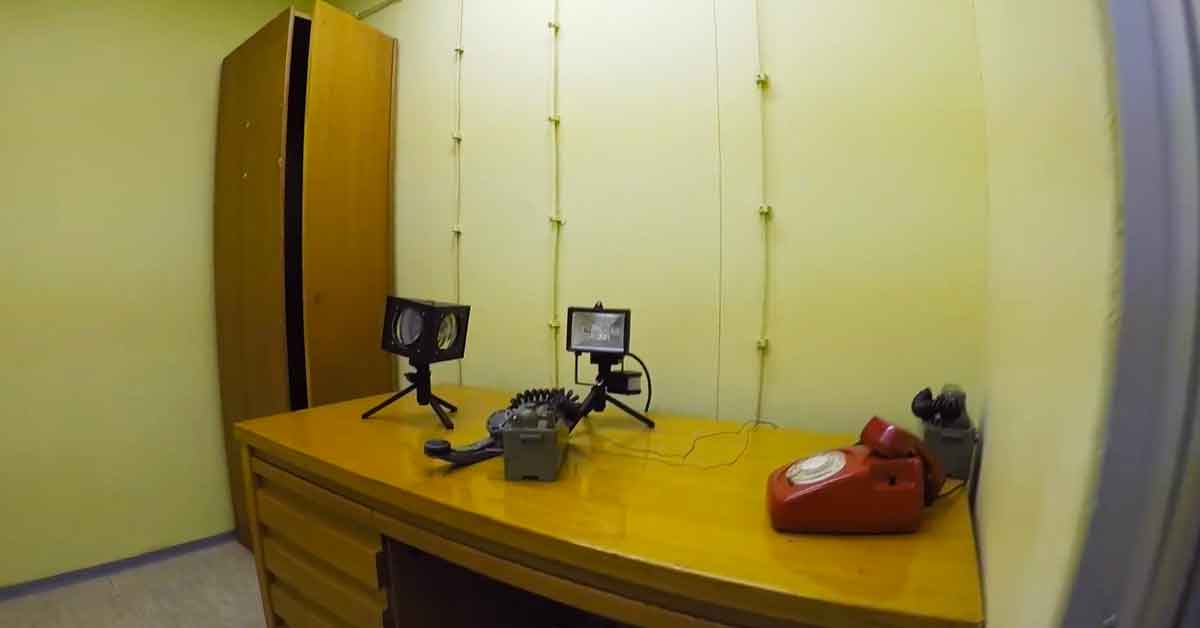
Today, Tito’s Bunker stands as a surreal time capsule – frozen exactly as it was in 1979, complete with authentic furniture, obsolete communication equipment, water systems still functional, and air conditioning apparently built to withstand nuclear winter. Visiting this facility is like stepping into an alternate history where the Cold War actually escalated to nuclear conflict, and you’re discovering the mechanism by which Yugoslav leadership intended to manage post-apocalyptic governance. The experience is simultaneously fascinating, absurd, sobering, and utterly unforgettable.
Table of Contents
History and Construction of Tito’s Bunker – How Communism Built Apocalypse Insurance
The origins of Tito’s Bunker trace to geopolitical realities of 1950s Yugoslavia. Unlike Soviet satellites bound by ideology and military occupation, Yugoslavia achieved independence through Tito’s charismatic leadership and negotiating genius. However, this independence came with constant tension – Tito maintained Yugoslavia as communist buffer state that remained unaligned with either Soviet or Western blocs, threading an extraordinarily difficult diplomatic needle. The Hungarian Revolution (1956) and Soviet threats convinced Tito that Soviet invasion remained possible if Yugoslavia ever seemed vulnerable. Simultaneously, nuclear weapons had become the dominant military technology, transforming strategic calculations fundamentally.
In 1953, Tito made an extraordinary decision: invest in building the largest, most luxurious nuclear bunker imaginable – one that would not merely protect leadership but enable them to continue governing Yugoslavia for six months after thermonuclear holocaust. Construction commenced under absolute secrecy, with workers sworn to silence, compartmentalized so no individual knew the complete scope, and carefully selected for political reliability and ethnic representation (nine Serbs, four Bosniaks, three Croats – reflecting Yugoslavia’s federal structure). The location – near Konjic in Bosnia – was strategically chosen as the geographic center of Yugoslavia, surrounded by Dinaric mountains providing natural defense, accessible to major infrastructure, and remote from urban centers that would become radioactive wastelands.
The construction process consumed 26 years and reportedly cost more than any other Yugoslav military project except the Željava Air Base and Lora Harbor. Workers used conventional explosives to bore through limestone, creating a horseshoe-shaped complex of 12 interconnected functional blocks penetrating 280 meters below the mountain summit. The engineering itself was genuinely remarkable – the structure was designed to withstand nuclear detonations up to 25 kilotons, provide independent power generation, maintain water systems, filter air contamination, accommodate food/medical supplies for 350 people for six months, and enable virtually complete isolation from the external world.
When completed in 1979, the complex was transferred to a 16-person Yugoslav military garrison tasked with maintaining equipment in perpetual readiness. After Tito’s death in 1980, the bunker remained operational, continuously maintained though never actually occupied by its intended inhabitants. For another 12 years – through the entire 1980s – Yugoslavia’s highest military officials presumably could have retreated here in case of Soviet invasion, believing themselves capable of directing military operations from this underground fortress.
The bunker’s secrecy survived the Cold War’s end – indeed, it remained largely unknown even to ordinary Yugoslavs, let alone international observers. Not until March 1992, as Yugoslavia disintegrated into ethnic conflict, did the bunker’s existence become publicly known. During the 1992 army withdrawal from Bosnia, Yugoslav General Milutin Kukanjac ordered the facility destroyed to prevent Bosnian government seizure. However, two military personnel – acting on conscience or calculation that destroying such infrastructure was fundamentally wrong – sabotaged the demolition by disconnecting electrical wires leading to explosives placed in massive fuel tanks. The facility surrendered intact to the Bosnian government, which by war’s end was using it as medical supply storage and ammunition depot.
Descending Into Paranoia – The Tito’s Bunker Interior
Visiting Tito’s Bunker begins unpromisingly – a small, nondescript house on a mountainside offers no hint of the engineering marvel beneath. Guides conduct security checks, ensuring visitors carry no weapons, dangerous materials, or military equipment (photography is permitted but respect for the space is expected). Then you descend.
The main staircase extends downward interminably – story after story of concrete steps disappearing into darkness, with air becoming cooler and more humid. You descend approximately 280 meters – equivalent to a 100-story building oriented vertically downward. The psychological effect is profound: with each step downward, the surface world recedes, replaced by artificial illumination, echoing footsteps, and mounting awareness of the tons of mountain above your head.
Once inside the protected zone, 12 interconnected functional blocks reveal themselves – each serving specific purposes for the underground government-in-exile Tito envisioned. The Command Block features six red telephones, each connecting to one of Yugoslavia’s republics, enabling leadership to coordinate military response across the country. Theoretically, any call made from these phones would be untraceable – a communications system designed assuming nuclear conflagration had destroyed surface infrastructure. The phones themselves are period technology, mechanical and deliberately redundant, because nuclear electromagnetic pulse (EMP) would disable most modern electronics.
The Conference Rooms are surprisingly luxurious – wood-paneled walls, comfortable furnishings, projection equipment for briefings, and maps showing Yugoslavia’s territorial extent, military installations, and geopolitical positions. These rooms represent where Tito and his generals would have spent the six-month occupation period, directing hypothetical counterattacks, negotiating hypothetical surrender terms, or managing the transitional government assuming nuclear exchange occurred.
Tito’s Personal Block (Block 8) represents the most decadent section – featuring Tito’s private office, residential quarters designed for his comfort, bathroom facilities, and sleeping areas. The furnishings are surprisingly luxurious by communist standards, suggesting Tito deserved material comfort even in apocalyptic circumstances. The irony is profound: a communist leader whose ideology promoted egalitarian materialism designed a survival bunker with interior design standards vastly exceeding those available to ordinary Yugoslav citizens.
Residential Dormitories house basic bunk beds where 350 military and political personnel would have slept during the six-month occupation. The conditions are modest – functional rather than comfortable – reflecting the bunker’s emphasis on survival over luxury for ordinary occupants.
Medical Facilities include a surgery room, pharmacy, and treatment areas prepared for treating injuries sustained in surface combat before descent to the bunker. The assumption was that Tito’s military would fight conventional battle before retreating underground once nuclear weapons deployed.
Power and Water Systems were engineered for complete independence. The bunker contains diesel generators, water treatment facilities, massive cisterns for water storage (117 tons capacity of fresh water), and air filtration systems. Remarkably, all these systems remained functional when the bunker opened to tourism – the electrical systems were tested, water cisterns refilled, air conditioning activated, revealing that decades of mothballing had not substantially degraded mechanical systems.
Food Storage indicates planning for starvation-proof occupation – the bunker contained preserved food, medical supplies, and ammunition sufficient for 350 people for six months without resupply. The assumption was that after six months, either nuclear conflict would have concluded (in which case survivors would emerge to survey devastation) or some form of negotiated settlement would have occurred.
Practical Information – Visiting the Tito’s Bunker
Location and Access: Tito’s Bunker is located near Konjic, approximately 50-60 kilometers north of Mostar and 100 kilometers south of Sarajevo. The facility is not within Konjic itself but rather 7-8 kilometers distant in the foothills of Mount Zlatar. Vehicle access is essential – there is no public transportation to the bunker. From Mostar, driving takes approximately 60-90 minutes; from Sarajevo approximately 2 hours.
Tours and Hours: Tours operate daily with scheduled departures at 9:00 AM and 12:00 PM, lasting approximately 2 hours. A minimum of 10 participants is required; advance reservations (24 hours prior) are mandatory, and a list of visitors with full names and ID/passport numbers must be provided. Additional transport from Konjic town to the bunker costs approximately 40 KM (roughly 20 euros).
Cost: Tours cost approximately 10 euros per person (20 KM), making Tito’s Bunker one of Europe’s most affordable major historical attractions. The low cost reflects that the facility is government-owned and operated more as historical preservation than revenue generation.
What to Wear: Comfortable shoes are essential – there’s significant walking and stair climbing (descent of 280 meters requires physical capability). Dark-colored clothing is recommended to minimize reflections inside the bunker (a technical requirement for artifact preservation and photography). Temperature inside remains cool (approximately 15-18°C even during summer) – bring a light jacket.
Photography: Photography is permitted throughout the bunker, making it an excellent destination for history enthusiasts and photographers. The authentic furnishings, communication equipment, and survival systems provide compelling photographic subjects. The contrast between luxury spaces (Tito’s quarters) and utilitarian areas (dormitories, mechanical systems) creates visual interest.
Access Limitations: The bunker facility is technically still under control of Bosnia and Herzegovina’s Ministry of Defense, requiring security vetting and registration for visitors. The site occasionally closes temporarily for military purposes, though this rarely affects tourist access. Persons with severe claustrophobia may find the underground environment and stairwell descent psychologically challenging. Mobility-limited visitors may struggle with stair descent; elevators do not exist.
Context and Interpretation – What does Tito’s Bunker Reveal
Tito’s Bunker represents something unusual in contemporary European heritage tourism – a monument to extreme Cold War paranoia and colossal waste. The facility was never actually used for its intended purpose. Tito died peacefully in his bed in 1980; Yugoslavia remained independent until 1992; the nuclear exchange that supposedly necessitated this facility never occurred. The 4.6 billion dollars invested in this shelter might have funded thousands of schools, hospitals, housing units, or infrastructure that would have improved Yugoslav citizens’ lives. Instead, it was spent on a contingency that never materialized.
Yet the bunker provides exceptional insight into Cold War mentality – the genuine belief that thermonuclear war was possible, even probable; the conviction that leadership survival was worth extraordinary expenditure; the technological confidence that engineering could solve existential problems; and the fundamental contradiction between communist ideology (egalitarian, anti-hierarchical) and communist practice (elite leaders building bunkers unavailable to ordinary citizens).
The bunker also demonstrates Yugoslav uniqueness – because Yugoslavia maintained independence from Soviet control, Yugoslav leadership invested in independent defense infrastructure rather than relying on Soviet nuclear umbrella. The geographic positioning in Bosnia (center of Yugoslavia), the ethnic composition of the garrison (Serbs, Bosniaks, Croats), and the assumption that Yugoslavia could survive independent war all reflect Tito’s precarious independence.
Since 2011, the bunker has been transformed into a cultural site hosting contemporary art exhibitions and biennials – a conscious decision to preserve the structure as heritage rather than military asset. The Council of Europe declared the Contemporary Art Biennial D-0 ARK Underground a “Cultural Event of the Year” in 2011, recognizing the creative transformation of a Cold War relic into space for artistic expression and critical reflection on the era’s assumptions.
FAQ – Tito’s Bunker Questions
Was Tito ever actually in the bunker, or was it just hypothetical?
Officially, never. Tito visited factories in Konjic, which theoretically could have been cover for bunker inspection, but there’s no documentation confirming he entered the facility. It remained strictly theoretical – a contingency prepared but never activated.
Could the bunker actually survive a nuclear detonation, or was it mostly propaganda?
The engineering appears genuinely solid – designed to withstand 25-kiloton detonations through thick concrete, multiple blast doors, independent power/water systems, and air filtration. However, modern thermonuclear weapons (megatons) would certainly overwhelm it.
How many people did the bunker actually house, and for how long?
Designed for 350 people (military/political elite) for six months of complete isolation – including independent food, water, power, and medical supplies. Larger numbers or longer occupation would have required resupply.
Can ordinary tourists really visit, or is this restricted to scholars/specialists?
Completely open to public – anyone can visit with advance reservation. The conversion from military secret to cultural heritage site happened in 2011, making it accessible to all visitors willing to descend 280 meters underground.
How long does a tour actually take, and is it suitable for claustrophobic visitors?
Tours last approximately 2 hours total, including 280-meter stairwell descent and return. The extensive underground tunnels, narrow passages, and complete absence of sunlight make this unsuitable for severe claustrophobes – genuine cave-induced anxiety is likely.
What was the bunker used for during the 1990s war, and is there evidence of actual military use?
During the Bosnian War (1992-1995), it served as military supply depot and ammunition storage. Unlike its original purpose (command center in nuclear apocalypse), it served conventional logistical functions supporting ground warfare.
Our Most Popular Tours To Sarajevo
We offer many tours that include a visit to Sarajevo and its most popular locations:
- Full Day tour from Sarajevo to Belgrade (Most Popular)
- Full Day tour from Sarajevo to Međugorije & Mostar
- Full Day Tour from Sarajevo to Travnik and Jajce
- Full-Day 5 Cities Tour from Sarajevo to Herzegovina (Mostar)
- Full day Tour from Sarajevo to Dubrovnik (Kotor or Split)
Don’t Hesitate To Say Hi!
Got any questions about our tours or the city? Don’t hesitate to contact us anytime for more info and booking.
Use the following phone number and email: