
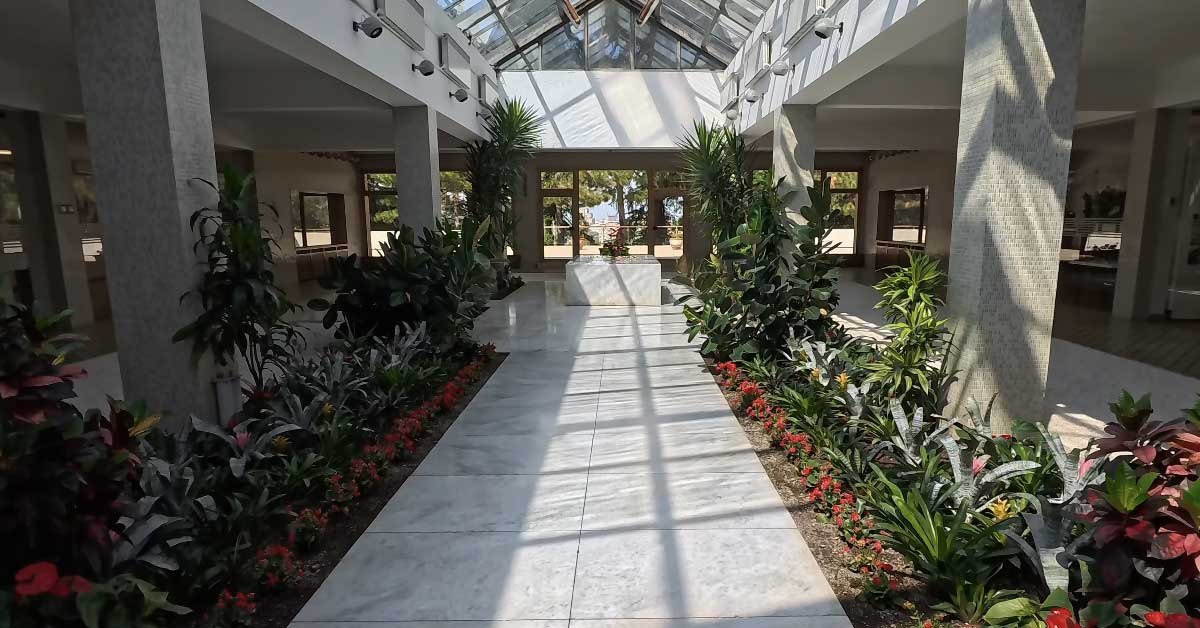
Some places in the city possess a special kind of silence. Not the uncomfortable silence that makes you want to run away, but the kind that forces a person to slow down, look around, and realize they have stepped into a space that has witnessed more history than most of us will ever read about in our lifetimes. House of Flowers Belgrade is exactly such a place.
This isn’t a location you visit just because it’s popular on Instagram or because everyone goes there for a photo op. You come here because you want to understand a period that forever changed the Balkans, a country that vanished in flames, and a kind of power that once seemed untouchable. Today, House of Flowers Belgrade is part of a larger museum complex, but it remains a memorial, an architectural gem, a time capsule, and a mirror of the entire region.
If you expect a classic museum where you just stare at glass cases and read boring plaques, you are mistaken. This place tells a story, but only to those willing to listen.
Table of Contents
What is House of Flowers Belgrade and where to find it
House of Flowers Belgrade is Tito’s mausoleum and the most visited part of the Museum of Yugoslavia complex, located in the Dedinje neighborhood. It’s not in the old town or inside Kalemegdan, but in a quieter, greener part of Belgrade where the visit feels more reflective and less “tourist-rush”.
You’ll find it within the Museum of Yugoslavia grounds, together with other exhibition buildings, so it makes sense to plan the visit as one small museum circuit rather than a quick photo stop. Even if you don’t come with nostalgia for Yugoslavia, the place works as a compact introduction to a century of Balkan history, told through architecture, symbols, and atmosphere.
The history of House of Flowers Belgrade and its symbolism
House of Flowers Belgrade was built in 1975 according to the design of architect Stjepan Kralj. The surface area of the facility is an impressive 902 square meters, which is a clear indicator that we are not talking about a small “memorial room” but a serious architectural undertaking.
Tito was buried in the central part in May 1980, fulfilling his own wish to rest right there, in an ambiance he loved. Jovanka Broz joined him in 2013, symbolically closing a great historical circle. The site was opened to the public in 1982, and since then, according to some sources, it has been visited by more than 17 million people. This clearly shows that interest in House of Flowers Belgrade is not just tourist-driven, but deeply emotional, political, and even nostalgic.
And then comes the symbolism of the name. Why is it called the “House of Flowers”? The name House of Flowers Belgrade comes from the fact that the grave was originally surrounded by a huge number of floral arrangements, creating the impression of a garden inside the building. Although after the breakup of the SFRY that “ring of flowers” was replaced by white rocks, the name remained as a permanent reminder of what the cult of remembrance once looked like. Even when the physical landscape changed, the name survived.
What to expect inside House of Flowers Belgrade during a visit
House of Flowers Belgrade is architecturally divided into three parts: the central space with the tomb and two parallel corridors on the sides, along with a spacious terrace on the opposite side of the entrance that offers a view of Belgrade. This specific layout is one of the main reasons why a visit doesn’t feel dark or burdensome like a classic “cemetery tour.” It feels more like a walk through carefully directed peace and light.
Within the complex, besides the tombs themselves, various artifacts can be seen. There are personal items, the Relays of Youth which are a phenomenon in themselves, photographs, and various memorabilia related to the Yugoslav period. The experience of this place depends drastically on the prior knowledge you bring with you. For some, House of Flowers Belgrade is a pure history lesson, for others a heavy nostalgia for a “better life,” and for some, an uncomfortable reminder of an authoritarian system. And that is okay. This place doesn’t tell you what to think; it forces you to react and feel the atmosphere of a bygone era.
The strongest moment of the visit is usually not looking at a specific object in a display case. It is that moment when you step from the outside world into the inner peace of the central space. Most people instinctively lower their voices then, not because they have to, but because the space demands it of them.
How to plan your trip to House of Flowers Belgrade
Since House of Flowers Belgrade is part of the wider Museum of Yugoslavia complex, it is best to plan the visit as a unified tour of the museum and the memorial. The location in Dedinje is ideal because it is a quieter part of the city, so your experience won’t collide with city noise and traffic chaos as soon as you step outside.
As for working hours, it is standard from Tuesday to Sunday from 10 AM to 6 PM with the last entry around 5:30 PM, while the complex is closed on Mondays. However, always check the exact opening hours before leaving as they can change during holidays or specific seasons. You can easily get there by trolleybuses 40 and 41 or bus 36 which starts from Slavija, and there is also parking for those coming by their own transport.
Here are three practical tips that make a difference:
- Slow down. Don’t rush to “do” the visit in 10 minutes. This place requires a slower pace.
- Context is key. If you are taking someone who doesn’t know much about history, tell them a short story about Tito and Yugoslavia before entering. The exhibition will be ten times more interesting to them.
- Walk around the neighborhood. Dedinje is full of old villas and greenery, so take the opportunity for a walk after visiting the museum.
Why House of Flowers Belgrade matters for local culture and identity
It is impossible to leave House of Flowers Belgrade without thinking about the broader picture of the Balkans. This isn’t just a grave; it is a focal point where different versions of history collide. For older generations who lived through the golden era of Yugoslavia, this place is almost a sanctuary, a reminder of a time when the passport was worth more and the country was a global player. For younger generations, it is often a curiosity, a place to learn about a “Red Emperor” they only know from textbooks.
The complex hosts thousands of visitors every May 25th, on the former Youth Day, which shows that the site is still very much alive in the collective memory. It serves as a rare neutral ground where people from all former republics come together, not to argue about politics, but to acknowledge a shared past. Whether you see it as a monument to a hero or a dictator, House of Flowers Belgrade remains an essential piece of the puzzle for anyone trying to understand the complex identity of modern Serbia and the region.
House of Flowers Belgrade FAQ Common Questions and Answers
Is House of Flowers Belgrade the same as the Museum of Yugoslavia?
House of Flowers Belgrade is physically located within the Museum of Yugoslavia complex. It is one part of the whole, so the ticket is usually purchased for the entire complex, which also includes the Old Museum and the May 25 Museum.
Why is it called House of Flowers Belgrade?
The name comes from the period when Josip Broz Tito’s grave was surrounded by large flower beds. Although the flowers were later removed and replaced with white stone, the poetic name remained in use.
When was House of Flowers Belgrade built?
The facility was built in 1975. Interestingly, it was not originally intended as a mausoleum but served as a winter garden and a residential facility for the president’s rest.
Who is buried in House of Flowers Belgrade?
Josip Broz Tito was buried in the central part in 1980, and his wife Jovanka Broz was buried beside him in 2013.
Our Most Popular Tours To Sarajevo
We offer many tours that include a visit to Sarajevo and its most popular locations:
- Full Day tour from Sarajevo to Belgrade (Most Popular)
- Full Day tour from Sarajevo to Međugorije & Mostar
- Full Day Tour from Sarajevo to Travnik and Jajce
- Full-Day 5 Cities Tour from Sarajevo to Herzegovina (Mostar)
- Full day Tour from Sarajevo to Dubrovnik (Kotor or Split)
Don’t Hesitate To Say Hi!
Got any questions about our tours or the city? Don’t hesitate to contact us anytime for more info and booking.
Use the following phone number and email: